Senator Alan Armstrong Advocates for Overhauling Federal Permitting Rules
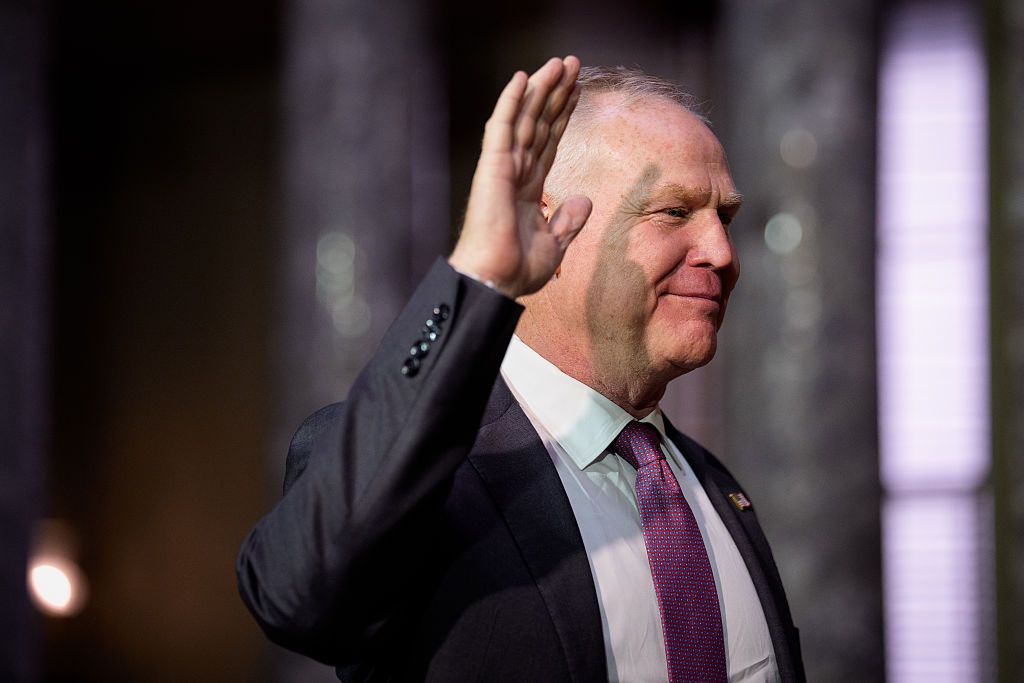
Oklahoma Republican Senator Alan Armstrong is actively urging Congress to reform federal permitting regulations. In an interview with Newsweek, he emphasized the necessity for new power infrastructure to manage the rising electricity demands from data centers and other sources, without impacting household finances.
This concern is linked to the growing issue of artificial intelligence (AI) infrastructure costs. According to a Gallup poll, 71% of Americans are against the construction of AI data centers in their locality. Furthermore, research indicates that the rapid expansion of such infrastructure might be contributing to higher household electricity bills.
Armstrong was appointed to the Senate this year and is not eligible for a full term under Oklahoma law. He expressed that data centers are often wrongly blamed for increased utility costs. He argued that the real problem lies in insufficient generation and grid infrastructure. He proposes that new major users should cover the extra costs they add to the system.
“I think that we have to have data centers,” Armstrong told Newsweek. “I think data centers have kind of become the scapegoat on high energy prices.”
Resistance to Local Data Centers
In Armstrong’s home state, there are concerns over electricity costs, water usage, noise, and changes to local communities. These issues have fueled public resistance to building data centers, transcending political lines. The Gallup survey from March reveals that 71% of U.S. adults oppose a local AI data center, with 48% strongly opposing. Only 7% are in strong favor.
Public concerns extend beyond AI discomfort. In an April Gallup survey, opponents cited resource consumption as a major issue, with 18% highlighting water and another 18% focusing on energy. Economic consequences, like increased utility bills, were mentioned by around 20% of opponents. Majorities across political groups rejected local construction.
“I don’t think anybody’s ever been successful in civilization at stopping progress,” Armstrong told Newsweek. “And I don’t think that’s a smart thing for us to do.”
Armstrong believes that restricting industry growth isn’t a solution. He urged for clear rules and safety standards for AI, maintaining an attractive environment for businesses. Domestically blocking industry growth could redirect investments elsewhere.
Economic Debate on Data Centers
The discussion on data centers and their impact on electricity prices is ongoing. Research from August 2026 by Lawrence Berkeley National Laboratory and the Brattle Group showed that U.S. data-center electricity demand has more than doubled from 2018 to 2024. This demand might triple from 2024 through 2028, posing risks for utilities like insufficient supply and possibly unused investments.
Despite these findings, some research offers different views on household billing impacts. A study by Cameron Scalera, Valentina Bosetti, and Filippo Pecci analyzed about 1,200 utility territories and 2,700 data centers. They found residential electricity prices rise with more data centers, estimating a 4% increase attributed to an average-sized hyperscale facility. However, this effect was negligible in areas served by nonprofit utilities.
“We find that data centers do cause household electricity prices to rise,” Scalera stated. “We find that about 10 data centers lead to a 11-13% increase in prices on average, and a single large hyperscaler causes prices to rise by about 4% on average.”
Scalera supported Armstrong’s infrastructure inadequacy argument, noting prices rose less in areas with surplus capacity. He stated data centers independently contribute to rising electricity prices, and a critical question is who will finance the necessary grid updates.
Armstrong’s proposal to levy tariffs on large-load consumers to protect residential users is still too new for comprehensive judgment. Scalera commented, “They seem reasonable. Future research will tell whether they actually help to reduce household rate increases.”
Conversely, other research suggests different outcomes. The 2026 Electric Power Research Institute study indicated that data center growth from 2015-2024 modestly lowered retail electricity rates, spreading system costs across more sales.
EPRI warned the AI expansion could alter these historical trends, noting constraints, hyperscale facilities’ unprecedented size, and investments in unmet demand.
Armstrong’s proposal would require data centers to pay more than their fair share of power costs. Large-load tariffs have emerged as a regulatory tool, with provisions like minimum monthly bills, demand charges, and cost assignments intended to protect existing customers.
Armstrong and Broader Policy Views
Armstrong diverged from former President Donald Trump on Russian diesel issues, advocating for expanding domestic infrastructure. He criticized sending revenue to adversaries while undermining messages to Ukraine. Armstrong linked this to his broader permitting reform agenda, focusing on limits and delays impacting U.S. energy resources.
Although Armstrong hasn’t directly discussed his proposal with Trump, he believes the administration will back it, based on energy and environmental policy discussions with Cabinet officials.
No Presidential Ambitions
Unique in the Senate, Armstrong previously served as an executive at Williams and was appointed to replace a vacancy without prior elected office experience. He has no plans for further political pursuits.
“No, I definitely will not be running for president in 2028,” Armstrong stated. “You know, this has been a really invigorating opportunity for me. Didn’t see this coming.”
Despite his current role, Armstrong intends to stay connected with business opportunities post-Senate and hasn’t decided on a preferred 2028 presidential candidate. His brief Senate tenure highlighted frustrations over Washington’s ineffective policy handling, especially regarding long-term issues like permitting reform.
For Armstrong, AI-related political challenges intersect with concerns over community burdens from infrastructure costs. Emerging research shows that the debate on data centers and utility rates is complex, heavily dependent on power supply and regulatory finance decisions.