Youth Voter Turnout: A Key Factor in Upcoming Elections
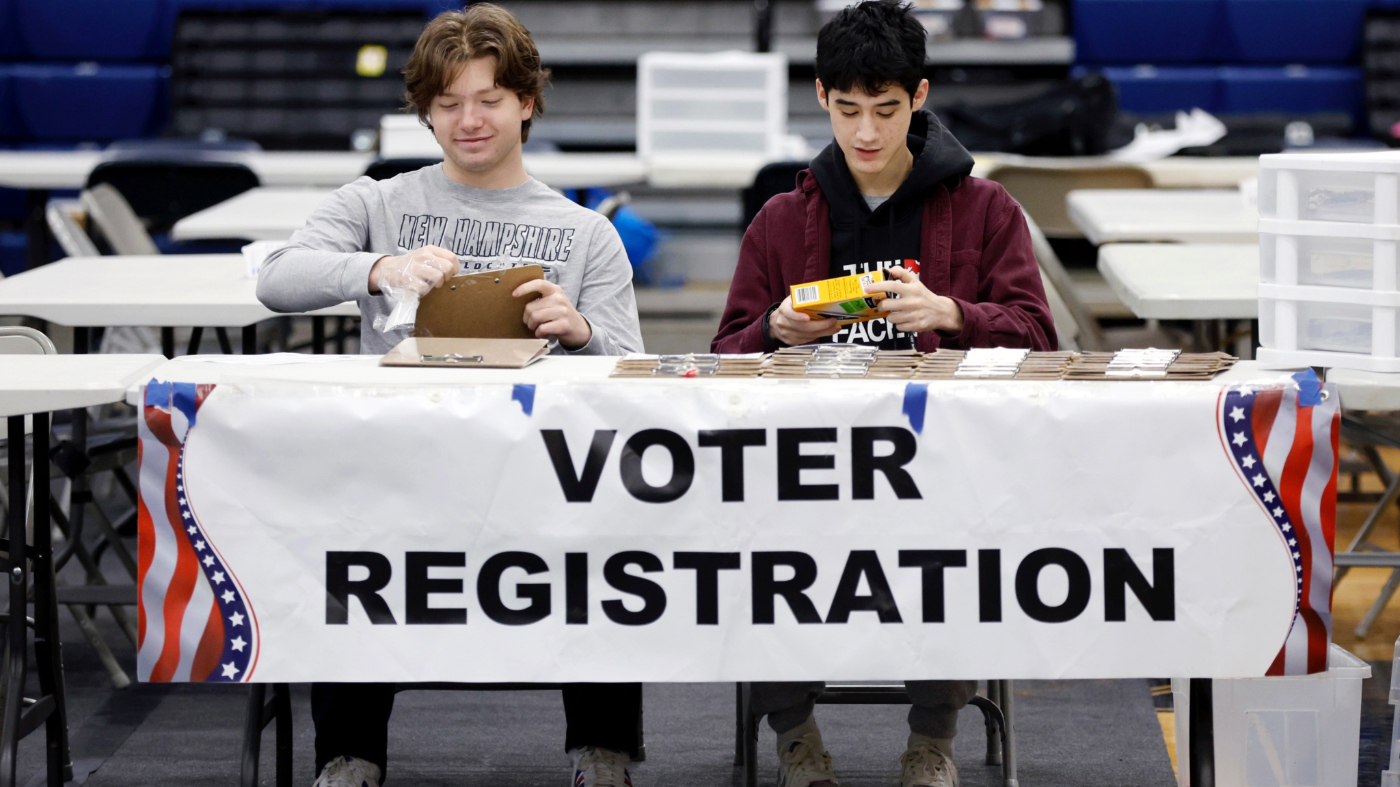
High school students Sawyer Brockman and Jack Skilling volunteered at a voter registration table for the presidential primary election at Windham High School on January 23, 2024. As November approaches, Democrats anticipate strong election results; however, the difference between modest success and significant victories will hinge on the turnout of young voters.
Currently, young voter turnout is poised to influence the control of the Senate and the effectiveness of the Democrats’ House majority. Despite this, the left has been underinvesting in youth organizing, media, and online engagement. This situation follows the right’s considerable $1.2 billion investment in young voters in 2024, spending significantly more than their left-wing counterparts.
Young people’s support has primarily favored Democrats, as demonstrated by voting patterns in 2025 and recent polling. Students and young women form a key demographic for the party. Young men who backed Trump in 2024 now withdraw support due to the Iran War and economic issues. In Senate battlegrounds like Texas and Michigan, Democratic candidates have a 20 to 31-point lead among young voters.
However, young voter turnout cannot be taken for granted. They are approximately 21 to 27 points less inclined to vote in this off-year election compared to older, right-leaning voters. In the last midterm, Gen Z’s participation was notably low, with only 28% voting in 2022 compared to 50% in 2024.
Between 2020 and 2024, turnout among voters under 35 dropped nearly 7%, equating to 2.5 million young voters not participating. Additionally, 40% of Gen Z and 36% of those under 35 are unregistered, and 11% of both groups were registered but did not vote in 2024. Mobility further complicates voting, as many young people move frequently, with 36% of those under 35 having relocated in the past two years.
Moreover, Republican election officials have implemented measures that make it more challenging for students to vote, such as removing on-campus polling sites and restricting student IDs, as seen in states like North Carolina and New Hampshire. Despite these challenges, young organizers are actively working to increase voter accessibility.
Reaching young voters is difficult because they do not engage with traditional media. They tend to communicate within private groups and campus communities where conventional outreach methods may not penetrate. Identifying and using trusted contacts and familiar channels is crucial to engaging them effectively.
Nationwide organizations have developed strategies to boost young voter turnout. Republicans have invested heavily in reaching this demographic. Democrats must respond to this challenge with equivalent vigor, ensuring young voters cast their ballots for the Democratic party.
With nearly half the states offering same-day voter registration or having deadlines close to Election Day, there is still time to mobilize this vital voting bloc. The competition for the youth vote continues.
Celinda Lake is a Democratic pollster. Eve Levenson chairs the board for Voters of Tomorrow and served as National Youth Vote director for the 2024 Harris-Walz campaign.