Collins Receives Economic Support Amid Tight Maine Senate Race
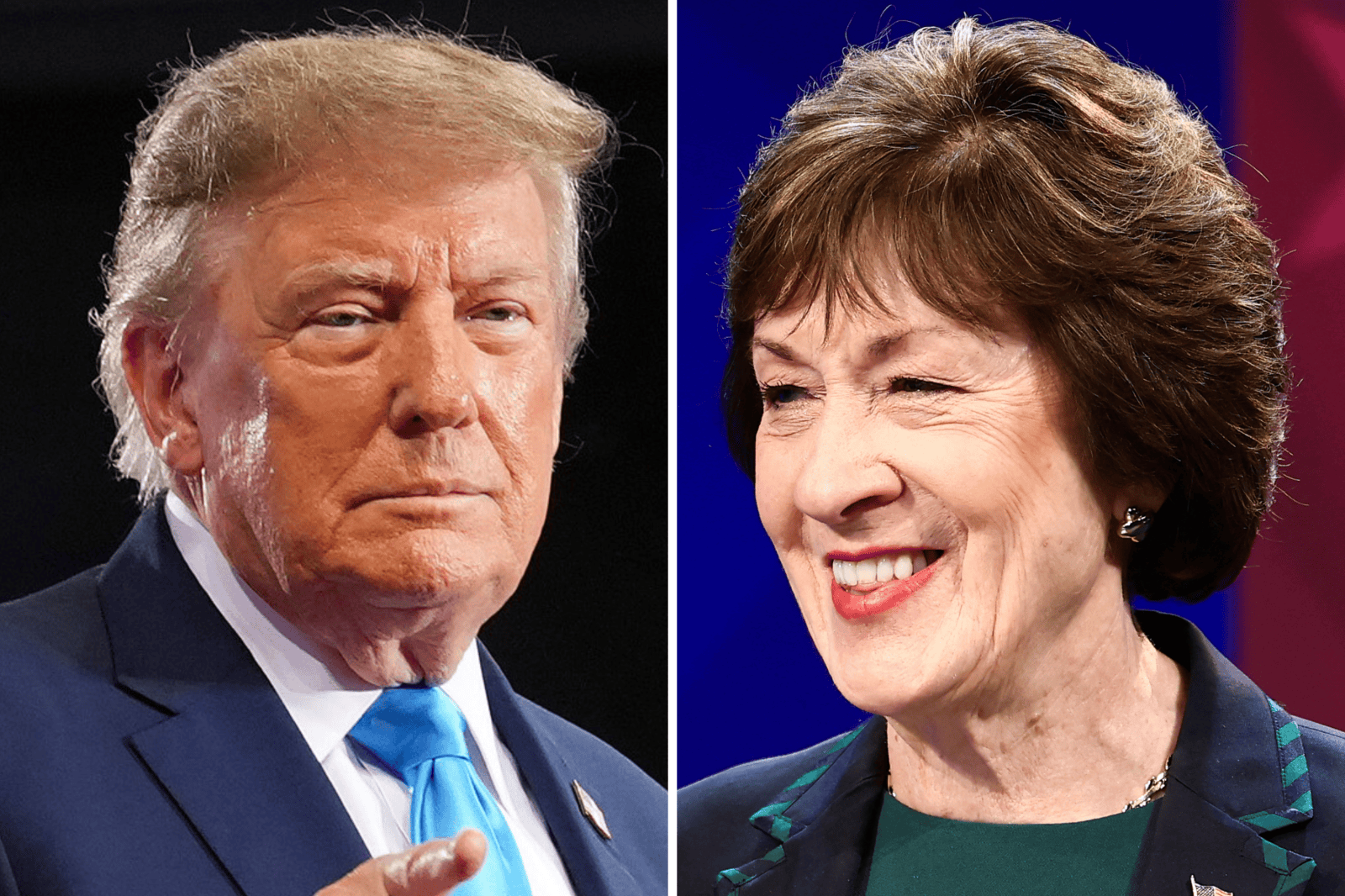
President Donald Trump has provided Republican Senator Susan Collins with a significant economic advantage in the competitive Maine Senate race. The president’s support includes aid for the state’s lobster industry and targeted tariff relief, coinciding with new polling that shows her polling neck and neck with Democratic rival Troy Jackson. A Fox News Poll indicates a tie between Collins and Jackson at 49 percent among likely voters. Earlier, the Marist Poll revealed a four-point lead for Jackson. Each survey targeted different electorates, so the four-point swing is indirect; however, both suggest the race is tighter as it reaches its final weeks.
Both candidates have strong backing, so turnout and a small group of undecided voters will be critical in determining the outcome. Newsweek sought input from Jackson and Collins campaigns and the White House during non-working hours for comment on Saturday morning.
Why It Matters
Midterm elections are historically challenging for the president’s party, and control of the Senate hinges on several close races. Collins is pursuing a sixth term after nearly 30 years in office and faces challenges in a state where Trump remains unpopular. Data from pollster Civiqs shows Trump with a 32-point deficit in Maine. Despite this, Collins has a track record of surpassing expectations: she won by nearly nine points against Democrat Sara Gideon in 2020, even when late polls predicted she would lose.
A Lobster-And-Tariffs Boost
Trump has bolstered Collins with new economic policies to promote in a state where lobstering, fishing, farming, and cross-border trade are vital. On October 23, the White House unveiled a national seafood plan aiming to enhance domestic processing, ease regulatory hurdles, and shield American fishermen from international competition. The America First Seafood Strategy is designed to restore Maine lobster fisheries’ profitability and includes over $5 billion in guaranteed loans for modernizing meat and seafood processing. A voluntary ‘U.S. Caught Seafood’ label aims to guide consumers in identifying domestic products.
Although this policy doesn’t guarantee lower seafood prices, its focus on Maine lobster offers Collins a local industry achievement. Additionally, a tariff modification removes 50 percent duties on Canadian imports used by Maine businesses, such as refrigeration equipment and packing containers. Nine agricultural product categories essential to producers of blueberries, potatoes, apples, and seaweed gain tariff exemptions on Canadian goods.
Collins explained that producers needed specialized goods, often lacking American-made alternatives or those incurring high replacement costs. ‘I have requested tariff relief for these vital goods,’ she stated, emphasizing her commitment to broader Canadian trade agreements. Politically, the relief provides Collins with an opportunity to demonstrate practical results from a president unpopular among Mainers. Jackson’s counterpoint is that Collins is benefitting from costs instigated by her party’s trade measures.
Opposing views arise as Oregon Senator Ron Wyden, a Democratic Senate Finance Committee leader, criticized the concessions as a ‘last-ditch attempt to rescue Susan Collins’ career.’ For Collins, the political task is delicate: accepting tangible support from a president unpopular in Maine while preventing Jackson from making the Trump connection a central campaign issue. Newsweek reached out to the Maine Potato Board, Maine Aquaculture Association, Wild Blueberry Commission of Maine, and Maine Lobstermen’s Association via email or online form on Saturday morning, outside regular work hours.
What Polls Show About Maine Senate Race
The Fox News Poll, conducted between October 16 and 20, sorted by Beacon Research, a Democratic firm, and Shaw & Company Research, a Republican firm, surveyed 1,514 likely voters with a sampling error margin of 2.5 percentage points. Interviews were done via landline, cellphone, and online questionnaires.
This tie followed the Marist Poll of 1,505 registered voters from October 1 to 4, placing Jackson at 51 percent and Collins at 47 percent. The four-point gap doesn’t show a clear advantage due to the 3.8-point sampling error margin. Responses came from phone, text, or online communication.
Jackson led 50 to 48 percent among a broader registered-voter group, within that group’s two-point margin. RealClearPolling’s average from September 23 to October 20 places Jackson at 48.8 percent and Collins at 47.4 percent, giving Jackson a slight 1.4-point lead.
The Coalitions Below the Tie
Collins gained a 13-point lead among independents in the Fox News poll, seven points among rural voters, and 16 points among voters without degrees, despite subgroup results having larger sampling errors than statewide findings.
Jackson had advantages of five points among women, 18 in suburban areas, and 23 among college graduates. Turnout presents Jackson’s best chance. With 79 percent of Democrats highly interested in the election versus 61 percent of Republicans, Jackson leads by 16 points among the most involved voters.
Voting patterns are mixed. About one-fifth had already voted, favoring Jackson by 40 points, whereas remaining potential Election Day voters preferred Collins by 12.
The Risk Linked to Trump
Only 37 percent of likely voters approved of Trump’s job in the Fox News poll, against 62 percent who disapproved, including 54 percent strongly. Further, 53 percent feared Collins votes too frequently with Trump.
Despite these numbers, Collins still enjoys 20 percent support from anti-Trump voters, indicating that her distinct political identity allows separation from White House policies.
Economic concerns challenge both parties. Only 12 percent report improved family conditions compared to two years ago, while 51 percent feel worse off. Newsweek editor Edward Pearcey edited this story. Newsweek’s reporting used Martyn, their AI assistant, for this story. More on Martyn is available here.