Potential Moves to Challenge DSA Members in Congress
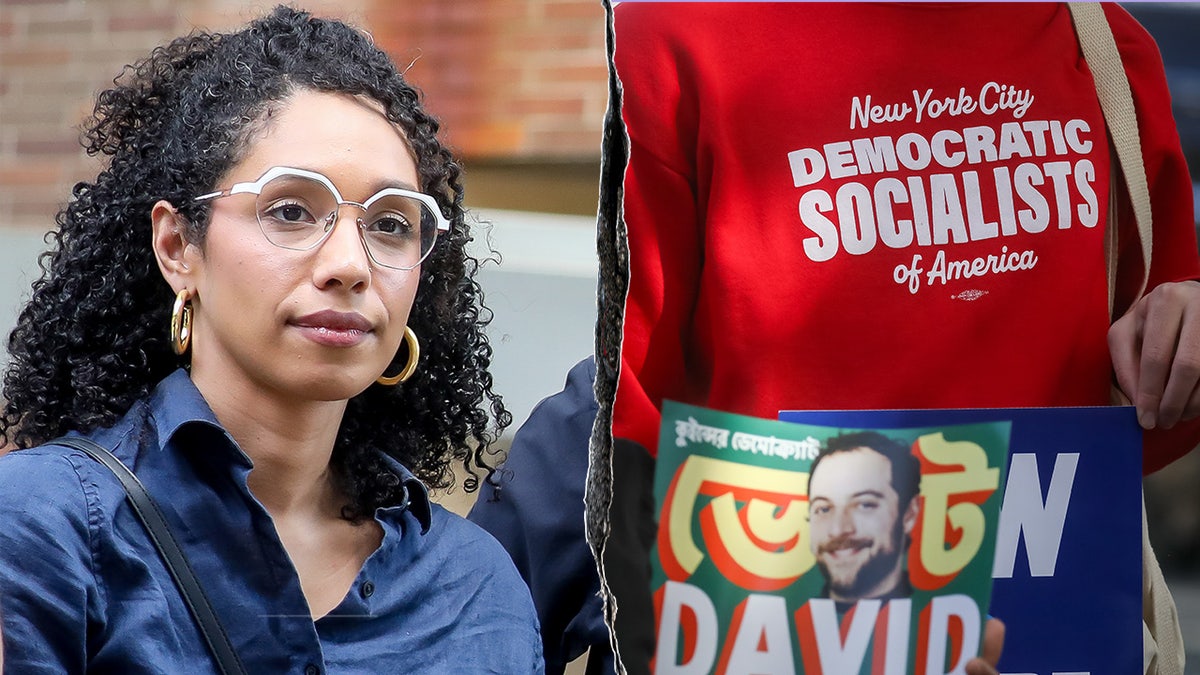
A lesser-known congressional procedure could potentially prevent members of the Democratic Socialists of America (DSA) from taking their seats in the House of Representatives next year, even if they secure election victories. Before joining the House as full members, elected individuals must pledge to support the Constitution by taking an oath. This oath is typically administered to all 435 members together by the House speaker at the start of a new Congress.
There is a circulating notion among conservative groups that any elected member can challenge another’s right to be sworn in if they present evidence suggesting that the individual will not uphold their oath. This leads to discussions among House members and a subsequent vote regarding the member-elect’s eligibility to be sworn in.
In the case of DSA members, their platform for drafting a new Constitution could be used as a basis for such challenges. Several DSA-aligned candidates and self-identified democratic socialists have already succeeded in primaries across the nation.
Representative Keith Self, a Republican from Texas, indicated that he might use this maneuver. He stated, “You cannot swear an oath to support and defend the Constitution while actively working to destroy it. The oath of office is not just words you say at a ceremony. It is a belief. It is an oath to our country and our fellow countrymen.”
Representative Self emphasized the necessity for the House to ensure that anyone taking the oath does so sincerely, without evasion or mental reservations, particularly as DSA candidates gain momentum. The term “Red-Green Alliance,” often used by conservatives, describes associations between far-left groups and radical Islamic entities.
Rep. Self declared that individuals advocating for the destruction of the Constitution should not be allowed to uphold it. The Center for Renewing America provides guidance on challenging an elected member’s fitness to take the oath. This includes presenting documentation to the House for debate, which could trigger a resolution vote on the member-elect’s intentions regarding the constitutional order.
Speaker decisions are pivotal in this process. If Hakeem Jeffries, a Democrat from New York, becomes the House speaker, he could dismiss such challenges. Similarly, Republican Speaker Mike Johnson from Louisiana could also choose not to pursue them should his party maintain control.
However, the prospect of blocking elected officials raises concerns about opposing the electorate’s choice. Such actions could conflict with past Supreme Court rulings, particularly the 1969 Powell v. McCormack case. This ruling states that Congress cannot bar elected candidates from taking their oath if they fulfill the constitutional criteria of age, residency, and U.S. citizenship.
Adam Clayton Powell Jr., a Democrat who faced multiple financial allegations, was initially prevented from taking his seat after winning re-election in 1966. The Supreme Court later overturned the House’s resolution to bar him.
Despite this precedent, some Republicans contemplate revisiting the maneuver. For instance, Representative Tim Burchett, a Republican from Tennessee, expressed intentions to block Darializa Avila Chevalier from Congress due to her past controversial comments involving the American flag.
The escalating political tensions underscore the partisan landscape evolving ahead of the new Congress, which will be shaped by upcoming midterm elections.