Kansas Farmers Grapple with Economic Strain Amid Political Uncertainty
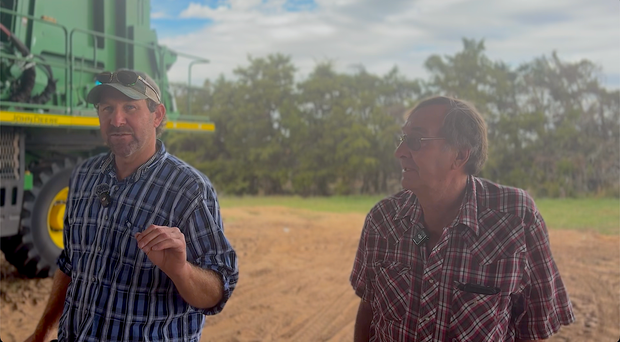
“There’s a lot of pissed-off farmers right now,” said Jeff Preisser, a Kansas farmer, emphasizing their mounting frustrations with leaders like Trump and Marshall. Preisser’s situation, shared during the last phase of Kansas’ closely contested Senate race, highlights severe financial challenges.
In 2026, the Preisser family faced $737,375 in elevated operational costs compared to the previous year. This included $514,625 more for fertilizer, $187,000 for diesel due to the Iran war, and an additional $10,000 for parts tied to steel tariffs. Concurrently, drought conditions cut crop yields by 20%, and low commodity prices alongside trade wars diminished agricultural exports, resulting in $325,000 less revenue from 2025 to 2026.
The farming sector has encountered tough years. Kansas saw a reduction of 700 farms from 2024 to 2025. Across the Midwest, farm bankruptcies soared by 70% in the same time frame. “Last year was tough … and it’s worse now. No more collateral. No more money,” stated Jeff Preisser, uncertain if his 6,500-acre farm in Sylvia, Kansas, would survive another year.
This crisis is nudging Jeff’s father, Larry Preisser, to vote Democrat for the first time. Larry plans to vote for Adam Hamilton, a pastor aiming to become the first Democrat representing Kansas in the Senate since the 1930s, highlighting dissatisfaction with Republican leadership. He mentioned promises of passing the Farm Bill, now expired since 2018, were unfulfilled.
Jeff Preisser remains undecided about voting, though he’s clear he won’t support the Republican candidate. His sister, Mandi Sieren, shares a deep mistrust of all political parties.
Tracy Chambers, another local farmer, reminded them, “Your vote is your voice.” Both she and Larry Preisser were drawn to Hamilton’s appeal, considering him a moderate who could collaborate across party lines.
“He wants to work with Republicans,” said Larry Preisser. “Back in the day, they did not argue this much.”
Yet opinions differ among farmers. Mick Roush, another Kansas farmer, shared similar economic concerns but continues supporting Marshall, fearing Hamilton is too liberal.
The Iran war, tariffs, and immigration policies further stressed farmers, splitting public opinion on Marshall’s effectiveness. Some, like Roush, prioritize party loyalty to maintain Republican control in the Senate, believing Democrat governance might worsen conditions.
An April survey found more farmers and ranchers trust Republicans over Democrats with key industry issues, though many feel their voices go unheard. Notably, over 73% think elected officials misunderstand farming realities.
President Trump recently announced policies to ease diesel prices, unveiling an $8 billion relief program at a Wichita rally. Yet the Preisser family criticized it as a temporary fix to deeply rooted problems. They lamented unpredictable conditions and volatile markets.
“Here’s some money, but no lasting resolution for crop and fertilizer prices,” Jeff Preisser remarked.
An increasing number of farmers face forced asset sales for debt repayment. Larry Preisser had to let go of land owned by his family for 140 years.
The farming industry at large faces challenges beyond Kansas. Nationwide, farm bankruptcies rose for a second year in 2025. The U.S. Department of Agriculture forecasts farm debt to reach a record $624.7 billion in 2026.
A January letter from 56 agricultural trade groups urged Congressional action, warning of threats to national food security and the deepening rural economic crisis.
Amidst uncertain futures, some farmers hesitate to recommend agriculture to future generations, with the average U.S. farm producer aged 58.1 years, and nearly four in ten over 65 as of the 2022 Census of Agriculture.
“The fun’s gone, but you gotta keep going until you’re broke,” expressed Larry, faced with limited retirement options.