Scholar Challenges Doubts on Ancient Jesus Account
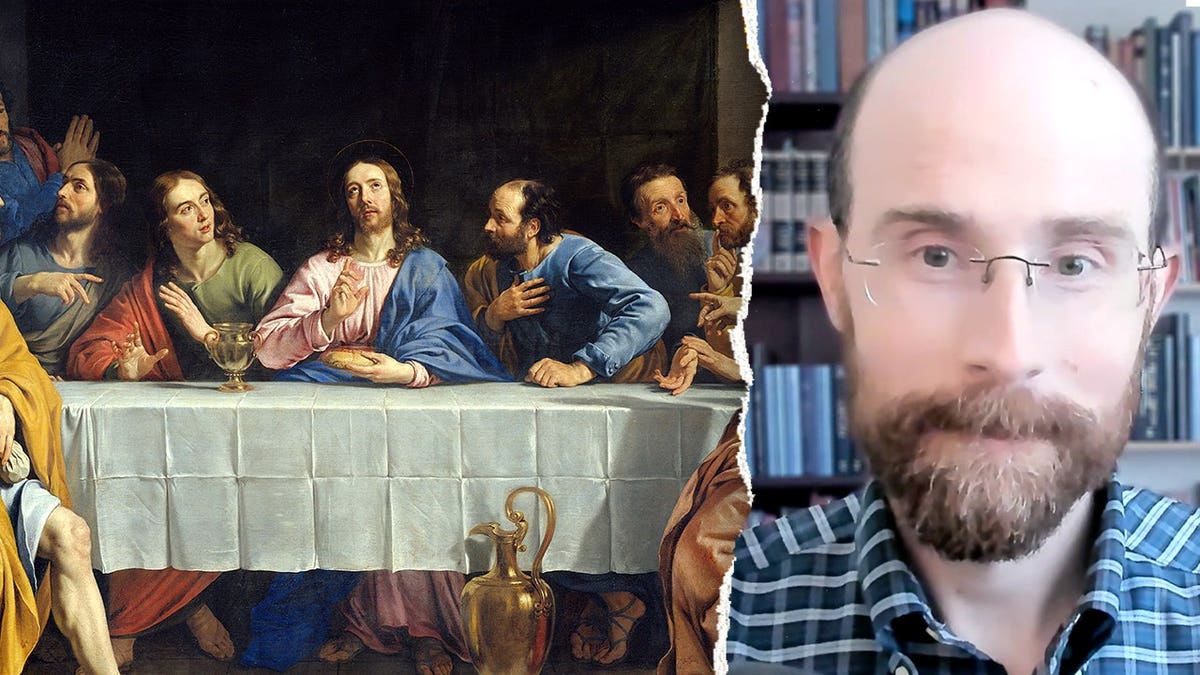
A scholar suggests a nearly 2,000-year-old reference to Jesus might be more credible than previously believed. This challenges persistent skepticism about one of the earliest non-Christian narratives of his life.
T.C. Schmidt, an associate professor of religious studies at Fairfield University in Connecticut, authored a book titled “Josephus and Jesus: New Evidence for the One Called Christ.” The book, set for release in 2025, analyzes a long-debated passage by the ancient Jewish historian Josephus.
Josephus, who lived from around 37 to 100 A.D., included references to Jesus in his work “Antiquities of the Jews.” This work is one of the rare non-Christian accounts of Jesus’ life that has survived.
“Josephus depicted Jesus as a wise man who gathered followers and faced crucifixion under Pontius Pilate. The text also mentioned reports of Jesus appearing alive post-death.”
Scholars have long debated whether Christian scribes modified this passage. They questioned the presence of statements about Jesus, which seemed atypical for a non-Christian Jewish writer.
T.C. Schmidt argues for the passage’s authenticity, highlighted in an interview with Fox News Digital. He relies on linguistic analysis and comparisons with Josephus’ other writings to support his claim.
He examined various ancient versions of Josephus’ account—Greek, Latin, Syriac, Arabic, and Armenian. Using textual comparisons and computer-assisted stylistic analysis, Schmidt concluded that the passage aligns with Josephus’ writing style.
Schmidt discovered linguistic consistencies throughout the passage. “Every phrase in the passage can be linked back to Josephus. It sounds typical of Josephus,” Schmidt explained.
He highlighted that certain descriptions of Jesus have been misinterpreted, presenting the passage as seeming more Christian-friendly than Josephus intended. For instance, Josephus’ account of Jesus performing supernatural acts does not necessarily imply Josephus believed these powers came from a divine source.
Schmidt stated, “This language is ambiguous, allowing for interpretation as either divine or demonic.” He noted that other Jewish writers have referenced Jesus similarly.
Schmidt also remarked that his analysis solidifies Jesus’ historical position, citing congruence with Gospel details like Jesus’ disciples, miracles, and crucifixion under Pilate.
Importantly, the passage hints at Jesus’ resurrection, which Schmidt argues corroborates early Christian beliefs. Josephus recognized early Christians’ belief in Jesus’ resurrection but didn’t personally affirm it.
On the reception of his book, Schmidt reported positive feedback, sparking reconsiderations about the passage’s authenticity. He shared that his research led him to question previous academic teachings.
Josephus’ account remains a subject of scholarly debate, with ongoing discussions over possible alterations by Christian scribes. Schmidt has identified further potential connections between Josephus and figures related to Jesus’ crucifixion for future investigation.
Encouraging readers to examine historical texts personally, Schmidt shared how his research prompted a reassessment of his beliefs, previously assuming the passage was inauthentic.