Catholic Schools Face Challenges in Colorado’s Preschool Program
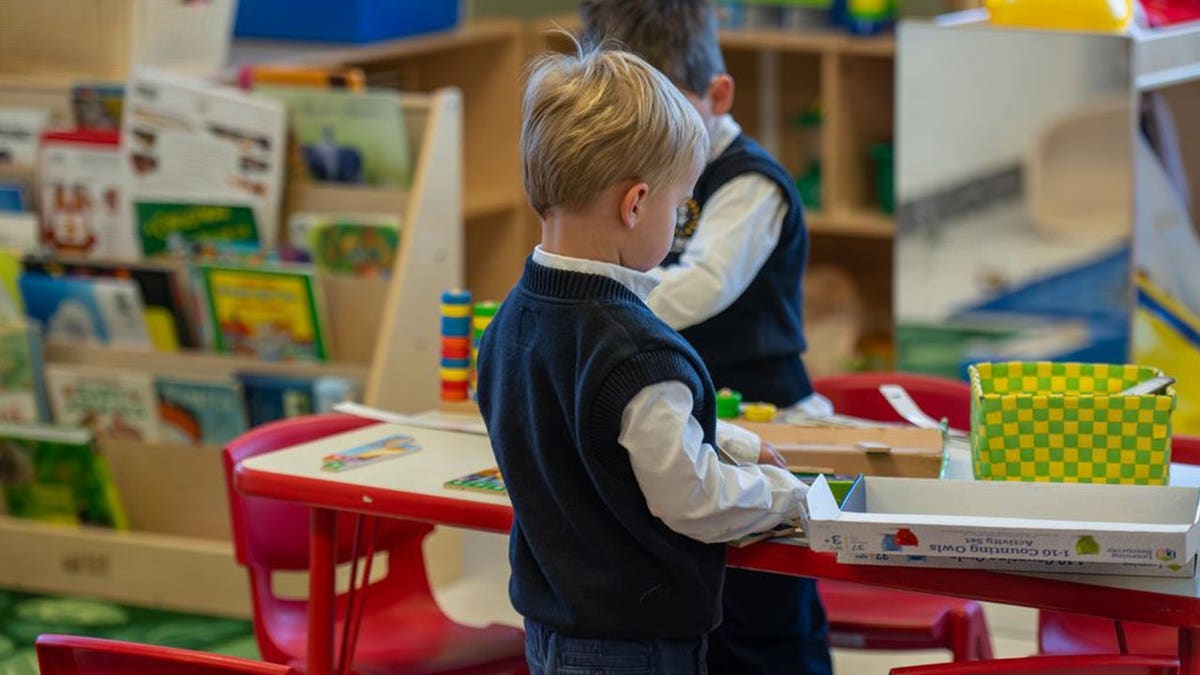
In Colorado, a father pays for Catholic preschool out of his pocket while his taxes fund other children’s preschool education. One of his children has spina bifida, making Colorado an essential place due to Medicaid’s coverage. An extra $6,000 could significantly help his family.
A mother works at a lumber company, while her husband, a house painter, faces work slowdowns in winter. They have six children with a seventh on the way. Initially, she thought Catholic school was only for wealthy families.
Another mother started a florist business to afford tuition. Three of her children are in a Denver Catholic school, but preschool costs pushed her youngest to a Lutheran school under the state program.
“I’m choosing just a faith,” she expresses, “and here I’m being punished for that.”
A fourth parent accepted a lower-paying job at her parish school to receive a tuition discount, witnessing other families leave due to pre-K costs.
Dan and Lisa Sheley, who joined the Archdiocese of Denver in challenging state policies, share their story too. They have seven children, five attending St. Mary’s. They have spent thousands for a Catholic preschool education without state assistance.
Colorado’s “universal” preschool program was meant to aid families like theirs, yet it does not, due to an “equal opportunity” clause involving sexual orientation and gender identity. Catholic schools reject these terms as they conflict with their teachings on marriage and identity.
Historically, the Blaine amendments of 1875, during anti-Catholic sentiment, proposed banning public funds for “sectarian” schools, targeting Catholic institutions. Many states adopted similar constitutional measures without explicitly naming Catholics.
Colorado’s modern version grants eligible 4-year-olds around $6,000 annually but requires adherence to the “equal opportunity” clause. This exclusion leaves roughly 1,500 children from 30 schools without funding. Catholic preschool enrollment dropped by around 20%, leading to two closures.
The Supreme Court, in recent years, has worked against the Blaine legacy. Decisions in cases like Trinity Lutheran, Espinoza, and Carson emphasize that states offering public benefits cannot exclude schools for their religious beliefs. Colorado’s rules appear discriminatory against Catholic teachings.
The state program allows exceptions for some providers based on disabilities, income, race, gender nonconformance, or the LGBTQ+ community. Yet, Catholic schools find no flexibility. Policymakers had expected faith-based schools to participate.
The Supreme Court cases like Masterpiece Cakeshop, 303 Creative, and Chiles highlight Colorado’s intolerance. Justices should remind the state that constitutional protections remain strong. Families choosing private education should not have closed doors to Catholic schools due to their faith.
Andrea Picciotti-Bayer, director of the Conscience Project, emphasizes that the return of the Blaine amendments under new terms would be a setback.