Poll Shows Trump Comparatively Less Popular Than Past Presidents
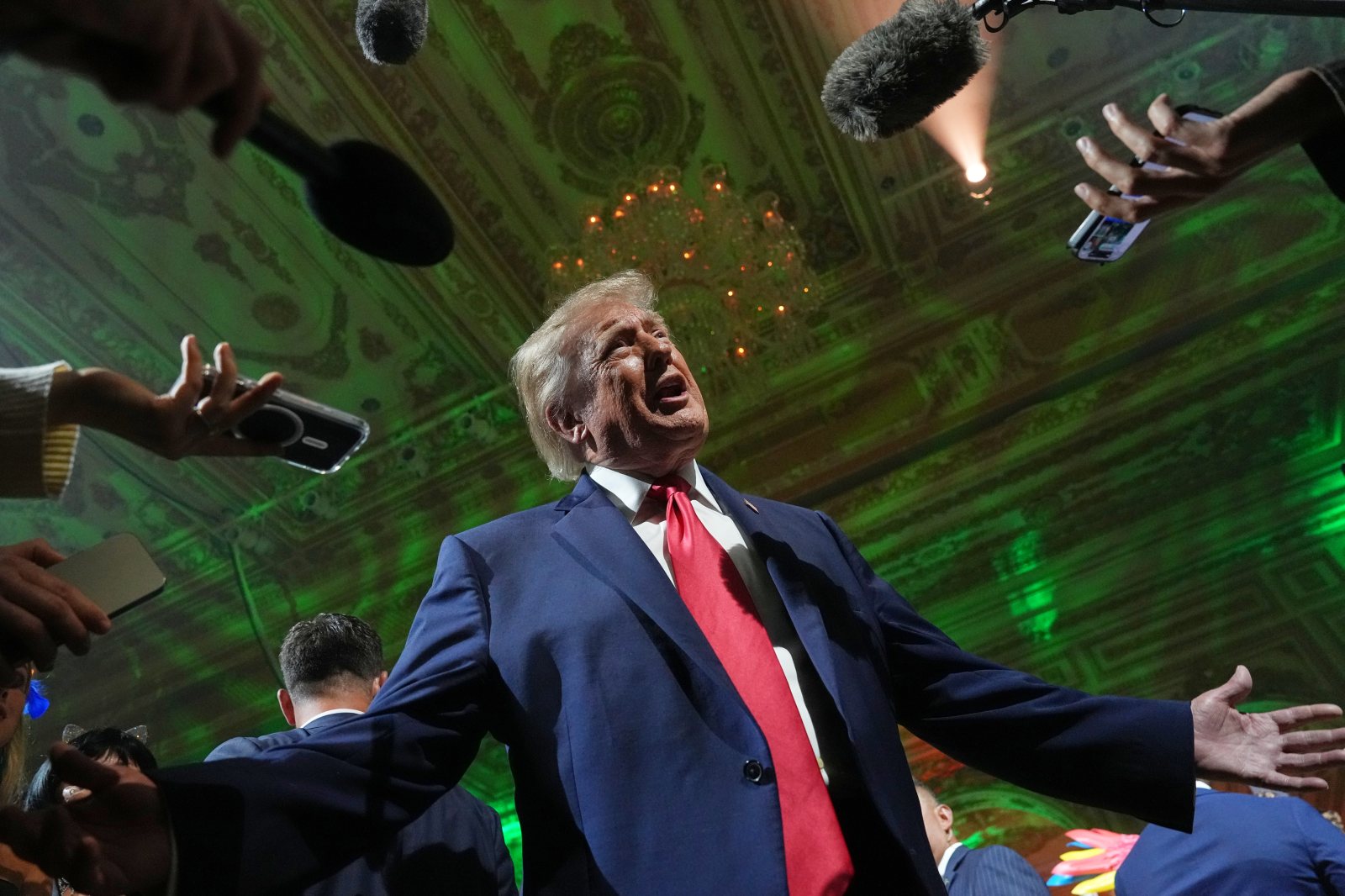
In a national poll ahead of the midterm elections, President Donald Trump matched former President Joe Biden in positive public perception but lagged behind former President Barack Obama. The survey, conducted by AtlasIntel and released two days before the midterms, showed 40% of Americans view Trump and Biden positively, while Obama garnered a 54% positive image.
However, Trump’s negative rating was notably higher than his predecessors, standing at 58% compared to Biden’s 54% and Obama’s 44%. This snapshot of public opinion coincides with the conclusion of voting on November 3, which will determine the control of Congress for the remaining two years of Trump’s second term.
Comparison of Net Ratings
When subtracting negative responses from positive ones, Trump had a net rating of minus 18 percentage points. Biden’s was slightly better at minus 14; Obama had a positive net rating of 10 percentage points. The survey interviewed 3,566 U.S. adults between October 28 and November 1, employing AtlasIntel’s Random Digital Recruitment method. It had a margin of error of plus or minus 2 percentage points.
Though Trump and Biden received the same proportion of positive responses, individual negative views differed, affecting net ratings. It’s important to note that these figures reflect personal impressions rather than hypothetical election outcomes.
Other Political Figures
Former First Lady Michelle Obama was rated positively by 52% of respondents but had a 44% negative rating, putting her 12 percentage points ahead of Trump. Other Democrats like NYC Mayor Zohran Mamdani, Representative Alexandria Ocasio-Cortez, and former Transportation Secretary Pete Buttigieg each scored 47% in positive ratings, surpassing Trump by seven points.
Florida Governor Ron DeSantis equaled Trump’s positive rating at 40%. Conversely, Republican Vice President JD Vance and Democratic former Vice President Kamala Harris had 38%, with Democratic former Secretary of State Hillary Clinton at 36% and California Governor Gavin Newsom at 33%. Small differences require cautious interpretation; polls are not always statistically significant due to various factors such as recognition, “don’t know” responses, and question wording.
Insights from Other Polls
A CNN survey by SSRS earlier this year echoed similar sentiments, positioning Obama as more popular than his successors. Released on June 18, Obama had a 57% favorable rating, against Trump’s 34% and Biden’s 30%. Among independents, Obama was far ahead, maintaining widespread support from Democrats. Other former presidents occupied middle ground, with Republican George W. Bush at a 42% favorable rating and Bill Clinton evenly divided.
In an open-ended question about admired presidents, Obama led with 30%, followed by Trump at 19%. Historical figures Abraham Lincoln and Ronald Reagan both received 9%. The CNN poll included 2,480 adults interviewed from May 7 to May 31, online and via phone, with an error margin of plus or minus 2.7 percentage points.
Recent Midterm Polling
Additional October polls provide context about Trump’s office performance and electoral environment. A Reuters/Ipsos survey revealed 32% of Americans approved Trump’s performance, with lower approval on economic issues at 25% and cost of living at 20%. Among likely voters, 53% leaned towards Democratic congressional candidates versus 44% favoring Republicans.
This survey conducted by Ipsos between October 22 and 26 used probability-based KnowledgePanel, interviewing 1,679 adults with an error margin of plus or minus 2.4 percentage points. A separate CNN/SSRS survey from October 15 to 18 indicated Democrats held a 10-point preference advantage among registered voters. Most participants viewed the election as a chance to impact Washington’s landscape.
The poll included 1,701 adults, 1,206 of whom were registered voters, with error margins of plus or minus 2.9 and 3.3 points. As elections approach, all 435 House seats and 35 Senate seats are contested, determining the next Congress starting January 3, 2027. The critical question remains: Will public dissatisfaction influence votes against Republicans, shifting power dynamics on Capitol Hill?