Florida Polytechnic University Introduces Flying Patrol Vehicle
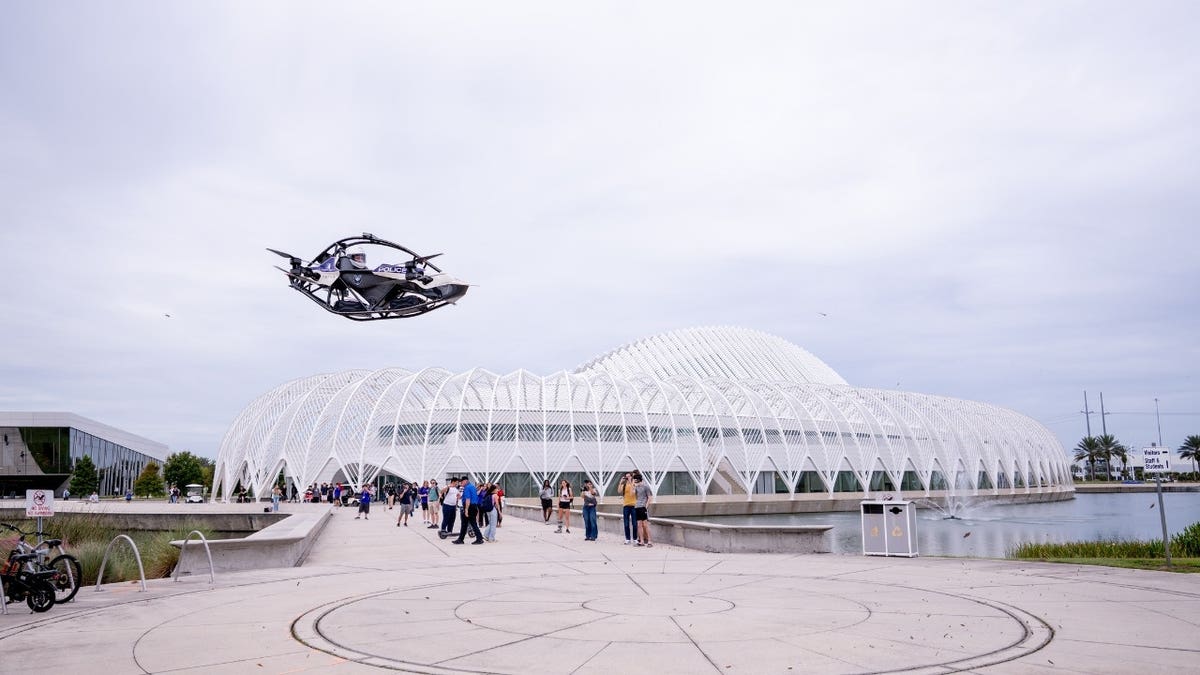
The Florida Polytechnic University Police Department in Lakeland is testing a new flying patrol vehicle called Astro. This single-seat electric aircraft, developed by Jetson, represents a significant shift in emergency response techniques. The vehicle, named after the dog in ‘The Jetsons’ cartoon, resembles a large drone and includes futuristic technology.
Details about Astro
Astro employs electric vertical takeoff and landing technology (eVTOL), enabling it to ascend without a runway. Unlike traditional helicopters, its compact form folds for transport and storage. It features an open cockpit and is powered by eight electric motors and propellers. A four-axis joystick allows the pilot to guide the aircraft.
Introduced in summer 2026, Astro underwent flight training with police personnel, including Police Chief Aaron Murray. The aircraft is recognized by registration number N911FP, a reference to emergency services and the university. Jetson notes that Astro is a standard Jetson ONE unit, but modified with police lights and camera mounts. Future plans include incorporating a searchlight.
Operational Capabilities and Limits
The aircraft can reach 63 mph, covering campus rapidly compared to ground vehicles. Jetson estimates its flight time at 20 minutes per charge, though batteries can be swapped quickly. Charging takes 90 minutes with a 240-volt connection and three hours with standard outlets. Astro’s weight capacity (210 pounds) includes the pilot and any gear, influencing how much equipment it can carry.
The vehicle boasts multiple safety features, such as redundancy in motor operations, automatic landing, and an emergency parachute. Priced at $148,000, it represents a high-cost investment.
Potential Uses in Emergencies
Astro offers practicality for emergency scenarios, especially in navigating obstructed roads following Florida’s frequent storms. Its vertical takeoff ability allows police to survey damage areas where conventional vehicles struggle. Chief Murray envisions Astro aiding in campus monitoring and delivering critical supplies. However, its single seat means it cannot transport injured individuals.
Challenges and Regulations
Before Astro actively participates in police duties, it must clear regulatory hurdles. Jetson designed the ONE under FAA’s ultralight rules, restricting use to recreation. For public-safety operations, additional FAA authorization is necessary under Part 91. This process was nearing completion as of October with expected approval by year-end.
In addition to its law enforcement role, Astro will support Florida Polytechnic University’s aerospace research program. Students will analyze flight data for engineering projects, contributing to the field’s understanding.
Expanding Air Mobility
Astro showcases a novel trend for police departments considering alternatives to costly helicopters. While Jetson’s aircraft has limitations in flight duration and seating, it offers efficient aerial views communities may embrace. Despite logistical challenges, Jetson views Astro as a step toward broader applications of personal electric aircraft.
Public involvement will be key in shaping how such technology aligns with privacy concerns and operational benefits.