Democratic Gains Among Key Groups in 2026 Midterms
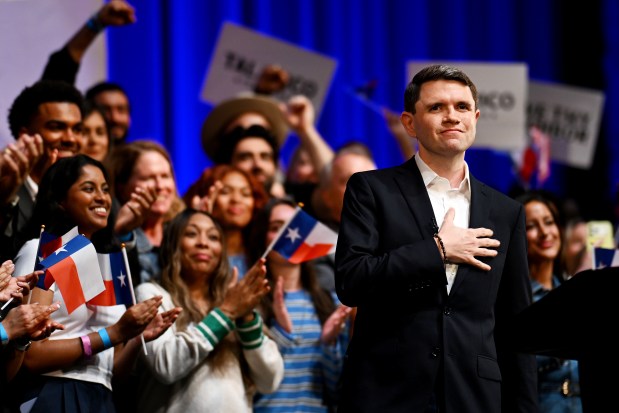
In the 2026 midterm elections, democratic candidates managed notable advances among essential demographic groups as indicated by The AP Voter Poll. This contrasts with the strides made by President Donald Trump during the 2024 presidential race within the classic Democratic base.
The AP Voter Poll surveyed over 100,000 voters from all 50 states, revealing a substantial leftward shift by younger voters. The support for Democratic candidates among those under 30 years old significantly exceeded the support for Vice President Kamala Harris in 2024.
Further findings from the 2026 midterms demonstrated voters penalizing Donald Trump. This resulted in historic losses for the GOP. Hispanic voters, who leaned toward Trump in 2024, redirected their support to Democrats this year following a similar trend observed with Black voters, especially Black men.
Moderate voters, a group largely critical of Congress’s lack of action on presidency checks and balances, predominantly backed Democrats nationwide, crucial for successes in several key Senate contests. Voters experiencing at least moderate hardship due to inflation, especially those with a 2025 household income below $50,000, also shifted away from Republican support compared to 2024.
Young Voters Swing Democratic
After significant backing for Trump in 2024, younger voters shifted strongly toward the Democratic Party in the midterms. The AP Voter Poll revealed approximately 70% of voters under 30 nationally supported Democratic candidates in their local U.S. House race, compared to around 30% favoring Republicans. This shift marked a dramatic contrast from 2024, where younger voters were evenly split between Trump and Harris.
Young voters and first-time midterm voters generally supported Democratic candidates, though they constituted a smaller segment of the electorate. Only about 10% of 2026 voters were under 30, limiting the impact of this shift.
The dissatisfaction among younger voters with the nation and leadership was evident, with approximately half expressing anger over the current direction compared to around one-third of voters aged 65 and older. Additionally, 60% of voters under 30 indicated their vote for the U.S. House aimed to oppose Trump, contrasting with 50% of voters aged 30-44 and 40% aged 45 and older.
The Democratic shift among young voters was vital in Senate races where Democrats gained seats, such as in Texas, Kansas, Iowa, Ohio, and North Carolina.
Republicans Lose Ground with Hispanic Voters
Republicans experienced losses with Hispanic voters, reversing Trump’s 2024 advances. Only a third of Hispanic voters supported Republicans in local U.S. House races, despite 40% supporting Trump two years prior. Approximately 60% backed Democratic candidates.
This pattern was apparent in the Texas Senate race, where Democrat James Talarico triumphed over Republican Ken Paxton, with around 60% of Hispanic voters favoring Talarico. The contrast with the Florida Senate race, where Republican Sen. Ashley Moody narrowly retained office, showed less than half Hispanic backing though Trump had previously secured their support.
Trump’s Gains with Black Voters Prove Fleeting
Black voters, especially Black men, showcased a return to Democratic preferences, reversing Trump’s past success. Nationally, only 10% of Black men supported Republicans in the House race compared to the 25% backing Trump in 2024. Roughly 90% supported Democratic candidates.
Shifts among Black men were crucial in races like Georgia’s governor race, where Keisha Lance Bottoms was elected as the first Black woman governor, backed by 90% of Black men. Republican Byron Donalds, although elected as Florida’s first Black governor, only received backing from a quarter of Black men and 10% of Black women.
Democratic Support Rises Among Moderates
Dems saw increased backing from moderates, particularly in Senate races flipping Republican-held seats. Two-thirds of moderates supported Democratic candidates nationally, growing from the 60% supporting Harris previously. About 80% of moderates felt Congress wasn’t adequately regulating the presidency, aligning with concerns over inflation hardships.
In Kansas, Adam Hamilton secured 70% of moderate votes, a notable increase from Harris’s support. Iowa’s similar trend saw Josh Turek gaining nearly two-thirds of moderates, and in North Carolina, Roy Cooper increased his moderate backing significantly.
Lower-income Voters Shift Towards Democrats
Economic concerns led lower-income voters to favor Democrats in 2026. More than half of voters with households earning below $50,000 supported Democratic candidates, altering from their 2024 split between Trump and Harris.
Economic anxieties, particularly concerning food, gas prices, and utilities, were more pronounced among these voters. 60% ranked cost of living as crucial for their vote, surpassing the 50% among incomes above $50,000.
The AP Voter Poll deployment by SSRS for the Associated Press and major news networks blended various interview methods from Oct. 19 to Nov. 3 in Alaska and other states. Detailed methodology information is available, with a sampling error margin of ±0.6 percentage points.