Election Day Outcomes: Democrats Gain Ground
Recently, Republicans extensively redrew congressional districts in states like Texas, Florida, Ohio, and North Carolina. This move aimed to solidify their narrow majority in Washington. However, Democrats have made substantial gains, potentially reversing the Republican advantage in these areas.
Before the elections, Democrats managed to secure at least 11 of the 15 districts Republicans had redrawn to their benefit. This success suggests the GOP’s strategy might not yield the anticipated long-term gains. Additionally, a seat in Utah, redrawn by court order, favored Democrats. In California, where they executed their redraw, Democrats expect to gain as many as five seats.
Meanwhile, in Idaho, voters on deciding the state’s official gun opted for the Winchester Model 1873 through a non-binding vote. This decision, introduced by state lawmakers, likely signals acceptance of the voters’ choice.
Elsewhere, Gov. Josh Shapiro advocates for Democrats to address affordability and hold the Trump administration accountable. After Democrats gained significant victories, Shapiro emphasized passing legislation combating high living costs while maintaining oversight of the former administration’s policies.
Furthermore, towns in League City, Texas, and York, Maine, voted against Flock-style cameras that track vehicle movements, reflecting growing public opposition across political lines.
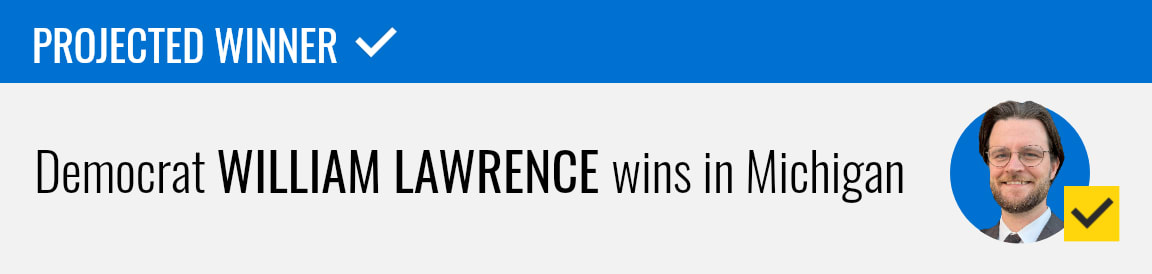
In Michigan, Democrat William Lawrence triumphed over Tom Barrett, marking a notable win in one of the most contested House races. Additionally, Democrat Sean McCann secured Michigan’s 4th Congressional District. These victories highlight Democrats expanding their influence into battleground territories.
Democrats have gained full control in five state governments, including Michigan, Minnesota, Nevada, Pennsylvania, and Wisconsin, marking an expansion in areas where they hadn’t held simultaneous control for years.
Amid these shifts, President Trump focused on the White House’s new ballroom, largely avoiding addressing the election losses suffered by Republicans.
Looking forward, Democrats are already fundraising for the 2028 elections. The Democratic National Committee launched digital ads to gather support following recent electoral success. This early move underscores the party’s long-term strategic planning.
During election night, reporting sites in Colorado, Iowa, and South Carolina experienced outages due to high web traffic. While there was speculation about cyberattacks, the disruptions appeared related to automated traffic spikes rather than malicious intent.
Researchers found AI chatbots were influenced by unofficial campaign websites, indicating the technology’s susceptibility to misinformation.
Democratic candidates also secured secretary of state positions in Arizona, Michigan, Nevada, Georgia, Indiana, and Ohio. These strategic wins grant them oversight in key battleground states for future elections.
As Democrats gain authority, Chuck Schumer is optimistic about his re-election as Senate majority leader, prioritizing reducing costs and eliminating government corruption. Meanwhile, Mike Johnson, the outgoing House Speaker, will not continue as Republican leader following significant losses.
Senators-elect like James Talarico and Abdul El-Sayed express intentions to work on bipartisan platforms focused on issues like immigration, border security, and healthcare reform, signaling collaboration with the current administration.
Doctors running as candidates succeeded in various significant midterm races, suggesting restoring public trust in the medical establishment post-pandemic.
Young men who supported Trump previously expressed disappointment in his economic policies, as reflected in recent exit polls.
Florida’s Governor Ron DeSantis described the Republican losses as an ‘extinction-level event,’ noting the disconnect between party expectations and electoral outcomes.
Lastly, reactions from international figures, like those in Iran, frame the U.S. election results as a response to Trump’s foreign policy and domestic challenges.