Swift Observatory Returns to Earth After 22 Years in Orbit
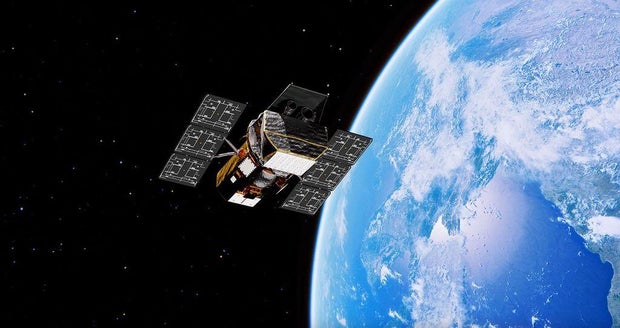
The Swift Observatory, a NASA telescope weighing approximately 1.5 tons, has returned to Earth. After being launched more than twenty years ago, efforts to save the telescope failed earlier this year. The observatory re-entered Earth’s atmosphere over North Sumatra in Indonesia at 7:39 a.m. ET, according to NASA. Most of it burned up during reentry, but some components might be found across different regions.
The observatory’s descent was tracked by NASA and the U.S. Space Force. NASA had estimated the reentry time to be near 3:30 a.m. EST on November 4, with an error margin of 11 hours. Despite the reentry, NASA had assured that the chance of harming anyone on Earth was low, estimating the odds at 1 in 2,100.
First launched on November 20, 2004, the Swift Observatory targeted massive galactic explosions, such as gamma-ray bursts and supernovas. Its name reflects its swift capabilities to redirect toward these occurrences. Although initially planned for a two-year mission, it operated until the previous month. Ultimately, solar activity nudged the telescope back down to Earth.
In a rescue attempt, NASA contracted Katalyst Space in July to push the telescope back into orbit using Link, a three-armed robot. However, the mission faced challenges when the robot could not get within seven miles of the telescope. The robot itself fell back to Earth in September. By August, it was decided to let the Swift Observatory return to the surface.
The observatory continued collecting data until late October when NASA assessed that it was too low to stabilize. It was shut down then. During its mission, the Swift Observatory observed over 2,000 gamma-ray bursts and 1,400 exploding stars. It played a crucial role as an initial alert system for the Hubble and Webb space telescopes.
Swift has broadened our understanding of a wide variety of cosmic objects and events, from active galaxies powered by supermassive black holes and stars undergoing X-ray flares, to supernova explosions and comets and asteroids in our own solar system,NASA highlighted this in a blog post.
Scientists are considering how to continue the observatory’s work. John Nousek from Pennsylvania State University mentioned that they were aware Swift would eventually return. He expressed hope that Swift’s successes could pave the path for future space missions.