Agility Robotics Makes Humanoid Robot Public Debut on Wall Street
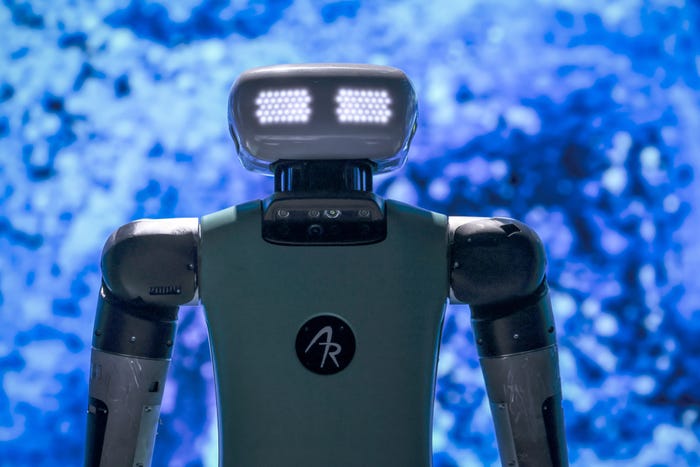
Agility Robotics is set to transform the Wall Street landscape as it becomes the first company in the United States to publicly focus on humanoid robots. The Oregon-based company, known for its two-legged robots used in factories and warehouses, will begin trading on Nasdaq, signaling a significant moment for the industry.
Last year, Agility Robotics generated $1.8 million in revenue but reported a net loss of $138.1 million. This reflects the distance the humanoid robotics industry needs to cover before achieving profitability. More than half of the revenue originated from five robots sold to an investor.
Agility is going public through a merger with Churchill Capital Corp XI, a special-purpose acquisition company (SPAC) led by former Citigroup executive Michael Klein. This merger was completed, and the company will trade under the ticker AGLT.
There’s something to be said for being first,said Agility CEO Peggy Johnson, who previously held leadership roles at Magic Leap, Microsoft, and Qualcomm. She noted that going public would allow Agility to set vital metrics for what customers need in humanoid technology.
The merger values Agility’s existing equity at around $2.5 billion, and the company expects approximately $465 million in capital before expenses, with $100 million already secured.
SPAC mergers saw a spike in popularity in 2020 and 2021 but declined as interest rates increased in 2022. However, there is a renewed interest with the recovering IPO market. Agility’s decision to opt for a SPAC merger was influenced by Michael Klein, who has experience with similar ventures, including those backed by Sam Altman and Lucid.
Agility Robotics’ devices, especially its humanoid robot, Digit, have been deployed in nine different customer facilities. Notable clients include Amazon, Toyota, and GXO. The company’s investors are giants like Amazon, Foxconn, Nvidia, and SoftBank.
Despite its losses, filing records indicate that $38 million of Agility’s $138.1 million net loss stemmed from non-cash expenses linked to employee stock awards. The company utilized $99.8 million in cash to maintain operations in 2025.
Michelle Sun, a robotics analyst, pointed out that there are numerous challenges in achieving unit economics. Agility remains optimistic about its latest model, Digit 5, designed to work safely among humans without prior safety barriers.
The company boasts orders exceeding $300 million for 1,000 robots from a single client. These orders are conditional on Agility meeting its timelines and delivering products with the specified features. They aim to start deliveries in the first half of 2027, with full availability by the end of the year.
Agility Robotics’ public listing exposes a notable valuation gap among humanoid robotics companies. Despite a $2.5 billion valuation, it falls below private competitors like Figure AI, Apptronik, and Neura Robotics. Tesla’s humanoid project, Optimus, remains without a standalone valuation.
Chowdhury highlighted a trend of market valuation favoring companies with current hardware shipping over those relying on future promises. Sun added that Agility’s public profile would serve as a benchmark for how the markets assess companies making humanoid robots, a topic mired in controversy.
Agility’s public entry occurs as U.S. policy becomes more restrictive toward foreign-made robots. The FCC recently banned new foreign-made advanced robotic devices, including humanoids, benefiting domestic manufacturers like Agility.
The humanoid market is predominantly occupied by Chinese firms, which accounted for the majority of shipments last year. Companies like Unitree have a substantial market presence.
It’s good for the US to show strength in this area,CEO Peggy Johnson commented regarding the industry presence in the U.S.