Vulnerability in PHP Exposes Web Servers
PHP2Shell, a notable pair of vulnerabilities, has become a major concern for cybersecurity experts. PHP, the programming language driving about 70% of websites, has had these vulnerabilities since 2012. A researcher utilizing an OpenAI model discovered the issue. PHP’s maintainers released a patch on Oct. 21, but attacks had already started. Only servers with the patch are protected.
AI now has the power to understand a patch and determine how to exploit the vulnerability it addresses. This task previously required the expertise of intelligence services or elite hackers. The defenders are lagging behind. Qualys reports 167 million PHP installations, with only about one in a thousand updated 12 hours post-disclosure. Delays can last weeks.
On Oct. 27, Anthropic’s Claude model crafted an exploit targeting Linux servers through a vulnerability in handling network connections. Linux developers fixed this on Oct. 5, yet by Nov. 2, Ubuntu had not distributed the fix. Unpatched vulnerabilities often lead to significant attacks.
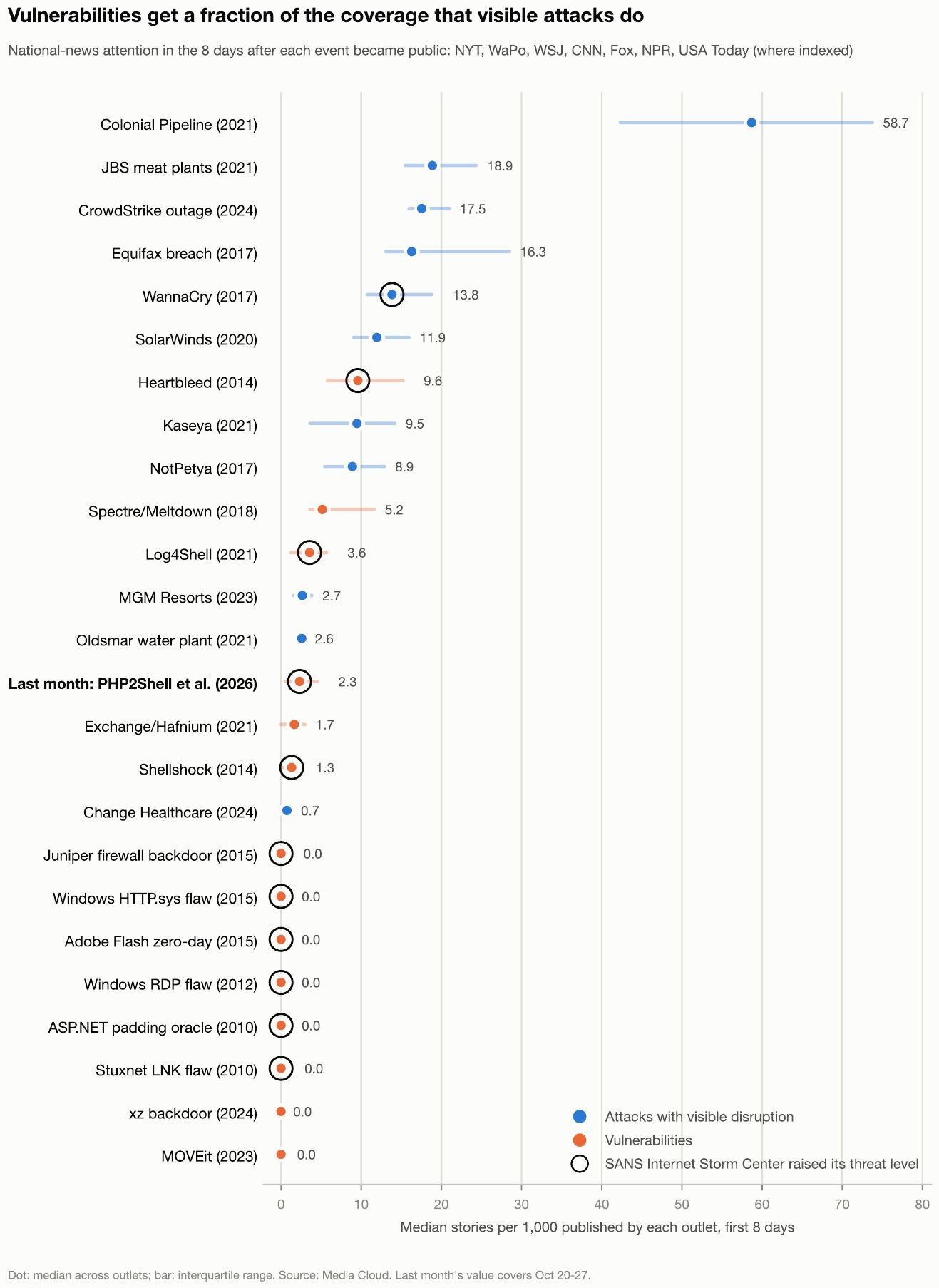
In March 2017, Apache Software Foundation patched a vulnerability in Struts. Equifax failed to install the patch, leading to a data breach affecting 147 million Americans. Using Media Cloud, the coverage of 25 significant cyber events, including the Struts patch, was measured. National media outlets did not report on the patch promptly. Equifax’s breach got more attention, with a median of 16 stories out of every 1,000 published.
The focus tends to be on the impact rather than prevention. In Media Cloud’s October index, only nine out of 5,610 stories mentioned PHP2Shell or other vulnerabilities. Some vulnerabilities matter significantly, with the Storm Center noting 10 critical events from 2010 to 2021, where 60% received no media coverage.
Powerful AI systems have increased vulnerability discoveries. Fixing them would enhance safety, but in the short term, they create opportunities for attackers. The public deserves notices similar to hurricane watches. CISA should issue alerts when critical vulnerabilities are identified, and media should cover these as they do with recalls.
The upcoming Congress will determine how AI progress is managed, allocate funds for warnings, and decide liability for unpatched systems. AI companies are also warning about the escalating risks. Jason Clinton of Anthropic highlighted the worsening situation, prompting security leaders to seek immediate assistance.
While AI reshapes security threats rapidly, the responsibility to respond lies with lawmakers, corporate boards, and the public. Unawareness prevents effective risk assessment. Equifax had time to react, but PHP2Shell targets faced attacks prior to the patch. Like a hurricane watch, we must inform the public before breaches occur.
Opinions expressed in Fortune.com commentary pieces represent their authors’ views and not necessarily those of Fortune.