AI’s Influence on the Legal Field: Insights from Attorney Alex Spiro
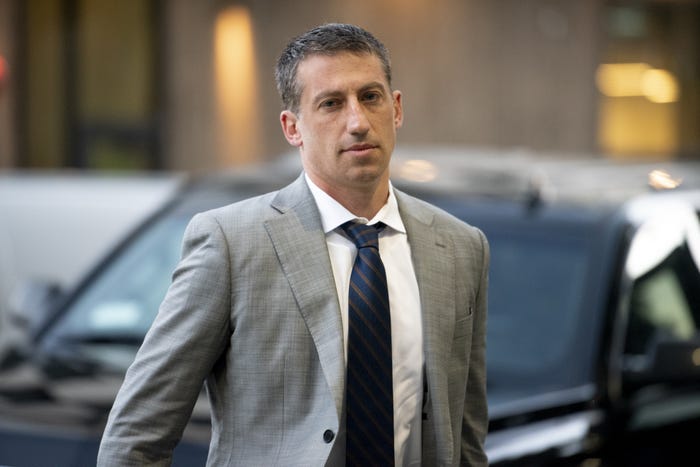
High-profile attorney Alex Spiro, a partner at Quinn Emanuel Urquhart & Sullivan’s New York office, spoke about the impact of artificial intelligence on the legal industry. During a recent appearance on the tech talk show TBPN, Spiro suggested that AI could streamline legal processes by eliminating unnecessary steps, leading to quicker settlements or trials.
Spiro, known for representing high-profile clients such as Elon Musk, Alec Baldwin, and Jay-Z, discussed the potential for AI to help lawyers assess whether a case is worth taking to trial. He explained that AI tools could simplify the process of reaching the truth, thereby enabling more efficient decision-making on case management.
“AI will eliminate a layer of a lot of things, including my day job. And by eliminating that layer, it allows you to get to the truth and synthesize it faster,” Spiro noted. “If you can do that, then you can make quicker decisions on, this is something to resolve or this is something to go all the way on.”
According to Spiro, this advancement could result in fewer cases becoming bogged down in prolonged litigation. He believes that the reduction of ‘fat in the middle’ will lead to cases settling more swiftly or proceeding directly to trial.
Spiro suggests that the insights from AI could lead to an increase in trials. As attorneys gain the ability to analyze cases at a faster rate, it becomes clearer which cases are worth pursuing fully. He stated, “Maybe there are more trials because people just say, ‘Okay, we just did an analysis of these 10 cases. These nine should settle. This one shouldn’t. We’re going all the way.'”
While AI offers substantial benefits, Spiro maintains that it won’t alter his core approach to handling trials. He emphasized the importance of proven argumentative techniques in front of juries.
“I haven’t changed my approach to trying cases or how to present in front of a jury in 20 years,” Spiro explained. “There are argumentative techniques that work and some that don’t.”
The attorney observed that jurors remain consistent in their perceptions, regardless of AI advancements. He remarked that his communication style with jurors stays the same, but the process of gathering information could become more efficient.
When asked whether AI might lead clients to overestimate their legal knowledge, Spiro acknowledged that it’s a challenge he’s familiar with. “I represent almost exclusively clients that think they know more about the law,” he commented with a touch of humor.