Mississippi’s Election Challenges Highlighted in Tense Senate Race
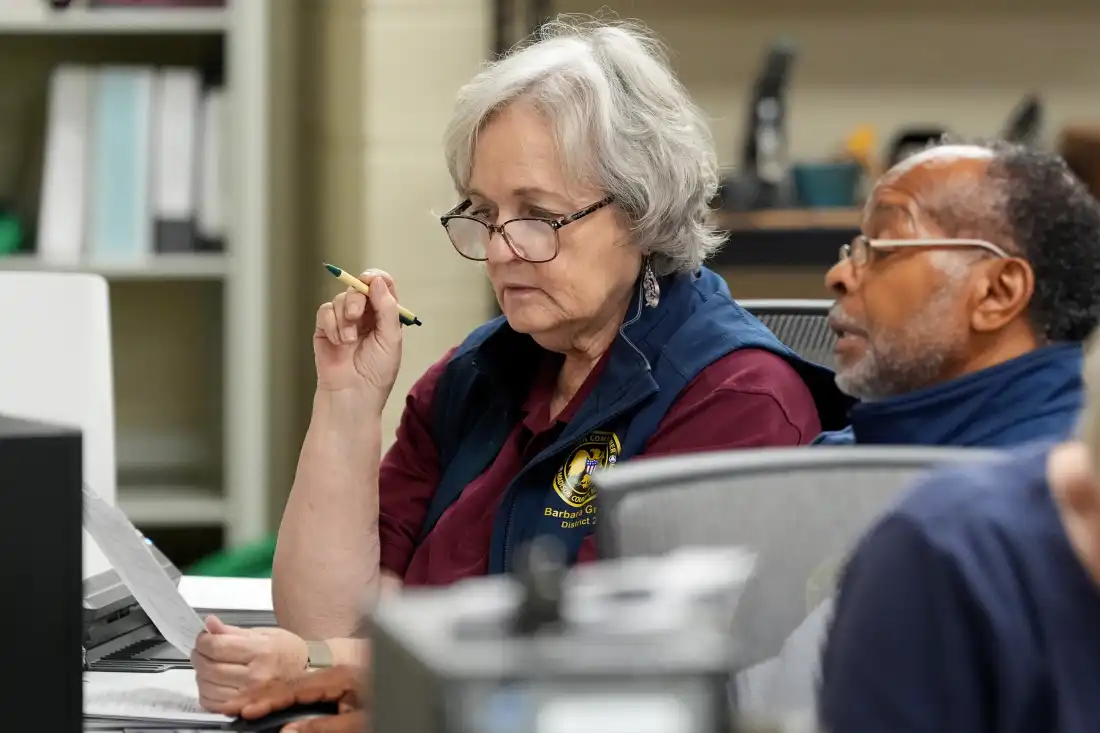
Two Madison County election commissioners reviewed an affidavit ballot envelope on Thursday in Canton, Mississippi. The intense U.S. Senate race between Republican Sen. Cindy Hyde-Smith and Democratic challenger Scott Colom has brought attention to Mississippi’s election processes. The decisive nature of this contest emphasizes the importance of each vote.
Currently, the vote count remains unfinalized, and the margin between the candidates is razor-thin. As of midday Friday, fewer than 2,000 votes separated them. However, clarity on the number of ballots remaining is lacking. The Colom campaign reported over 15,000 provisional ballots needing verification. Meanwhile, the state Republican Party estimated 20,000 outstanding ballots, which may include absentee votes postmarked by Election Day and accepted until November 10.
The state’s decentralized voting system adds to the complexity. Republican Secretary of State Michael Watson acknowledged that counties independently run elections, leaving even his office without a concrete count of outstanding provisionals. By Thursday, only about 7,000 provisionals had been processed, with around 80% accepted. Counties will remain the primary source of updates until results are certified.
Mississippi consists of 82 counties, each having until next week to submit election results to the state. Michael Morse, a law professor from the University of Pennsylvania, expressed surprise at the lack of clear information available for this significant race. He mentioned the difficulty in obtaining basic details about the process.
Provisional Ballot Rate
The provisional ballot rate, known locally as affidavit ballots, may rank among the highest nationwide this election cycle. These ballots are used for voters whose eligibility is uncertain, and their validity is determined post-election. If Colom’s estimate of 15,000 holds, these ballots would represent about 1.5% of the total Senate race votes, surpassing most states’ rates from 2022.
One reason for the high rate is Mississippi’s handling of voter registration. Unlike most states, Mississippi requires ‘inactive’ voters to vote provisionally. This group includes voters flagged for not participating in past elections or due to data suggesting ineligibility. These voters must complete additional forms, and local officials confirm their eligibility post-vote. The state’s use of credit data for list maintenance may also contribute to the high rate.
Reactions and Concerns
Despite this, Secretary of State Watson defended the state’s registration process, arguing that the time needed for affidavit ballots ensures voter roll integrity. In contrast, Kathy Boockvar, a former Democratic Secretary of State from Pennsylvania, criticized the system for breeding distrust among voters. Boockvar highlighted the difficulty in accessing information, underscoring Mississippi’s lack of prior attention as a battleground state.
She emphasized the importance of transparency and data as solutions to address voter suspicion and mistrust. With the results pending, Mississippi’s election processes remain scrutinized as they navigate this significant race.