Exploring the Mysteries of Edgar Allan Poe and Arthur Conan Doyle
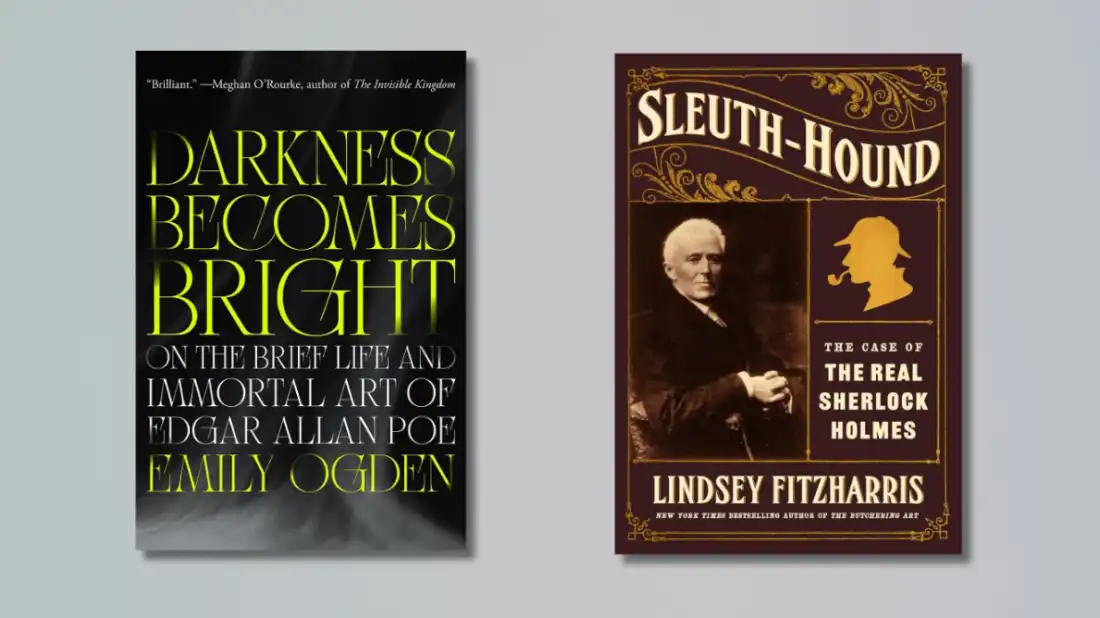
Edgar Allan Poe, a fascinating literary figure, continues to pique curiosity. Born in Boston in 1809 to actor parents, Poe was orphaned young and taken in by the affluent Allan family in Virginia. His life was brief and troubled, ending mysteriously at the age of 40. Despite his short lifespan, Poe left a rich legacy of essays, haunting poems, and short stories.
Poe is credited with inventing the detective story. Yet, the greatest mystery he created may remain unsolved: the source of his extraordinary talent and its enduring appeal. Many have tried to unravel this enigma without success. Had he spoken about it, Poe might have approved Emily Ogden’s new book, Darkness Becomes Bright: On the Brief Life and Immortal Art of Edgar Allan Poe. Ogden, a professor at the University of Virginia—Poe’s alma mater—was captivated by Poe’s work while teaching it.
“This is a book about Edgar Allan Poe,” Ogden explains. “But as much as it is about Poe himself, it is about Poe’s followers and fellow travelers: those of us who … have let him be our guide into the darkness.”
Ogden’s book combines biography, exploration of Poe’s influence on others like translator Charles Baudelaire, and personal reflections on how Poe’s work occupies her thoughts. Darkness Becomes Bright is framed by a true event from the diary of John Sartain, a friend of Poe’s and a Philadelphia engraver. In 1849, a distressed Poe sought Sartain’s company for a “midnight ramble” to the Fairmount Water Works. There, Sartain prevented Poe from jumping into the Schuylkill River.
Ogden delves into how Poe’s creations emerged from his personal struggles. Sir Arthur Conan Doyle revered Poe’s detective fiction, declaring it unsurpassable. Doyle wrote, “Poe was the father of the detective tale,” and claimed Poe had defined the genre’s boundaries completely. Despite this, Doyle produced his first Sherlock Holmes story, A Study in Scarlet, in 1887 to supplement his income, followed by 59 more adventures. Holmes and Dr. Watson gained legendary status, inspiring readers to send letters to their fictional residence, 221B Baker Street.
Doyle’s characters have been extensively studied, yet author and medical historian Lindsay Fitzharris offers fresh perspectives. Her book Sleuth-Hound: The Case of the Real Sherlock Holmes examines the influence of two real doctors: Joseph Bell, known for his keen diagnostic skills, and early forensics pioneer Henry Duncan Littlejohn. Both impacted Doyle, a medical student at Edinburgh’s Royal Infirmary, inspiring the creation of characters like Holmes and Dr. Watson.
Fitzharris illuminates Bell’s collaborative investigations with Littlejohn, who tackled some of Scotland’s gruesome crime cases. She even suggests possible connections to the Jack the Ripper case. Alongside these stories, Fitzharris provides engaging histories of fields like toxicology, anesthesiology, and public health.
These books reveal new facets of well-known figures. As Poe’s “The Purloined Letter” illustrates, sometimes important details are hidden in plain sight, awaiting discovery.