Rising Stars at the 2026 French Open
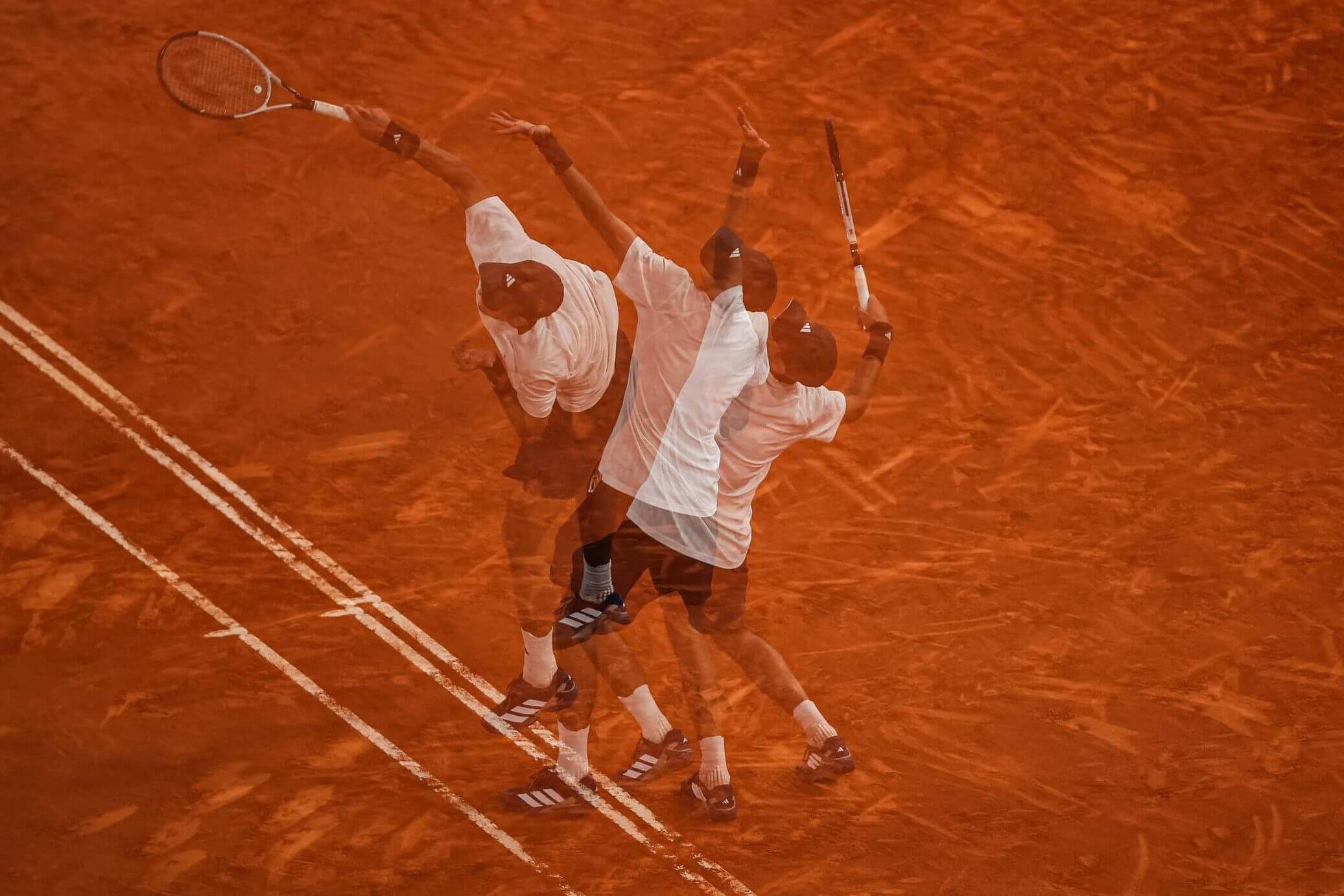
The 2026 French Open showcases new talent in the world of men’s tennis, despite notable absences like Carlos Alcaraz, who is sidelined by a wrist injury, and Jannik Sinner, who exited early due to health issues. These players have influenced a new generation that is eager to prove its worth on the courts.
Among these promising players is João Fonseca, a 19-year-old Brazilian, who impressed Novak Djokovic with his dynamic playstyle. Rafael Jódar, also 19, displays an aggressive game, diving for shots with a mix of influences from Alcaraz and Sinner. Then there is 17-year-old Moïse Kouame from France, who wields a powerful forehand and backhand, representing a blend of styles from past greats.
New Era of Tennis Players
These young talents form a wave of competitors inspired by previous stars like Rafael Nadal and Roger Federer. Jódar acknowledges Rafael Nadal as a childhood inspiration, while he credits Alcaraz with influencing his professional approach. Kouame, interestingly, named Petra Kvitová as a personal favorite early on.
Overcoming trails led by the ‘Big Three’ — Federer, Nadal, and Djokovic — has been a tall order. Players like Félix Auger-Aliassime, 25, and Casper Ruud, 27, describe how the game’s evolution has introduced new challenges. The strategies once honed under the chess-like precision of past champions have been quickly outpaced by the speed and power brought by Sinner and Alcaraz.
In a sport where adaptability is crucial, the current environment demands that even experienced players must grapple with changes. For instance, Alexander Zverev and Daniil Medvedev briefly shifted tactics to meet new demands but the new crop of players is pushing the envelope further.
Traits of the New Generation
Fonseca, Jódar, and Kouame’s playing styles reflect their mentors. Fonseca’s forehand is noteworthy, achieving a remarkable 81 mph, with rotations per minute (RPM) significantly higher than tour averages. Jódar’s game similarly combines aggression with consistent power. Their ability to transform defense into attack is setting new standards.
The swift evolution of these players is exemplified by Jódar’s rapid ascent from a ranking below 700 to now placed among the top 40 globally. Fonseca’s playing strategy emphasizes ‘aggressive with margin,’ allowing him to conduct points effectively, even against seasoned opponents like Djokovic.
Challenges and Prospects
This influx of youthful talent is marked by resilience as seen in cases like Jakub Menšík, who overcame physical strain to achieve victory in Paris. Similarly, Learner Tien and Alex Michelsen demonstrate the relentless spirit that typifies this new wave.
Tien highlights the collective mindset among young players who believe in their capability to challenge established names. Michelsen points out the overall completeness of players like Jódar and Menšík, emphasizing inspired approaches derived from watching past legends.
Fonseca faces Ruud next, while Jódar and Menšík continue their journeys by taking on seasoned competitors. These matches pit different tennis generations against each other, underscoring the evolving nature of the sport.