The Process and Challenges of Forming Israel’s Next Government
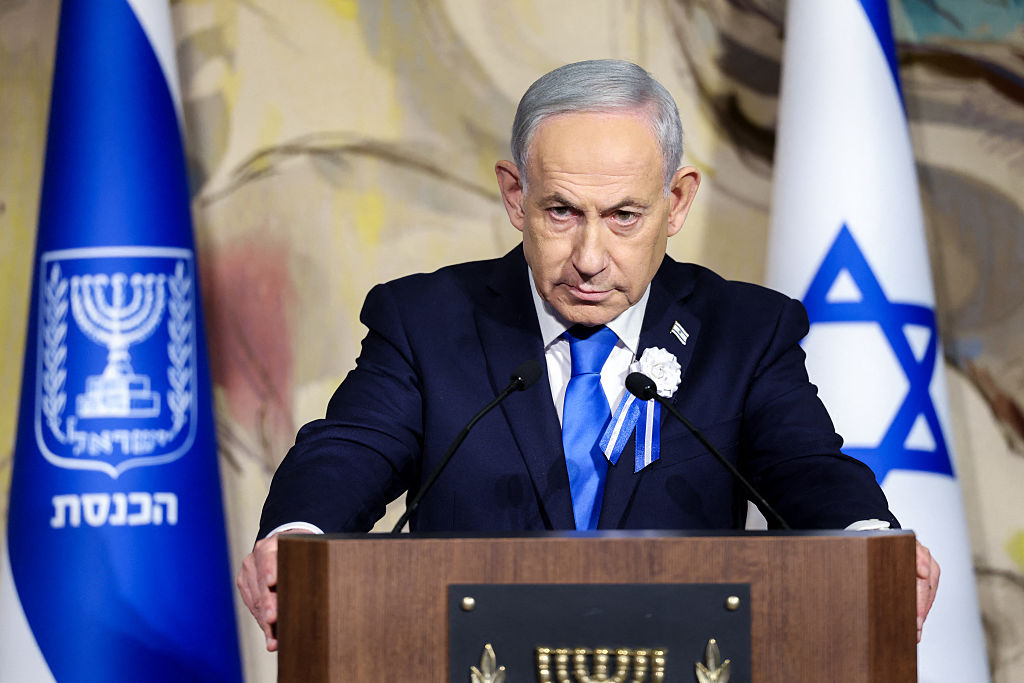
Israeli President Isaac Herzog recently tasked Gadi Eisenkot, former military chief and leader of the center-right Yashar party, with the responsibility to form the next government. This marks the beginning of a complex process that could take several months and may leave Benjamin Netanyahu in power for the time being.
The Formation Process
Herzog gave Eisenkot 28 days until December 6, with a possible 14-day extension, to assemble a government that can win the Knesset’s confidence. If successful, Eisenkot must notify the President and the Knesset, and a confidence vote is required within seven days to finalize the government.
To succeed, Eisenkot must unite rival political parties with differing policies and priorities to form a majority. Joining his coalition signifies supporting him as the Prime Minister, but he faces many hurdles to secure the required seats.
Election Results and Impact
In the recent elections, no party bloc achieved the 61-seat majority in the 120-seat Knesset. Consequently, the leadership remains undecided. Israel conducts Knesset elections every four years. Voter participation on Election Day is crucial and considered a public holiday. About 67,000 Israeli citizens returned to vote, as absentee exceptions are rare.
Voters cast votes for parties rather than individual candidates. Seats are allocated based on the vote percentage each party receives. Netanyahu’s Likud party, together with far-right and ultra-Orthodox allies, won 53 seats, while Eisenkot’s Yashar, along with allied parties, secured 48. Two Arab-led parties obtained 19 seats, a notable high.
The parliamentary system requires forming a coalition with at least 61 seats for governance. Netanyahu’s and Eisenkot’s blocs could each potentially form a majority by partnering with Arab-led parties. Another scenario involves the two blocs unifying, holding 101 seats, although this demands negotiation over the Prime Minister’s position.
Electoral bloc parties can negotiate separately. Eisenkot or Netanyahu might engage with one of the Arab-led parties independently. Parties within blocs generally share similar policy views, making alliances more seamless.
Recent announcements indicate the opposition bloc has agreed to appoint Matan Kahana and Avigdor Lieberman to significant parliamentary roles. This demonstrates an ambition to reshape parliamentary control and highlights a strategic opposition to Netanyahu.
President’s Role and Eisenkot’s Selection
The Israeli presidency is largely ceremonial, with significant influence after elections. The President consults party leaders to determine who is best placed to form a coalition. In this election, although Netanyahu’s party garnered the most votes, Eisenkot was chosen because 67 of the Knesset members favored him.
President Herzog’s selection of Eisenkot is not an endorsement but a recognition of his potential to unify differing parties, reflecting that more voters favored parties opposing Netanyahu.
Challenges for Eisenkot
Eisenkot’s path to government may involve gaining support from the Arab-led Joint List and Ra’am parties, yet some of his allies oppose collaborating with Arab-led parties. Historical reluctance from Arab-led parties to join coalitions adds complexity.
Despite this, external support from Arab-led parties without coalition membership could still provide a parliamentary majority. However, this method has proven unstable in past instances.
Inviting ultra-Orthodox parties is another option for Eisenkot, though these parties oppose mandatory military service for yeshiva students, which Eisenkot supports as a priority.
Netanyahu’s Position
As Eisenkot endeavors to form his coalition, Netanyahu remains at the helm of the outgoing government. He can attempt to form his coalition by swaying members who initially did not support him.
If Eisenkot does not form a coalition in time, Herzog might task another Knesset member with forming a government, potentially giving Netanyahu a renewed opportunity. In the absence of a successful formation, parliament dissolution and new elections are possible, an experience Israel has faced multiple times recently.
If given a chance, Netanyahu would likely seek support from right-leaning members of Eisenkot’s alliance. This outcome could hinge on leaders like Bennett and Lieberman and their prior collaborations with Netanyahu.
Ultimately, the decision may boil down to which compromise is more appealing―joining Netanyahu or collaborating with Arab-led parties.