Aspen Fire Department Embraces Drone Technology for Firefighting
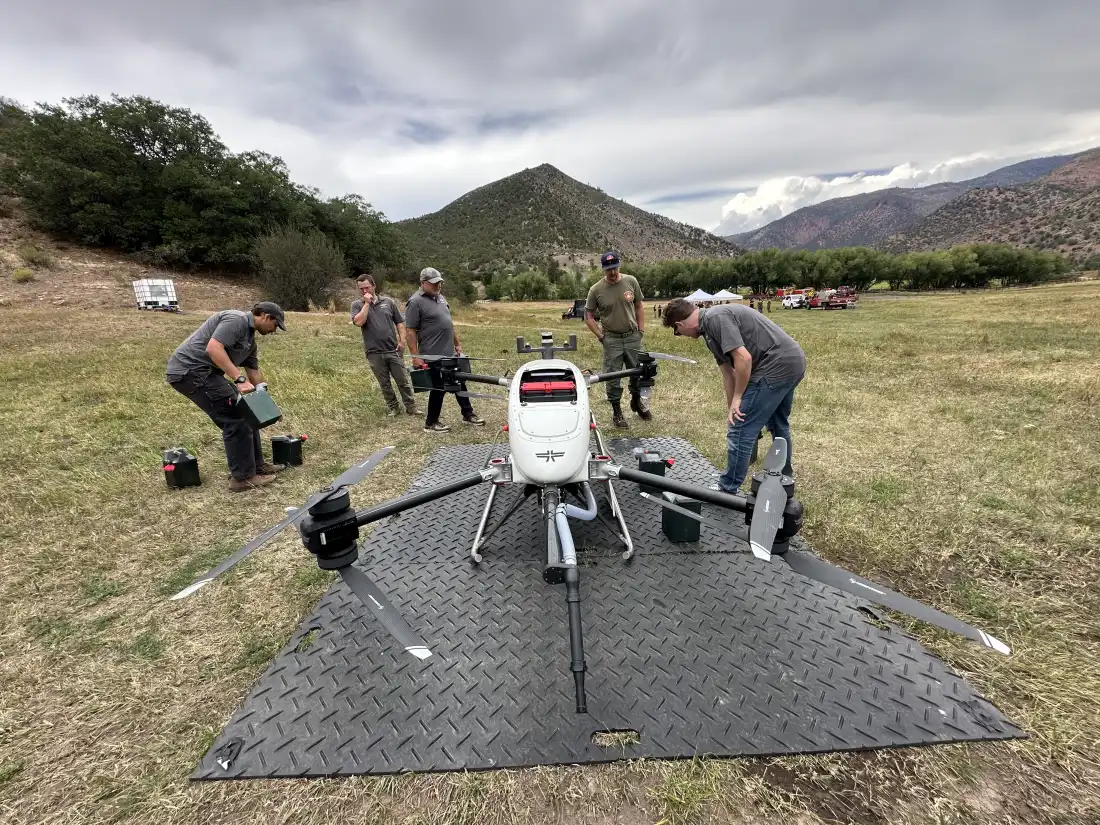
Firefighters in Aspen, Colorado, are receiving training to operate new drones developed by Seneca, a California-based company. These drones can carry and release fire-suppressing foam, offering a new approach to wildfire management.
On an unusual cloudy day in the Aspen mountains, firefighters gather around an iPad as they learn to operate a sizable drone. Resembling a large insect, the drone features propellers on four arms and measures about 10 by 12 feet. While drones have been used in wildfire monitoring for years, these new models incorporate AI to help extinguish fires.
Once training concludes, the Aspen Fire Protection District will be the first in the U.S. to operate these drones independently. Previously, they were only used in California with assistance from Seneca staff.
Swarm Technology for Firefighting
Seneca’s drones are designed to function in concert, akin to a small fire engine. They can collectively carry between 500 and 1,000 gallons of finished fire foam. Andy Fisher, deputy chief of Aspen Fire, mentioned the drones are straightforward to fly, quipping that even a 12-year-old could manage them.
Once launched next year, these drones will offer a strategic advantage. They can reach complex terrains, like those around Aspen, before firefighters arrive. The city is surrounded by forests and has limited evacuation routes, posing significant risks during wildfires.
Fisher believes deploying the drones promptly to contain fires while they are minor will be crucial to managing risk.
AI and Operational Efficiency
Seneca’s founder, Stuart Landesberg, emphasized the drones’ AI capabilities. These drones can navigate tricky terrain with ease and have a range of 5 to 10 miles, extending to 20 miles when not loaded. Their AI-driven sensor suite measures distance and wind speed to effectively release water or retardant.
Landesberg noted that while drones won’t replace large air tankers, they offer a cost-effective alternative for monitoring and managing fires, especially smaller ones.
Cautious Optimism and Funding
Aspen Fire will invest approximately $2.5 million over the next five years, supported by private donors. Other departments are observing Aspen’s experiences closely to evaluate the technology’s effectiveness.
Veteran firefighter Joe Stutler, although skeptical about the drones’ proven results, sees potential benefits, particularly for nighttime operations when traditional aircraft are grounded. However, he emphasizes the need for ground firefighters to complement aerial efforts.
The drones, having been put to the test in simulated burns, must still prove their worth in actual wildfire scenarios to convince skeptics like Stutler.
Regulatory and Operational Considerations
The FAA granted a waiver to Aspen Fire in late October. This allows drone operations up to 200 feet in Pitkin County, though operation over populated areas is restricted. Drones require direct visual oversight, with pilots in constant communication with observers in strategic locations.
If successful, Aspen Fire aims to expand operations and potentially assist in firefighting efforts across the state.