Analysis of The Good Daughter
The Good Daughter begins with a violent event typically reserved for climactic moments in thrillers. In a small Georgia town, two masked gunmen break into the home of a defense lawyer, targeting his wife and two daughters. This traumatic incident shapes the lives of the sisters as they grow up. Premiering on Peacock on November 12, the series front-loads this trauma, setting a foundation for numerous additional traumatic revelations across six somber episodes. The narrative is steeped in trauma, driving the story forward.
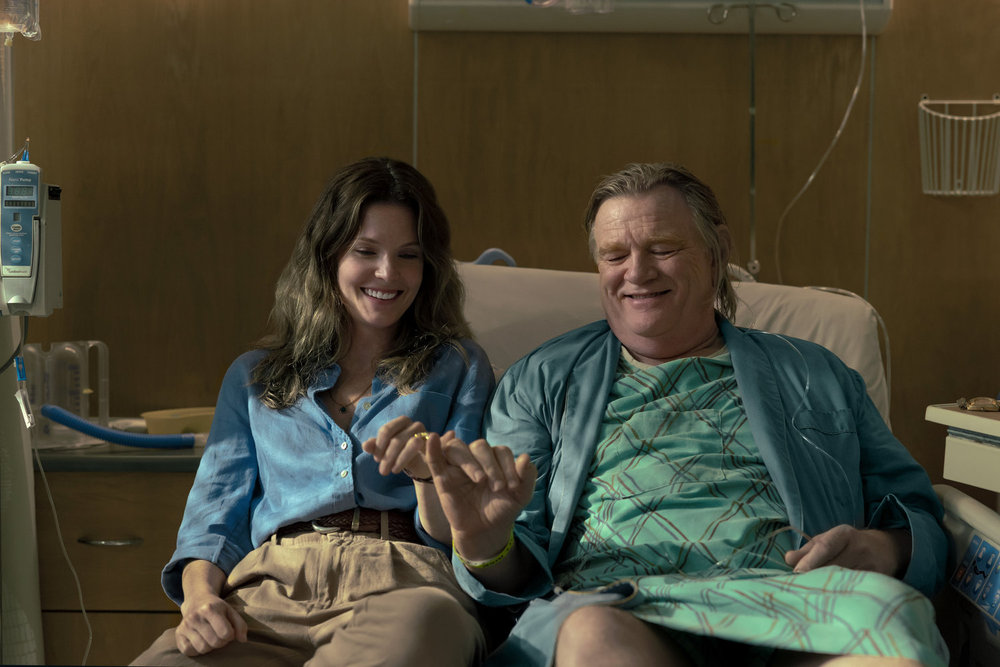
Years after this tragedy, Charlie Quinn, portrayed by Meghann Fahy, works as a lawyer alongside her father, Rusty (played by Brendan Gleeson). They are outcasts in their community, where Rusty faces blame for various perceived and real legal missteps. Rusty is portrayed as a sickly, aging figure with a taste for alcohol. Charlie, separated from her husband, wakes up with another man’s phone. When she takes the phone to his workplace—a high school where she endured a challenging past—she witnesses a deadly shooting. However, the supposed shooter, Kelly, a girl with learning difficulties, doesn’t fit the expected profile. Rusty sees an ideal client in her.
The plot thickens as Charlie’s estranged sister, Sam, played by Rose Byrne, returns home. Despite being a lawyer herself, Sam is a successful patent attorney—structured and affluent, contrasting her family. Byrne, along with Gleeson and Fahy, delivers strong performances, but the script relies heavily on contrived coincidences. For instance, a character’s untimely death borders on absurdity.
The narrative, based on Karin Slaughter’s 2017 novel and adapted for TV by Slaughter as a first-time showrunner, amasses a series of grim events as though ticking off misfortunes faced by women. While it addresses gender-based violence, the series offers little new in this well-trodden genre. Deeper questions, such as Rusty’s continued presence in a town that contributed to his family’s downfall, receive minimal exploration. The adaptation would have benefited from collaboration with another perspective in its storytelling approach.