Challenges in Addressing Iran’s Military Capabilities
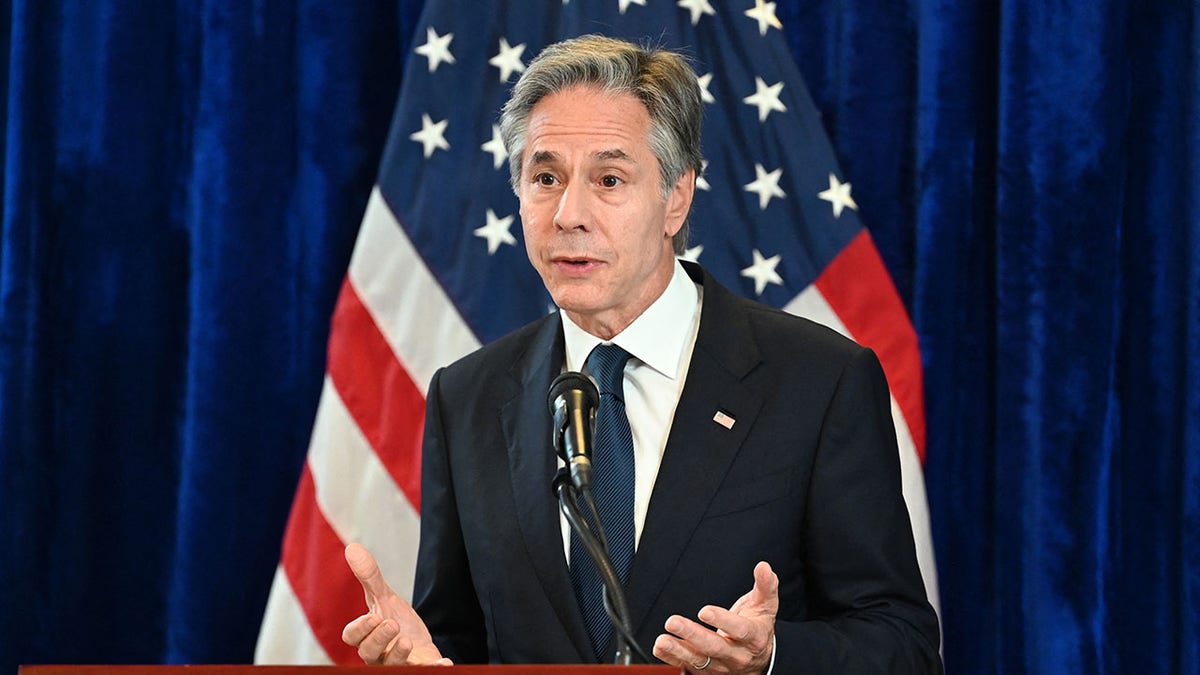
Former Secretary of State Antony Blinken expressed concerns on Saturday regarding the difficulties in countering Iran’s weapons capabilities through airstrikes alone. He emphasized that a U.S. ground invasion would be highly detrimental. In a speech at the Hindustan Times Leadership Summit in New Delhi, Blinken highlighted Iran’s vast territory and significant population of about 90 million people as key challenges to any military effort targeting its weapons arsenal.
“Iran’s ability to produce weapons deep within its territory shields them from straightforward elimination through airstrikes,” Blinken stated. “A land invasion might be necessary, which would be disastrous.”
The warning came prior to Iran’s claim of launching six drones at a U.S. military base in Bahrain. Bahrain’s air defenses successfully intercepted these drones, the first such defensive action since September. Iran’s Islamic Revolutionary Guard Corps attributed the drone launch to retaliate against “hostile US actions.”
The situation escalated further with ongoing unrest in Yemen, where Houthi forces progressed against Saudi-aligned troops. This raised fears of the conflict expanding throughout the region.
Blinken warned that despite the U.S.’s considerable military strength, Iran retains the means to broaden the conflict. “While the U.S. can intensify bombing strikes, Iran can target American bases, regional partners, or infrastructure,” he noted.
The former diplomat highlighted logistical issues, stating, “Iran’s coastline along the Strait of Hormuz complicates air-based military attempts. The country’s size and weapons facilities make airstrikes insufficient to dismantle military capabilities.”
Concerns about ground operations have also surfaced in Iraq. Iraqi officials resisted proposals for restricting trade across the Iranian border. Reports indicated Tehran’s worries that Iraq might be used as a launchpad for an American invasion into southern Iran.
Iraqi Foreign Minister Fuad Hussein expressed concerns in a France 24 interview, saying, “The region’s instability cannot continue forever. We’re either heading to peace or war.”
Given Iraq’s involvement in the conflict, Hussein emphasized Baghdad’s pursuit of diplomatic mediation, including talks with Iranian Parliament members. He rejected U.S. demands to close most Iraqi border crossings, calling them impractical and harmful to Iraqi people.
The U.S. Central Command expanded initiatives to disrupt Iran’s weapon transfers through Task Force Iron Gate. The task force will work with U.S. agencies to curb Iran’s transport of advanced weaponry and illicit revenue across borders and seas.