US Air Travel Faces Major Disruptions Amidst System Upgrades
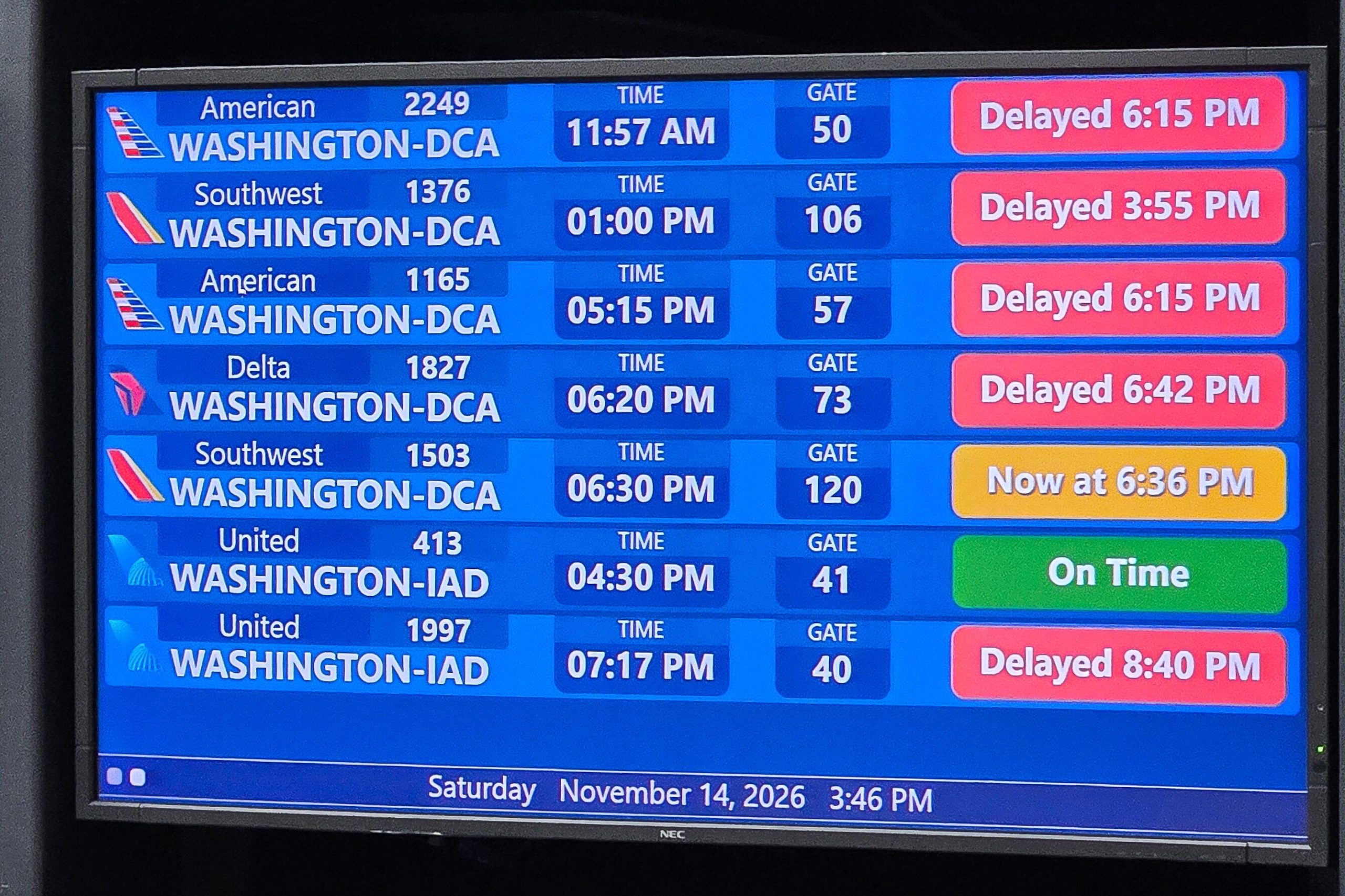
The United States experienced significant disruptions in air travel for three continuous days, with more than 5,200 flights impacted by Sunday. However, Transportation Secretary Sean Duffy remains optimistic, predicting that air travel will return to normal by Monday. Airlines are striving to restore schedules after a systemwide ground stop over the weekend.
Aviation data from FlightAware indicated that over 1,600 flights were canceled and nearly 3,600 were delayed on Sunday. On Saturday, more than 6,400 flights across the US were canceled, alongside over 8,000 delays.
Speaking on ABC’s “This Week,” Duffy denied any evidence of a cyberattack or malicious intent. The cause of the disruptions remains unknown, though he emphasized the Federal Aviation Administration’s (FAA) commitment to passenger safety. Duffy assured that the expectation is a gradual return to normal operations by Sunday, and a full recovery anticipated by Monday.
Impact on Airlines
JetBlue faced cancellations affecting 27% of its flights, while American Airlines saw 13% cancellations. Southwest, United Airlines, and Delta reported cancellations ranging from 3% to 5% of their flights.
On Friday, the FAA mandated a nationwide ground stop, halting nearly all departures for close to five hours. It marked the most extended halt since the post-9/11 clampdown on US airspace.
Airports across the country, such as Orlando International, displayed numerous delayed flights to cities like Washington, D.C., across airlines including American, Southwest, Delta, and United.
Technical Complications and Responses
The root of the problem relates to a new router installation by FAA contractor L3Harris. Officials reported that this led to a flood of data disrupting communication systems. Duffy noted the issue began with a recently replaced router in Amarillo, Texas, which overloaded routers nationwide.
The FAA has since disabled the functionality of the problematic routers and similar devices across the network. Yet, the specific cause of the maintenance problem remains elusive.
Duffy remarked that the worker responsible is a reputable veteran, dismissing any sabotage concerns. The routers installed in 2001 became outdated by 2006. As a solution, Duffy proposed a $50 billion upgrade request to Congress, a jump from the previous $30 billion proposal, following the 2025 approval of $12.5 billion for system enhancements.
Political Implications
President Donald Trump commented on the travel issues, urging Congress to accelerate funding approvals. Democrats gained control following the November 3 midterm elections, further impacting legislative dynamics.
Representatives Rick Larsen and André Carson, leading Democrats on transportation committees, expressed skepticism about the additional funding request. They highlighted that $11 billion of the $12.5 billion approved in 2025 remains unspent.
Duffy explained that the previously allocated funds are tied to specific spending and do not cover new software enhancements needed for airspace management.
Reported by Helen Coster and David Shepardson; Edited by Sergio Non and Will Dunham