Alaska’s Senate Race Hinges on Ranked-Choice Voting and Outstanding Ballots
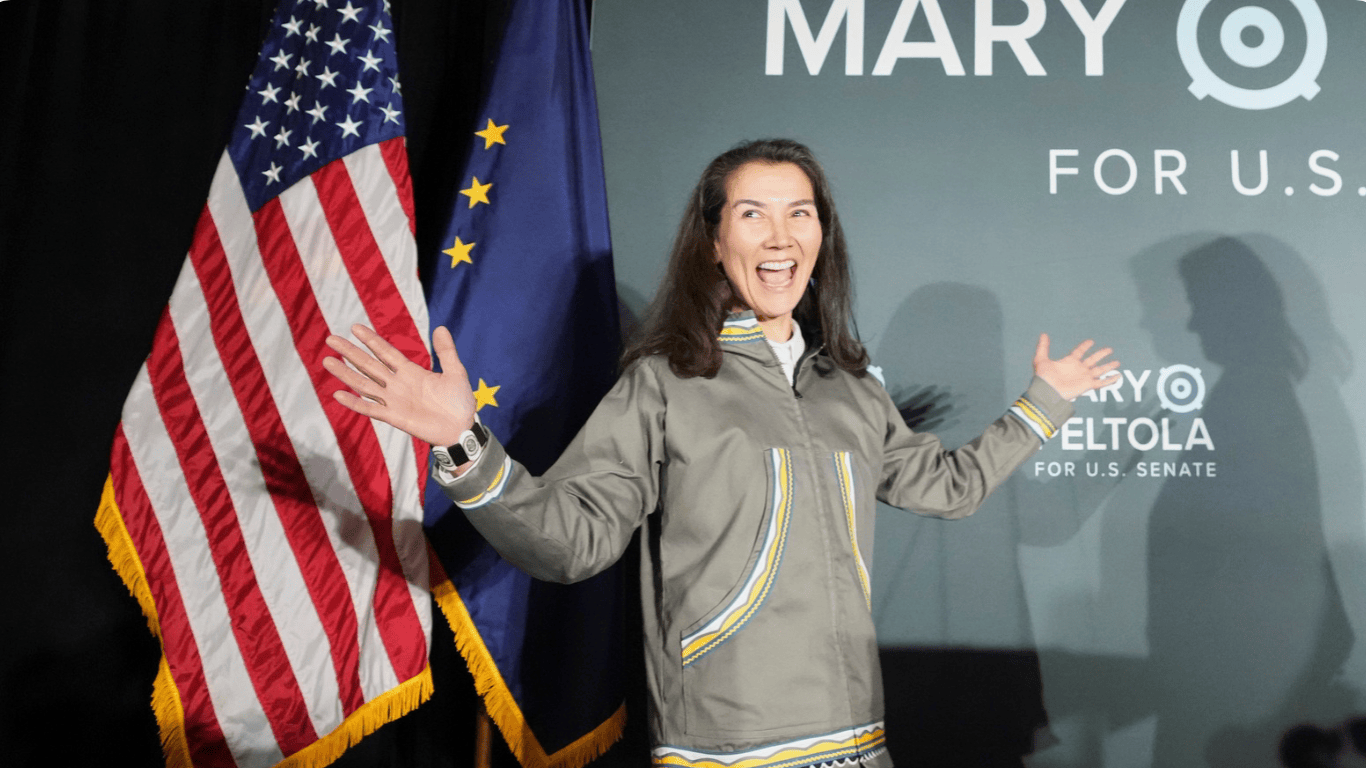
Alaska handles its vote counting slowly due to vast distances and its unique methods. In the current U.S. Senate race, Democrat Mary Peltola is close to a majority. She has 140,637 first-choice votes, accounting for 49.94%, while Republican Senator Dan Sullivan has 129,424 votes, or 45.96%. Republican Gerald L. Heikes and Daniel J. Sullivan Jr. have collected 6,002 and 4,652 votes, respectively. Write-ins account for 872 votes.
The Associated Press reports that 97% of the votes have been counted. The state waits to see if Peltola will secure the remaining votes needed for a majority. In Alaska, candidates must earn more than 50% of first-choice votes to win outright. Without such a majority, a ranked-choice voting process begins on November 18.
Understanding the Ranked-Choice Voting
If no candidate wins an outright majority, Alaska will eliminate the candidate with the fewest votes. The votes from the eliminated candidate then transfer to the next choice on those ballots until one candidate surpasses 50% or only two candidates remain.
The Arithmetic of a Majority
Mary Peltola needs to capture 52% of remaining votes to reach a majority. The exact number of outstanding ballots is not published, but estimates suggest several thousand still remain. This makes it possible for her to gain a majority with remaining votes.
Dan Sullivan, on the other hand, faces a challenge. He trails by 11,213 votes, which might exceed the number of remaining ballots. Every additional vote for him matters, especially in the ranked-choice process, highlighting the significance of voters’ preferences beyond their first choice.
Sullivan’s Path to Victory
For Sullivan, the ranked-choice voting provides an avenue if Peltola falls short of a majority. This election’s outcome partly depends on how voters ranked their choices. Analysis by Newsweek using RCTab shows Peltola with 51.83% of the votes to Sullivan’s 48.16%. This reflects the scanned ballot records and not the state’s official count.
Competing Certainties and Lingering Questions
Peltola’s campaign is optimistic about her victory, citing a lack of mathematical paths for Sullivan. However, Sullivan’s campaign remains hopeful, awaiting a full count of votes.
The involvement of Daniel J. Sullivan Jr., a candidate sharing the senator’s name, added a layer of complexity. Allegations suggested Sullivan Jr.’s candidacy aimed to split votes, though he asserts independence from any influence.
Next Steps in the Election
Ballots from overseas must arrive by Wednesday to count in this election. If no outright winner emerges from initial counts, the ranked-choice process begins. On November 25, Alaska plans to certify the election results.
The outcome in Alaska is pivotal. Democrats have already secured Congress, but a Peltola win would end a Republican hold over the Alaska Senate seat since 2014.