Diplomatic Moves Amidst Tensions
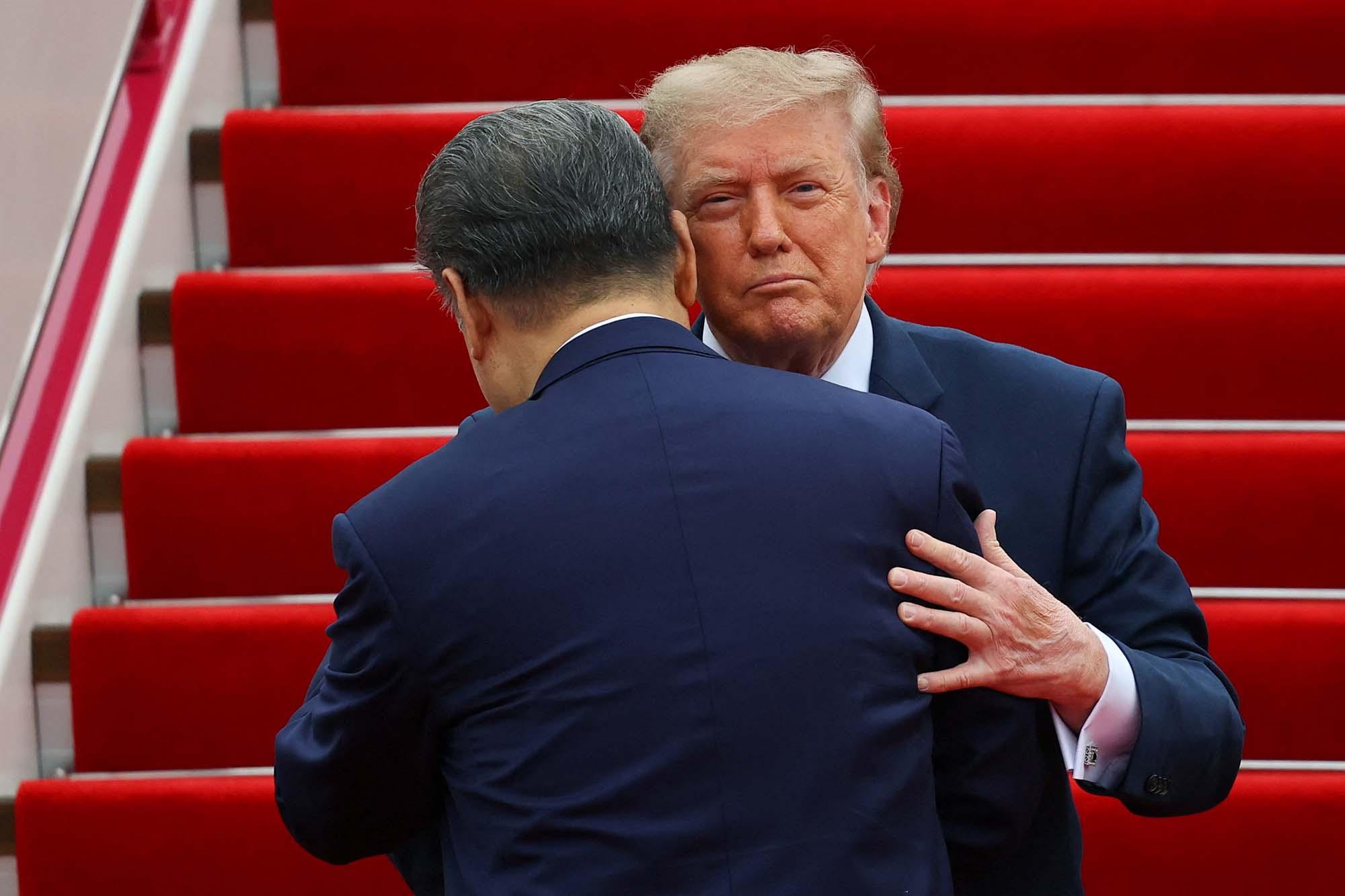
Chinese President Xi Jinping recently extended a rare gesture by welcoming President Donald Trump with a hug at Shenzhen Airport. This event coincided with Trump’s visit to China for the Asia-Pacific Economic Cooperation (APEC) Leaders Summit. Such a greeting prompted reactions from the media, who questioned the nature of Trump’s diplomacy.
Strategic Moves Before the Summit
In the days leading up to the China summit, President Trump took decisive actions:
- He signed a trade agreement with Thailand, allowing American goods to enter Thailand without duty. Additionally, this agreement addressed issues concerning Chinese goods being laundered through Thailand to avoid tariffs.
- Trump reaffirmed the United States’ commitment to the 1951 Mutual Defense Treaty with The Philippines.
- He announced joint anti-submarine patrols in the South China Sea involving Australia, Japan, India, and the US.
- The Commerce Department restricted sales of high-end chips to China and Southeast Asia, except under strict transshipment rules.
Challenges with China
Despite diplomatic gestures, Trump’s approach towards China remains wary. Xi Jinping is seen as untrustworthy, with China breaking agreements on trade and failing to fulfill commitments on rare earth shipments and agricultural purchases.
In addition to trade issues, the flow of fentanyl precursors from China to cartel labs highlights significant broken promises. US concerns also extend to cyberattacks and cybertheft linked to China, as well as China’s support for North Korea and covert arms shipments to Russia and Iran.
Balancing Diplomatic Relations
Within the Trump administration, differing views exist regarding cooperation with China. Although some, like Secretary of Commerce Howard Lutnik, believe in broad collaboration, Trump’s actions suggest a strategic positioning. He aims to manage global relations with caution.
In summary, Trump’s diplomatic engagement with China is marked by dual strategies of engagement and vigilance, reflecting ongoing geopolitical dynamics.