The Legacy of Garrett Brown and the Steadicam
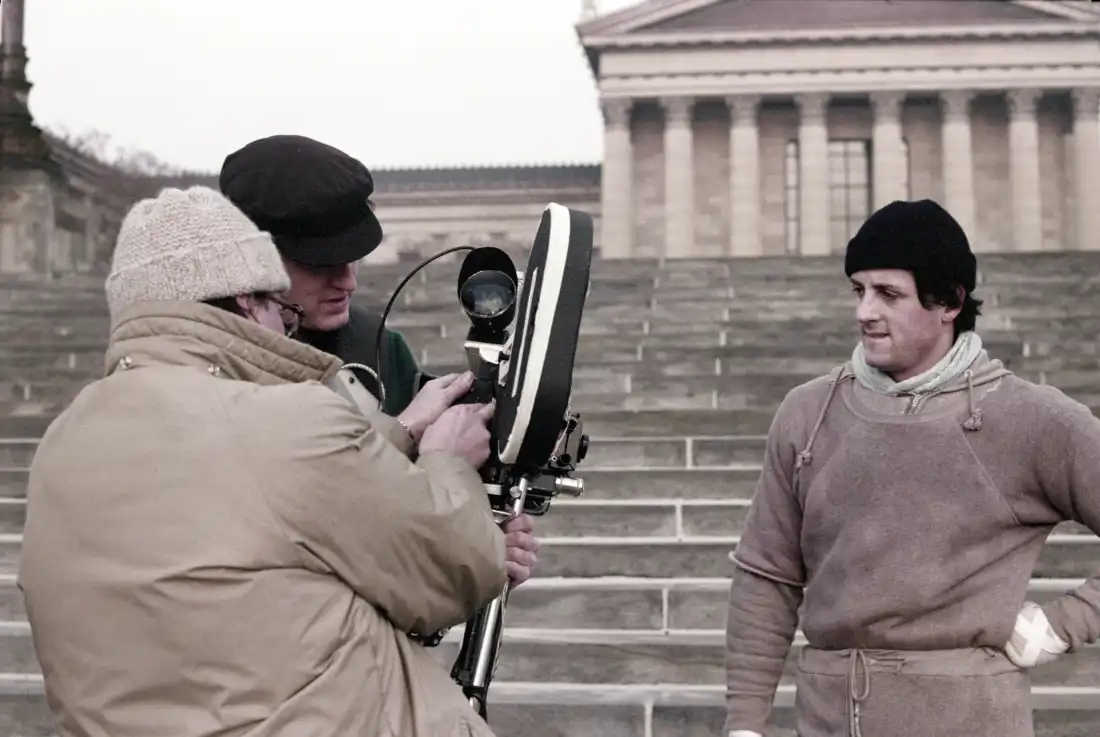
Sylvester Stallone’s iconic film Rocky achieved glory by winning Best Picture at the 1977 Academy Awards. The movie’s memorable scenes feature Rocky Balboa’s intense training montage. He runs through trainyards, busy markets, and along a jogging path. His regimen includes punching speedbags, doing push-ups, sit-ups, absorbing blows to the stomach, and hitting frozen meat with his fists. The iconic scene culminates with Rocky’s triumphant run up the Philadelphia Art Museum steps, ending with him raising his arms in victory.
A New Film Celebrating Garrett Brown
The new film I Play Rocky delves into the story behind Stallone’s writing and acting achievements. It also pays tribute to the film’s original cinematographer, Garrett Brown. Brown invented the Steadicam, which remains a vital tool in modern filmmaking. In Rocky, Brown utilized this technology inside the boxing ring, in the meat locker, and while running the steps with Rocky.
He’s not just holding a camera, he’s telling a story,said director Peter Farrelly about Brown.
The smooth camera operations by Brown captured those exhilarating moments with precision. His technique brought the audience closer to the action.
The Invention and Impact of the Steadicam
Brown’s invention consisted of a harness and a gimbal, facilitating smooth filming. His Steadicam earned him an Oscar in 1978. Brown later expanded his innovations with the Skycam for live sports, and the Mobycam and Divecam for underwater events. Yet, his journey began in music, performing in a duo before shifting to filmmaking.
Innovations Beyond Film
Brown began by producing content for Sesame Street and commercial shoots. Discontent with cumbersome dollies and jerky handheld cameras, he designed a more practical device. In a hotel room in 1974, he developed the initial Steadicam sketch. This innovation revolutionized film shooting, making previously difficult shots possible.
From Test Shots to Hollywood
Brown’s test shots around Philadelphia impressed filmmakers. His work in Bound for Glory and the legendary steps sequence in Rocky became transformative in cinema. Brown’s Steadicam work continued in major films like Return of the Jedi and The Shining. He compares the Steadicam’s stabilization to the human eye’s stability aided by the inner ear, emphasizing the smooth, natural visuals it can achieve.
Despite advances in technology, Brown asserts that the skilled operation of the Steadicam by humans remains irreplaceable by AI.