Nvidia’s New AI Chips Set to Transform Personal Computing
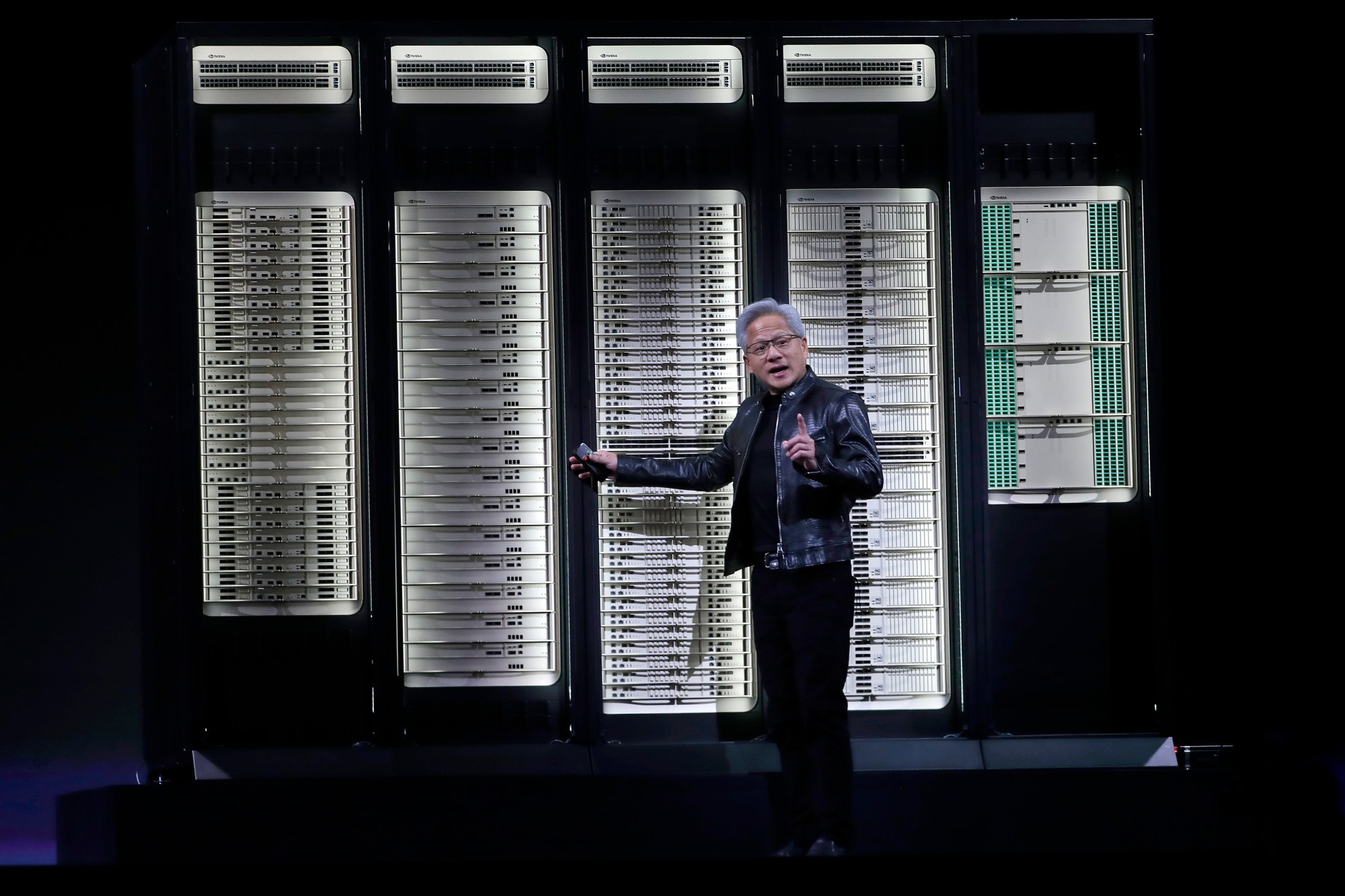
Jensen Huang, CEO of Nvidia, presented at the Computex 2026 exhibition in Taipei, Taiwan. Nvidia introduced advanced chips designed to integrate artificial intelligence into laptops and desktop computers. These innovations will appear in new PC models from brands like Microsoft and Dell by the end of the year.
Nvidia, headquartered in Santa Clara, California, has found success with high-end chips for data centers amidst the AI demand boom. The company now aims to expand across AI systems and products. Huang described “reinventing the PC” in his keynote speech at the Nvidia GTC event.
He introduced the RTX Spark superchip, combining CPU and GPU capabilities. This chip will power new laptops and desktops, referred to as “AI personal computers,” debuting in the fall. Nvidia, now the world’s most valuable company, is ahead of giants like Apple and Microsoft, positioning its superchips against rivals such as Intel and AMD.
Nvidia’s stocks increased nearly 4% in early U.S. trading, while Intel and AMD saw over 3% declines. According to Huang, these innovations are tailored for creation and gaming. He emphasized AI agents that understand and assist users through human-like interactions.
“When it has an autonomous (AI) agent, an agent that’s helping you, that understands you, you could talk to it,” he stated.
Microsoft added that PCs running on the RTX Spark would support complex AI models and workloads. Nvidia highlighted that these computers could operate AI agents locally. Huang emphasized this as a game-changer in PC innovation over the last 40 years.
Omdia’s chief analyst, Lian Jye Su, noted the significance of Nvidia’s move amidst growing personal AI agent demand. Analyst Neil Shah from Counterpoint Research sees Nvidia’s announcement as a driving force for AI applications at home, envisioning an “AI supercomputer” in each household.
Additionally, Nvidia’s new Vera CPUs for data centers are slated as major growth drivers, according to Huang. Early adopters include Anthropic, OpenAI, and SpaceXAI. Huang also unveiled a humanoid robot blueprint, particularly relevant for higher education research. The “Isaac GR00T,” a six-foot humanoid, features dexterous five-fingered hands from Sharpa, enabling precise movements.