The Persistent Tension Between American Profanity and Censorship
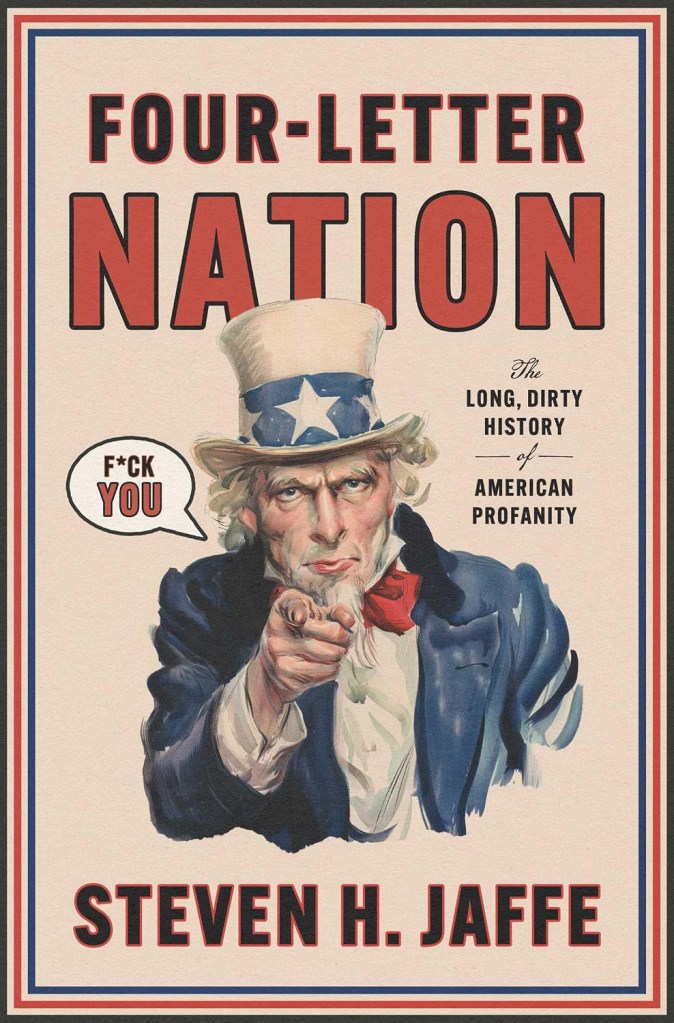
In 1665, John Porter Jr., the son of a Puritan farmer in Massachusetts’s Essex County, faced the Quarterly Court. He was accused of disrespecting his parents. Historian Steven H. Jaffe discusses this event in his book, Four-Letter Nation: The Long, Dirty History of American Profanity, published by Simon & Schuster. Porter’s crime involved calling his father a ‘s–t-a-bed’ and his mother a ‘ram bugger.’ Though sentenced to death, his mother pleaded for clemency, saving his life. The court imposed a fine of two hundred pounds, equivalent to about $50,000 today. He was also required to stand on a ladder at the gallows for an hour with a rope around his neck. This punishment was meant to humble him.
Jaffe’s book explores America’s penchant for profanity and attempts to suppress it. He states, ‘We’ve always cursed from the start of the Thirteen Colonies, and we’ve always had people trying to silence our curse words.’
The colonists from 17th-century England brought with them an array of impious and provocative words. These terms expressed shock, defiance, and joy. Yet, Puritanical beliefs frowned upon such language. Profane or vulgar words were seen as irreligious and uncouth. For many generations, purity of language was linked to godliness and decency.
In 1662, English immigrant Thomas Baker was taken to court in Charles County, Maryland. His graphic descriptions of neighbors’ genitalia caused outrage. The court ordered him to apologize on bended knee and pay the lawsuit costs.
Over the years, America has both embraced and adapted its use of profanity. During the Civil War, phrases like ‘kiss my ass’ gained popularity. President Abraham Lincoln once remarked, ‘the Southern Confederacy can kiss my ass’ when victory seemed near.
New curse words emerged over time. For example, in 1888, the phrase ‘motherf–ker’ was used during a dispute in Texas, ending violently. The 20th century saw a shift; dirty words became part of American self-expression.
Cursing was once male-dominated, but over the past century, women have joined in. Initially, women were quieter, though they participated.
As exposure to swearing has increased, there is less shock over profanity. ‘Before the 1960s and 1970s, certain dirty words sparked outrage,’ Jaffe notes. Today, there is a personal balance between desensitization and offense to profanity.
Jaffe questions if common curses still matter. Despite their prevalence, he believes they retain impact, particularly in specific contexts. Younger generations, especially Gen Z, continue to invent new profane expressions, notably on social media. Jaffe suggests traditional words like the f-bomb still hold power in certain situations.