Amazon Rallies NYC Customers Against Proposed Delivery Legislation
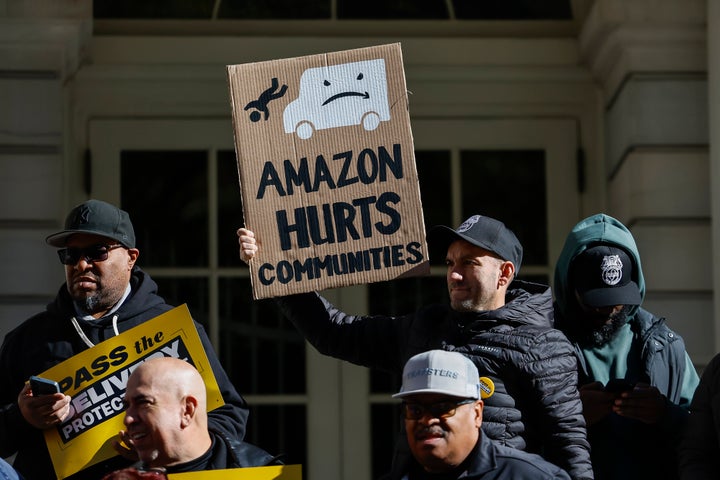
Amazon is seeking to engage New York City customers in a campaign against a city council bill that targets the company’s delivery practices. Recently, New York-based shoppers visiting Amazon’s website or app noticed a warning message stating, “NYC Council could add up to $5 per order.” This alert, highlighted with a prominent red banner, references the Delivery Protection Act. The bill aims to compel Amazon to directly employ its delivery drivers within the city.
Customers clicking on the message found encouragement to contact their council members about legislation that might raise costs for New Yorkers. Amazon also invited them to submit their names and contact information while urging them to “act now to protect low prices” at checkout.
This move intensifies Amazon’s opposition to Mayor Zohran Mamdani and Democratic supporters of the bill. They argue the legislation will enhance working conditions for drivers and ensure safer city streets. In response to these messages, Mamdani commented via an online post, emphasizing that Amazon, a massive corporation, is driven by profit motives, not worker protection.
As of Friday afternoon, Amazon reported that its campaign had generated 60,000 emails to council members. Kelly Nantel, an Amazon spokesperson, stated, “As the City Council continues to review this bill, we want to be transparent with our customers about what it would cost them if it passes as written…” She further encouraged customers to voice opposition if they are concerned.
Amazon’s effort to galvanize its users against the bill reflects the stakes involved. Although Amazon now delivers more packages than UPS, it outsources much of its delivery work to “delivery service partners” (DSPs). These smaller firms technically employ the drivers, who nonetheless operate under Amazon branding and facilities. While Amazon argues this system supports small business growth, critics, including unions and local leaders, claim it undermines labor standards and shifts liability.
The Delivery Protection Act would disrupt Amazon’s DSP model, requiring direct employment of drivers in order to operate city-based facilities. This change would also affect other companies like FedEx that use similar outsourcing practices. Support for the legislation includes backing from the International Brotherhood of Teamsters, representing UPS drivers. They highlight challenges in organizing Amazon’s drivers due to the fragmented nature of the DSP model.
“Such outsourcing has spread across the economy, making jobs more precarious and less secure for working people,” said Julie Su, New York’s deputy mayor for economic justice. The direct-hire mandate aims to ensure accountability, including driver safety.
Amazon claims the new law would disrupt DSP operations, potentially leading it to relocate delivery hubs to New Jersey or Connecticut, thus increasing delivery times. Its estimation of an additional $5 per delivery arises from a consulting report by the Five Borough Jobs Campaign, a business coalition partially funded by Amazon.
Kelly Nantel expressed optimism about finding a compromise: “We hope this bill doesn’t pass as written.” Amazon remains open to dialogue, inviting council members to tour its facilities and converse with DSP owners, though uptake has reportedly been slow.