Iran’s Tanker Efforts Amid US Naval Blockade
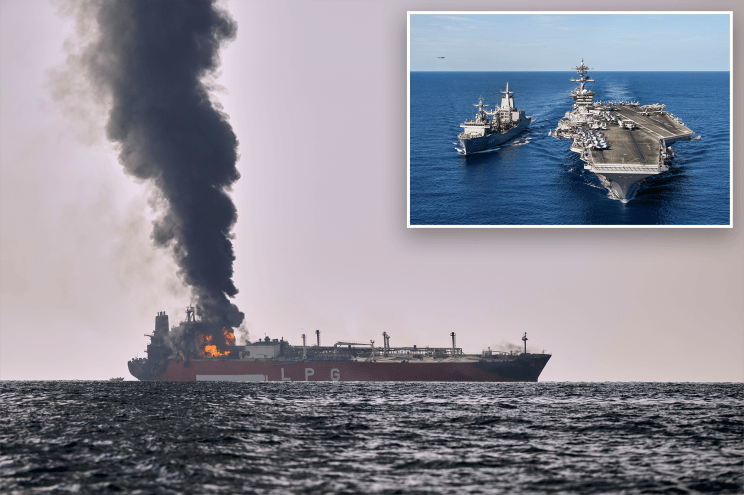
Iran has assembled over 14 tankers at its key crude oil export terminal in response to a US naval blockade, according to a recent report. However, experts have raised doubts about the validity of this claim.
Euronews reported that satellite imagery and ship-tracking data reveal these vessels near Kharg Island, a site responsible for 85 to 90 percent of Iran’s crude oil exports. Crews in Tehran have been assigned to the vessels, and Iranian flags are now flying, possibly indicating a convoy toward the Sea of Oman soon.
Iran is reportedly exploring alternative methods to transport its oil. These include ship-to-ship transfers at sea to obscure the oil’s origin and avoid American sanctions. Recently, a liquefied petroleum gas tanker burned near the Strait of Hormuz off Oman.
Maritime intelligence firms caution that the convoy reports have yet to be confirmed. The Maritime Executive pointed out that Fars News Agency, linked to Iran’s Islamic Revolutionary Guard Corps, mentioned potential retaliatory attacks against energy infrastructure in the Persian Gulf if the US interfered with Iranian shipments.
Mohammad Enayati Najafabadi, a journalist with IRGC ties, suggested via social media that disrupting Iran’s tanker routes could lead to attacks on facilities in the region. This acts as a warning against any US interception attempts.
TankerTrackers, which monitors Iranian oil exports, initially indicated preparations for oil shipments. However, as reports transformed into claims of a looming convoy through the Strait of Hormuz, the firm clarified the situation.
Wishful thinking. That’s definitely not what’s going on,stated TankerTrackers on social media.
This distinction is critical as the US has intensified its restrictions on Iranian oil shipments and supporting vessels. US Central Command issued a recent maritime advisory, warning that ships acquiring cargo from Iranian sources could face interception and legal action.
US forces have authorized the interception, boarding, and rerouting of such vessels, along with returning their cargo to Iran if necessary. Non-compliant ships risk enforcement action, including the use of force as allowed by law. These measures follow recent ship-to-ship transfers of approximately 200,000 barrels of Iranian crude in the Persian Gulf.
A sanctioned Suezmax tanker, Olym, aligned with the Hao Fan, a tanker allegedly spoofing its location, exemplifies these transfers. Identified by United Against Nuclear Iran, the transfer highlights the blockade’s challenges to Iran’s economy.
Tehran had been exporting around 2 million barrels of crude oil daily. However, shipping data indicates significant recent export reductions, with Kpler analytics marking two consecutive months without major loadings.
Iranian Foreign Minister Abbas Araghchi expressed commitment to resuming exports, stressing the need to overcome the blockade. Kharg Island remains crucial due to its capability to handle supertankers and store vast oil quantities.
Limited facilities like the port of Jask cannot replace Kharg’s capacity. Meanwhile, Windward maritime analytics reports 31 tanker positions near the blockade line in the Arabian Sea. Additionally, 11 liquefied petroleum gas tankers challenged restrictions in September and October.
Whether these vessels will attempt these challenges remains uncertain.