Challenges and Changes in American Consumer Spending
In a shift, Mississippi elected Scott Colom, a Democrat, to the U.S. Senate, the first since 1947. Colom’s opponent had made a remark on food options amidst high beef prices, which he turned into a notable campaign ad. This change in Mississippi was part of a larger Democratic surge, with wins in Texas and Alaska as well, where candidates focused on economic issues like high fuel prices.
In the broader U.S. economic landscape, Heather Long, chief economist at the Navy Federal Credit Union, observed distinctive economic divisions. Long’s report describes an ‘E-shaped economy,’ highlighting growing disparities between income groups.
Economic Disparities
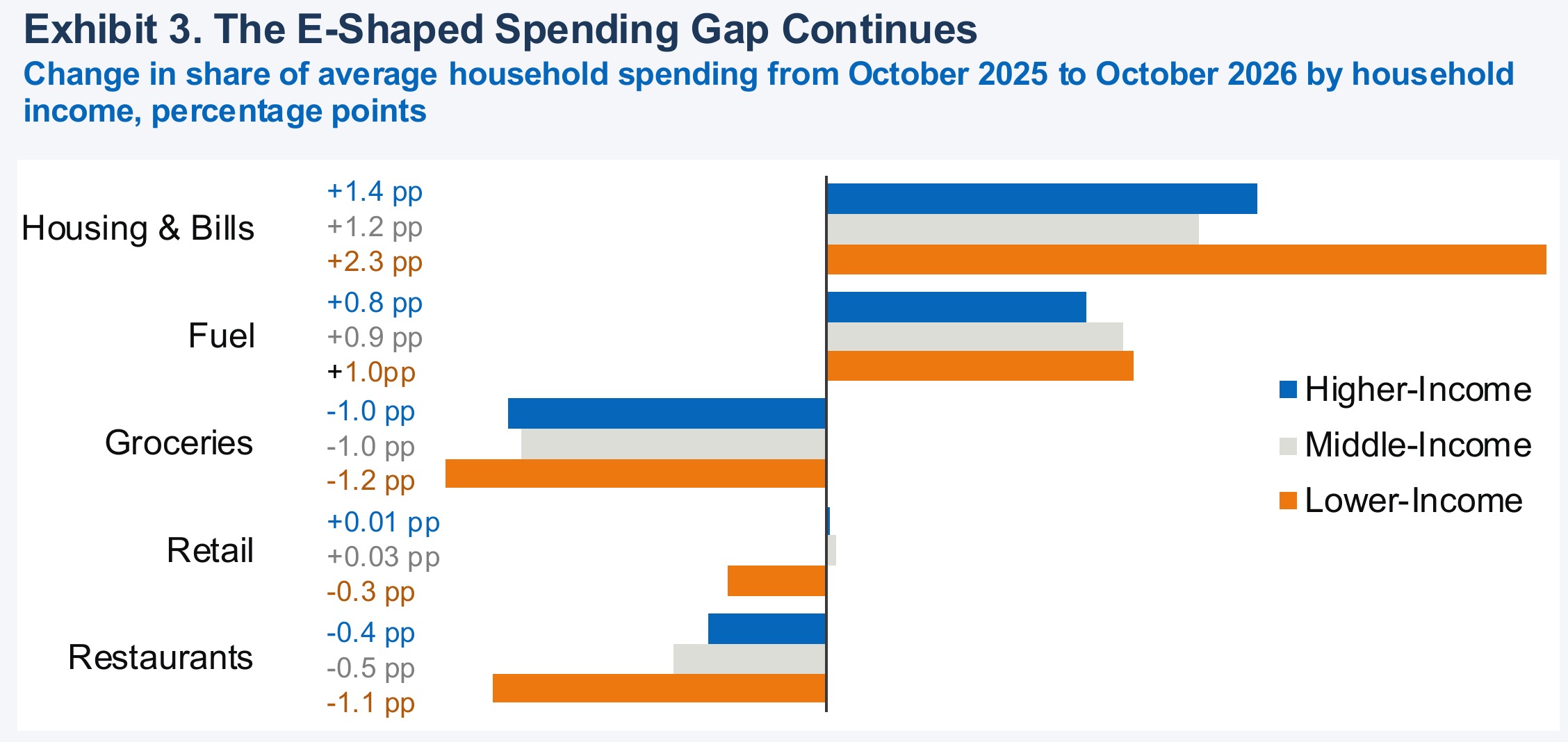
Long identifies the top third of households as economically insulated, with a minimal impact from inflation. Their spending adjusted for inflation is slightly down since January, while the spending gap between middle and lower-income groups is widening significantly. The lowest income consumers, heavily affected by rising gas prices, are struggling more than others. Middle-income earners can maintain their bills but must cut discretionary spending, particularly in food.
Analysis of Spending Patterns
Navy Federal Credit Union analyzed data from 6 million members, revealing monthly spending increases, mainly on housing and gas, accompanied by reductions in grocery and restaurant expenditures. Adjusted for inflation, overall spending was slightly down. Property taxes and insurance, while excluded from the Consumer Price Index, contribute notably to financial strain. Rising household bills, like utility bills, are termed a ‘silent squeeze.’
During the recent elections, economic issues topped voters’ concerns. Many reported worsening personal finances, disconnecting from Wall Street’s narrative of consumer resilience. Significant cutbacks are evident, as wealthier consumers and others reduce grocery spending, shifting towards cost-saving measures like shopping at discount stores.
Consumer Borrowing and Debt
Heather Long notes a surge in credit card debt and personal loans, signaling financial stress despite consumer resilience narratives. Relief comes from a drop in gas prices, offering modest financial respite. Yet, looming health insurance premium hikes for 2027 remain a concern, likely affecting financial conditions further.
Overall, economic pressures are reshaping consumer behavior and political landscapes. Changes in shopping habits, driven by necessity and economic stratification, underscore the evolving challenges faced by American households.