Challenges and Innovations in Drone Production
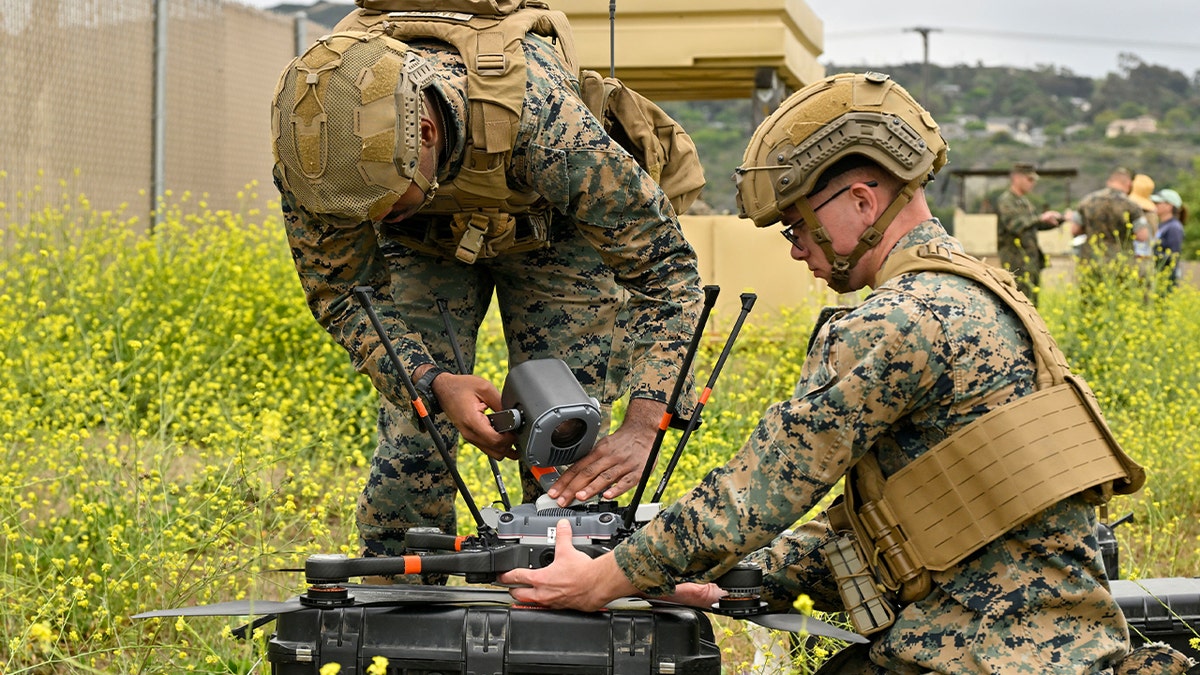
Drones dominate today’s battlefields as artillery did in previous conflicts, used in vast numbers every day. Ukraine produced five million drones in one year. Russia launched 805 in a single night against Ukrainian cities. Success in modern warfare hinges not on having the most advanced weapons but on maintaining a robust industrial base capable of large-scale production. This process relies on a key component: the permanent magnet. Every drone motor requires at least one, and nearly all are produced by China.
In 2025, President Donald Trump issued an executive order promoting American-made drone platforms. This directive pushed federal agencies to focus on domestic production, leading to faster acquisition timelines where vendors compete directly in field evaluations. The Pentagon’s Drone Dominance Program allocated $1 billion to acquire over 200,000 drones by 2027 and expects to have 340,000 systems by 2028. Realizing this goal requires a reliable production capacity reaching beyond the motor to its components. The U.S. imports nearly all of its 50,000 tons of permanent magnets annually from China. Without this supply, production cannot scale.
T.S. Allen, a former leader of the Pentagon’s rapid drone fielding program, emphasized the need for addressing every critical component, with a focus on batteries and other essential materials. Almost all processing for these minerals occurs in China and Malaysia.
China’s control over rare-earth elements began with state subsidies, undercutting prices to bankrupt Western rivals. This control allows China to manipulate prices and apply export restrictions. Rare-earth prices fluctuate significantly. Alternatively, iron and nitrogen used in iron nitride permanent magnets are abundant, inexpensive, and unaffected by export restrictions.
In April 2025, China required export licenses for seven rare-earth elements and their magnets, impacting defense and industrial supply chains. Approved license applications became scarce, and rare earth magnet exports dropped by about 75% before partially rebounding. Europe’s Motor-G and Ukraine both faced production challenges due to reliance on Chinese supplies. Western rare-earth capacity expansion is not the sole solution for permanent magnets.
Allen estimated that battlefield needs require production levels ten times greater than current Replicator program goals, which aim to produce thousands of drones. Such scale tests every supply chain component for resilience. Shortages tolerated in smaller programs pose major risks in large-scale production.
Iron nitride, used in various commercial sectors already, faces no export license issues, nor can it be embargoed. The magnets offer high performance in terms of temperature tolerance and weight, crucial factors for drone motor design. Developed by American researchers and scaled by U.S. manufacturers, incorporating iron nitride into drone motors presents a viable alternative, ensuring more reliable supply chains.
Production success is pivotal in attrition warfare; sustained output dictates victory. Supply chain vulnerabilities threaten production with disruptions and diplomatic tensions. Securing an uninterruptible source of critical inputs like magnets is essential.
Jonathan Rowntree, CEO of U.S.-based Niron Magnetics, leads the development of the only powerful permanent magnets free of rare-earth elements.