Controversy Surrounding Los Angeles Mayoral Primary and Homeless Voter Claims
Following the Los Angeles mayoral primary election, unsubstantiated conspiracy claims have spread on social media regarding Spencer Pratt’s exit from the race. Allegations surfaced that Pratt received zero votes on election night. The U.S. attorney’s office quickly debunked this claim. Another narrative alleges fraudulent involvement of ballots from homeless individuals in his loss.
Many proponents of this theory lack substantial evidence and rely on misinformation. A TikTok user posted video interviews with individuals identified as Skid Row residents, claiming they were paid to vote for incumbent Mayor Karen Bass. Bass advanced to the runoff with Councilmember Nithya Raman, while Pratt fell to third place as votes were counted. L.A. County election officials stated there was no proof of the alleged payment to vote, emphasizing that the woman in question is registered to vote in Inglewood.
Alex Stack, a campaign spokesperson for Bass, dismissed the accusations, equating them to false claims made by Trump after the presidential election. The L.A. County Registrar also denounced the allegations as false.
Reporters from the Times visited the area where the TikTok videos originated but did not locate the individuals featured in those clips. Experts argue that isolated instances, if true, would unlikely alter election outcomes. With over 750,000 voters participating, such cases are insignificant in changing results.
“A vote here or there that might have been a little fishy in Skid Row—that’s not going to be enough to turn the outcome of an election,” said Christopher R. Hallenbrook, associate professor of political science at Cal State Dominguez Hills.
Law professor Rick Hasen from UCLA stated that any minor incidents should be investigated thoroughly to ensure integrity. However, he finds wide-scale fraud claims implausible.
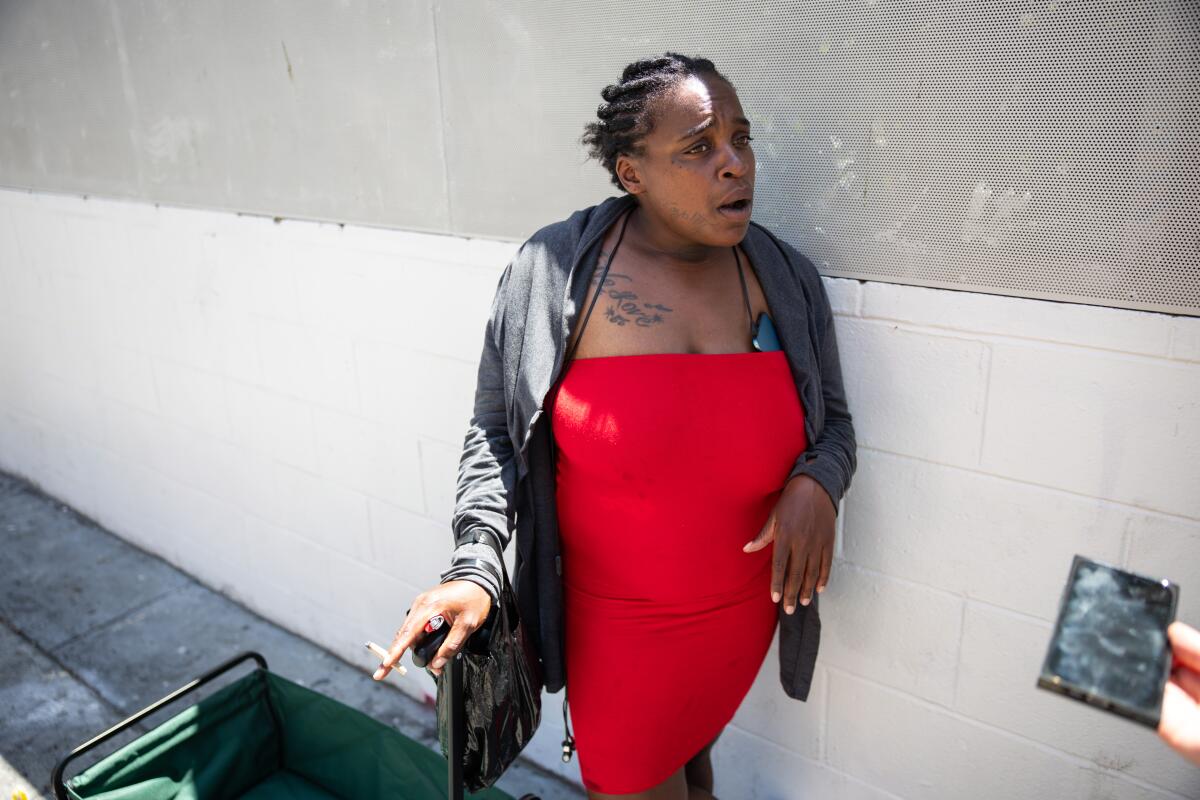
Residents in Skid Row voiced their opinions to the Times. Most said they neither voted nor encountered any monetary offers for votes. Michele Brewster, a resident, mentioned a lack of election engagement in the area. She noted that the voting process seemed to overlook Skid Row.
Some individuals reported seeing workers gather signatures for ballot petitions. Money was allegedly offered to encourage the signing of petitions and registration as voters. These actions have previously led individuals to court.
A Marina del Rey woman admitted to illegally paying individuals on Skid Row for voter registration, as per a plea agreement. This conduct involved using her former address for registrations, potentially leading to unlawfully distributed mail-in ballots.
The L.A. County Registrar stated that voter registration records are cross-verified against U.S. Postal Service data. Discrepancies lead to voters being marked inactive, disallowing participation until proper records are filed. Mail-in ballots undergo signature verification to confirm voter authenticity.
Conservative media claims suggested vote rigging through homeless votes against Pratt. Benny Johnson alleged a systematic delay in homeless ballots submission to manipulate results, a claim lacking evidence. Data showed Bass had the most votes in Skid Row precincts.
Spencer Pratt raised concerns on social media regarding homeless voter contributions to results. First Assistant U.S. Atty. Bill Essayli may investigate reports of abnormal voter registrations at homeless shelters.
The California Post reported that the Midnight Mission had 1,160 registered voters at its address, which seemed anomalous compared to its capacity. However, the mission’s actual services and occupancy data indicated a fluctuating population eligible for registration.
L.A. County Recorder’s Office advised against equating shelter capacity with registration numbers. Homeless individuals may use service providers’ addresses to receive ballots, and lacking an address, they can opt for in-person voting.
Rick Hasen concluded, “People who are unhoused have the right to vote, just like everyone else. Registering unhoused individuals to vote is beneficial, not adverse.”
Additional insights contributed by Times staff writer Sandhya Kambhampati.