A Legacy of Blade Sharpening: From Italy to Chicago
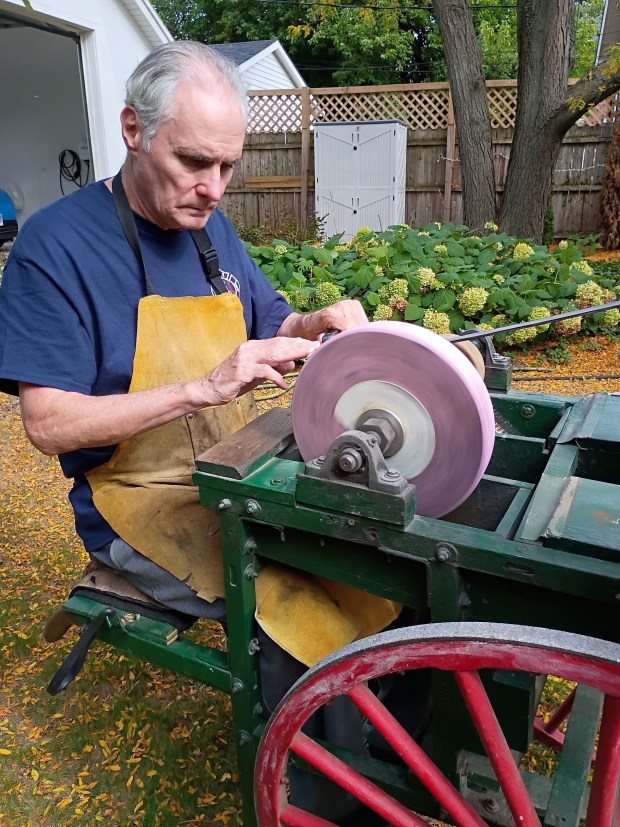
For over four decades, Tony Delciello was a familiar sight on Chicago’s South Side. With a green and red cart outfitted with a sharpening stone, he honed countless blades each year. Residents brought him garden shears, hedge trimmers, and kitchen knives. Charging a modest fee, he sharpened tools from April through October.
Delciello, originally from Italy, returned to his homeland a few years ago. However, his iconic cart remains in Chicago. John Carmody of Morgan Park, a retired fire department engineer, now owns the cart. Carmody, who worked in various roles, including as a singer and truck driver, was once one of Delciello’s customers.
In an interview, Carmody recalled how the sound of Delciello’s bell would send him rushing to gather dull tools. Delciello’s visit came only once a year. Missing it meant waiting another year for sharpened blades.
About four years ago, Carmody discovered the cart was for sale. Delciello planned to sell it before moving back to Pescolanciano, Italy. Other Italian knife sharpeners operated in the area but stuck to separate routes. Carmody, with his Irish heritage, became the first with a different background to take on the trade.
The cart has a storied history. In 2007, it was stolen, along with Delciello’s van. Years later, Delciello found it at a farmer’s market while using a replica. Although he intended to sell it, he made Carmody prove his dedication.
Carmody’s first sharpening attempt didn’t impress Delciello. Nevertheless, he persisted and ultimately bought the cart for $2,000. It included maintenance notes and instructions for finding replacement stones.
Starting on Holy Saturday before Easter 2023, Carmody began sharpening blades publicly. At a local egg hunt, people were intrigued by the antique cart. A police officer even shared a photo of Carmody on Facebook, sparking local interest.
Carmody operates mainly on weekends, unlike Delciello who worked six days a week. He avoids extreme weather and makes adjustments such as wearing a leather apron for protection. The cart features small additions like paper angels and a wooden basket for tools.
Carmody has taken the cart to block parties, responding to invitations from organizers. He stores it safely, offering services occasionally even when off duty. During colder months, he plans to work primarily by appointment in his garage.
While communication with Delciello has waned, Carmody cherishes their final interaction. Despite Delciello’s initial insistence to remove his name from the cart, Delciello eventually expressed approval of its continued presence. The legacy of blade sharpening continues in Chicago, bridging communities with a simple but enduring tradition.