California Escalates Legal Battle Against 3D-Printed Ghost Guns
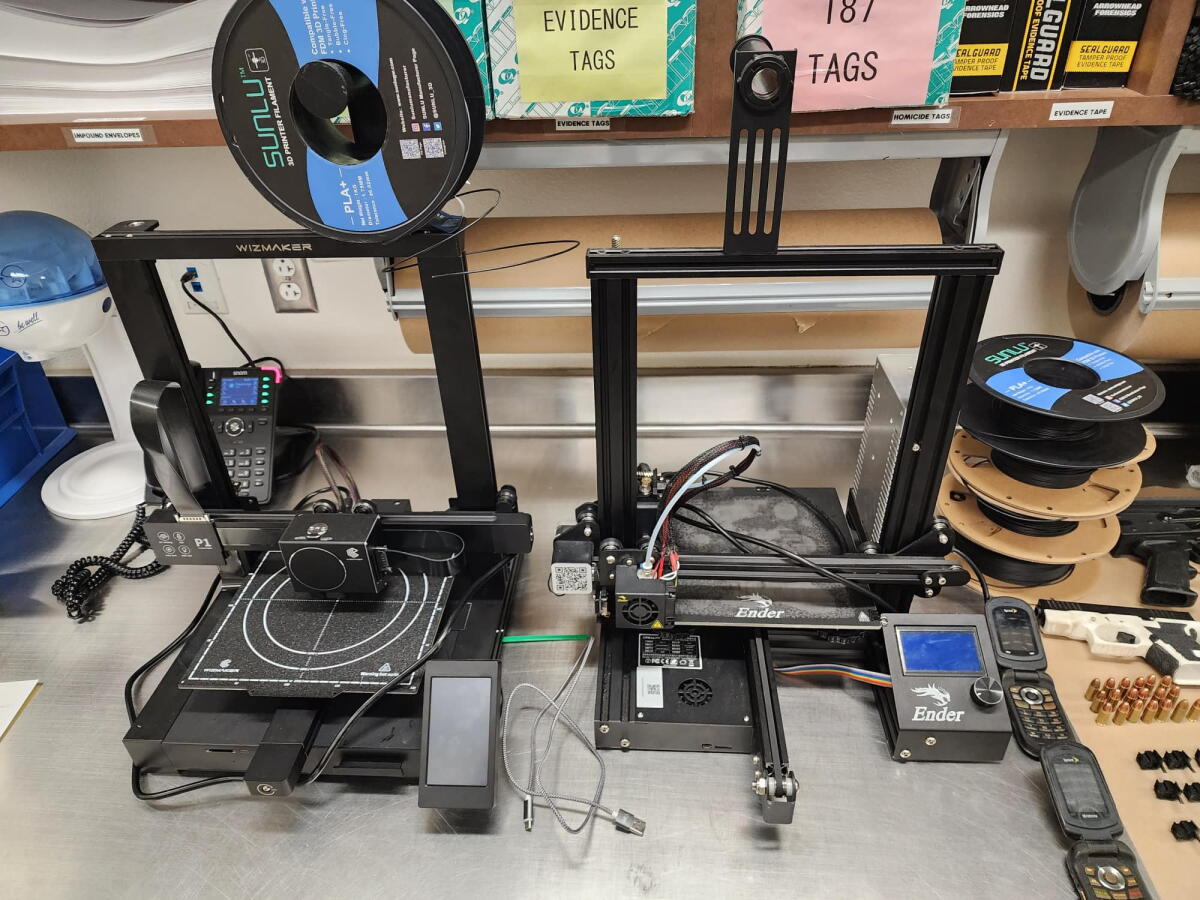
San Diego County initiated a lawsuit against a 3D printing filament manufacturer, Polymaker, for allegedly selling materials intended for producing untraceable firearms, commonly known as ghost guns, in violation of state law. Collaborating with the Giffords Law Center, the county accused Polymaker of targeting California residents with 3D printer filaments designed to create illegal weapons.
The lawsuit highlights the distinct nature of 3D-printed ghost guns, which can be made from plastic filament using readily available consumer printers. The suit claims that acquiring a 3D printer allows individuals to produce and assemble a working, untraceable firearm in under nine hours. This issue gained attention when San Diego Police’s Ghost Gun Team found spools of such material in a teenager’s home, intended for illegal manufacturing, suggesting harm caused by the manufacturer to the state.
Polymaker has not responded to requests for comments. This legal action comes amid a broader attempt by California to curb the illegal gun industry by targeting the components and supplementary materials that facilitate their production. Earlier this year, San Francisco, in partnership with the state attorney general, sued an online library, Gatalog, known for its database of digital firearm manufacturing codes. These suit claims that inexpensive 3D printers and accessible filament make printing gun parts economically feasible, alleging that a 3D-printed handgun costs about half of a commercially purchased gun.
Law enforcement agencies now recover approximately 11,000 ghost guns annually in California, a significant increase from previous years. While it is unclear how many are entirely 3D-printed versus assembled from mail-order kits, officials suggest the latter method is more common. The rise of untraceable weapons has driven authorities to extend regulations over the materials and plans enabling amateur manufacturers to produce guns cheaply and with minimal expertise.
Both Gatalog and Polymaker allegedly utilize networks of influencers to promote 3D-printed ghost guns and distribute digital firearm codes, specifically targeting California residents with state-specific compliance options on their sites. This focus puts them in direct violation of California’s laws.
The case involving Gatalog was brought to federal court in Florida, but their claims of First Amendment infringement were dismissed. U.S. District Judge Paul G. Byron upheld California’s authority to regulate items deemed harmful to public interest, citing the state’s police power and moral prerogative.
The lawsuits against companies like Polymaker and Gatalog are part of coordinated litigation under California’s Unfair Competition Law, led by a newly established department within the San Diego County Counsel. It leverages increased authority to address business practices posing risks to residents.
The effectiveness of California’s new gun control laws remains uncertain. The 9th Circuit Court of Appeals, influenced by appointments during President Trump’s tenure, has shown resistance to such restrictions. Recent court decisions have highlighted ongoing challenges in defining regulatory limits, particularly concerning semi-assembled gun kits.
The Supreme Court’s rulings on similar issues demonstrate the complexity of regulating partially assembled firearms, yet leave open questions about the extent of California’s enforceability regarding marketing-related regulations.