Celebrating the Supreme Court Decision on Women’s Sports
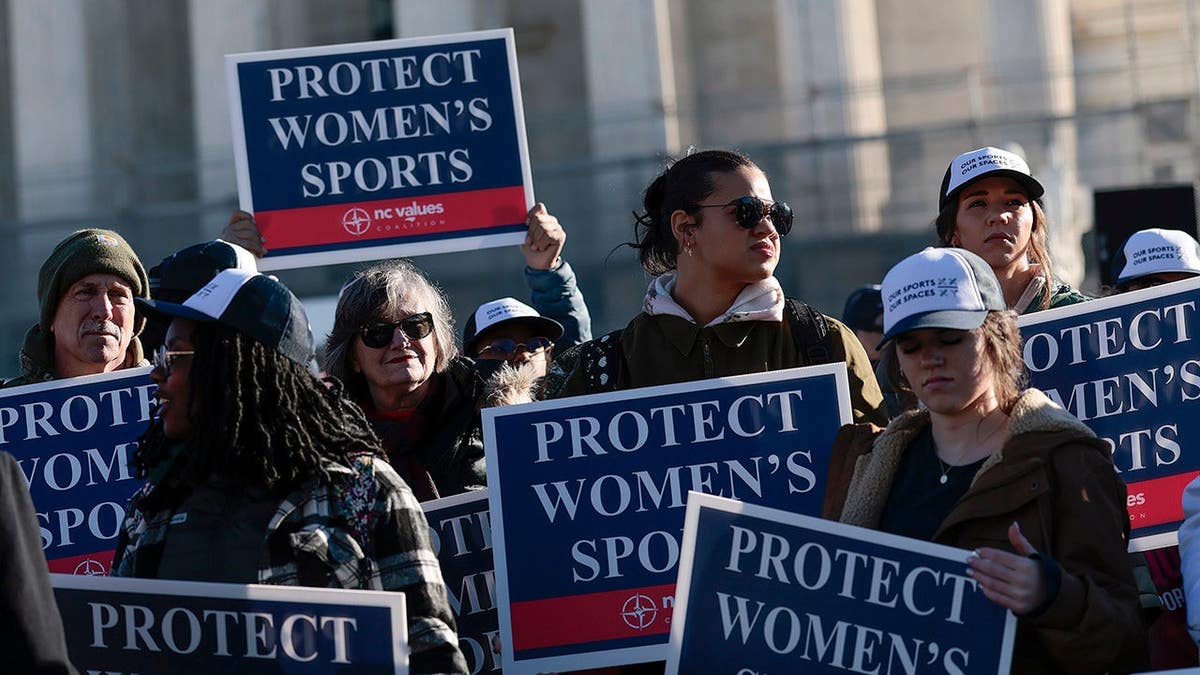
Recently, the Supreme Court upheld state bans on transgender girls participating in female sports. This decision was praised by Olympic gymnast MyKayla Skinner and former college swimmer Riley Gaines. They emphasized the importance of maintaining fair competition among women.
Lara Trump highlighted the significance of state elections in safeguarding women’s sports. She pointed out how media interpretation plays a role in these discussions. As the ‘Outnumbered’ panel reviewed reactions to the ruling, they stressed the need to focus on fairness and integrity in sports.
USA Volleyball indicated potential changes in its policy regarding genetic sex tests. This adjustment aims to protect women’s sports categories. Concerns arose as players from USA Volleyball-sanctioned leagues, along with their families, raised issues about competing against an allegedly transgender opponent.
USA Volleyball, the International Volleyball Federation, and members of the U.S. Women’s National Team announced a ‘constructive path forward’ after addressing players’ concerns about genetic screening in international competitions.
The joint statement from these organizations highlighted a ‘shared understanding’ over the SRY screening process. However, the statement did not signal an end to the screening or a change to the eligibility standard. Instead, it focused on improving communication and administration of the testing.
The International Olympic Committee (IOC) policy from March 2026, limits eligibility for the female category at major events like the Los Angeles 2028 Olympics to biological females, as confirmed by SRY gene screening. FIVB’s Sports Regulations also adopted SRY screening, categorizing players based on the presence or absence of a Y chromosome.
The FIVB regulation applies to official competitions, leaving domestic club competitions’ eligibility rules to national federations. This difference has caused concerns for families whose daughters compete against athletes they believe to be biologically male.
USA Volleyball’s current Gender Competition Policy states that athletes should compete as the gender assigned at birth, yet acknowledges inconsistency in enforcing these rules. The organization has faced criticism from families who argue that allowing modified birth certificates for eligibility undermines fairness.
Family and Athlete Statements
Several athletes and their families expressed their frustration over perceived unfairness in their competitions.
Athlete 1
One athlete felt strongly that competing against an allegedly biologically male player was unfair. She believed that no amount of training could bridge the physical differences.
Athlete 1’s Mother
The mother of Athlete 1 shared her concerns about the integrity of the competition. She hoped USA Volleyball would commit to protecting female divisions exclusively for biological females.
Athlete 2
Another athlete echoed similar sentiments, noting the mental impact of competing against players with biological advantages.
Athlete 2’s Mother
This mother voiced her frustration with the inconsistent enforcement of eligibility rules. She emphasized the importance of fair competition for her daughter and her peers.
Athlete 3
A third athlete described the discouragement of being in a sport where an allegedly biological male could outcompete her.
Athlete 3’s Mother
The mother witnessed her daughter’s confidence decline due to perceived unfair competition. She called for consistent application of eligibility rules.
Athlete 3’s Father
He expressed anger over what he saw as a failure by USA Volleyball to enforce its rules. He stressed that his calls for fairness were ignored, leading to feelings of disenchantment for his daughter.
USA Volleyball has yet to respond specifically to these family statements. Jackson Thompson, a sports reporter for Fox News Digital, has covered these issues with a focus on political and cultural impacts in sports. His reporting has been influential in federal Title IX enforcement discussions.