China’s Embrace of AI Chip Technology Challenges Nvidia’s Dominance
The competition between the United States and China in developing artificial intelligence technologies is intensifying, particularly concerning hardware and computing capabilities. Chinese companies such as Huawei are making significant strides, surpassing global leaders like Nvidia within China’s domestic market.
The Shift in China’s AI Chip Market
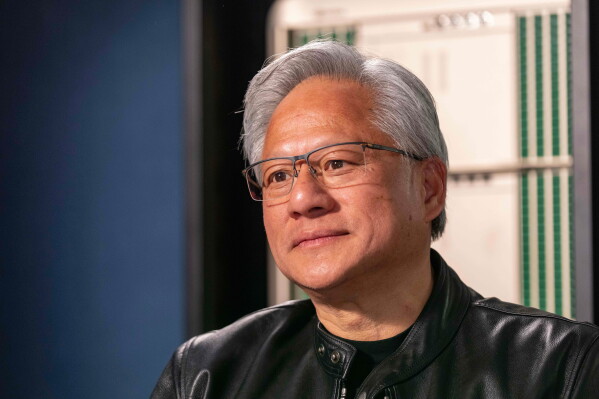
Jensen Huang, CEO of Nvidia, experienced a warm reception from locals during his visit to Beijing, but his company’s success in China remains limited. U.S. governmental export controls initially restricted the sale of Nvidia’s advanced H200 AI chips, aimed at safeguarding national security. When the controls were temporarily lifted, China pivoted towards using domestically produced chips, chiefly manufactured by Huawei. Huawei has emerged as a formidable player in the AI chip sector, with experts acknowledging the competitive threat it poses.
“Before the export ban, we held a 95% market share in China. The competitive landscape has transformed dramatically due to these restrictions,” Huang remarked.
Huawei leads the pack among Chinese chipmakers. Following restrictions on importing U.S. technology, Chinese chip manufacturers focused on self-reliance, developing their own chip designs. Huawei’s Ascend 950 series stands as a powerful alternative to Nvidia’s H200, presenting itself as a competitive counterpart. Bernstein projected Nvidia’s market share in China to drop dramatically, while Huawei’s will climb.
Huawei’s Emergence and Challenges
Despite Nvidia’s dominance worldwide, Huawei has achieved substantial integration of Chinese AI companies, such as DeepSeek, pushing for improvement in chip performance and affordability. He Hui from Omdia research firm noted China’s belief in its capability for self-sufficiency.
Last September, Huawei revealed plans to deploy high-performance AI computing clusters globally, using domestic semiconductors amid U.S. export controls. The need for Nvidia’s technology remains within China due to demand surpassing existing supplies. Several incidents of smuggling Nvidia chips into China highlight the ongoing interest in Nvidia’s products.
Nvidia’s chips, renowned for their power, rely on Dutch company ASML’s EUV machines for production. These machines depend on U.S. components and are crucial for manufacturing Nvidia’s products in Taiwan.
Global Market and Revenue Dynamics
Nvidia’s technology persists as vital for cutting-edge developments in China, including leading AI model training. Chinese tech companies and academic institutions maintain interest in Nvidia chips for research purposes, showcasing Nvidia’s sustained global influence.
Regarding revenue, Nvidia’s figures remain robust. The company’s revenue outlook is approaching $91 billion for the upcoming months, with previous earnings reaching nearly $82 billion, excluding any contributions from China’s data centers. Comparatively, Huawei’s figures lag behind at $126 billion.
Future Directions and Global Aspirations
DeepSeek, aiming to rival prominent AI platforms like OpenAI’s ChatGPT, has oriented its V4 AI model to run on Huawei’s advanced Ascend chips. Analysts speculate on collaborations between Huawei and DeepSeek, indicative of potential transitions towards Chinese technology replacing Nvidia’s products.
Nvidia’s adaptation strategies include engineering stripped-down H20 chips for sale in China, aligning with export restrictions. Despite regulatory uncertainties affecting shipments, the company remains a pivotal player in AI chip technology.
Huawei, already a global leader in telecommunications, aims to expand its chip operations globally. While demand for advanced chips persists, China’s manufacturing capacity lags behind domestic needs. However, increased production capabilities may bolster Huawei’s market presence internationally.
The quest for technological autonomy is consistent among Chinese enterprises, suggesting ongoing development irrespective of Nvidia’s market presence. Such aspirations reinforce China’s strategic approach towards technology and global market participation, emphasizing technological independence and export ambition.