Conflict and Controversy in WNBA: Carrington and Cunningham Clash
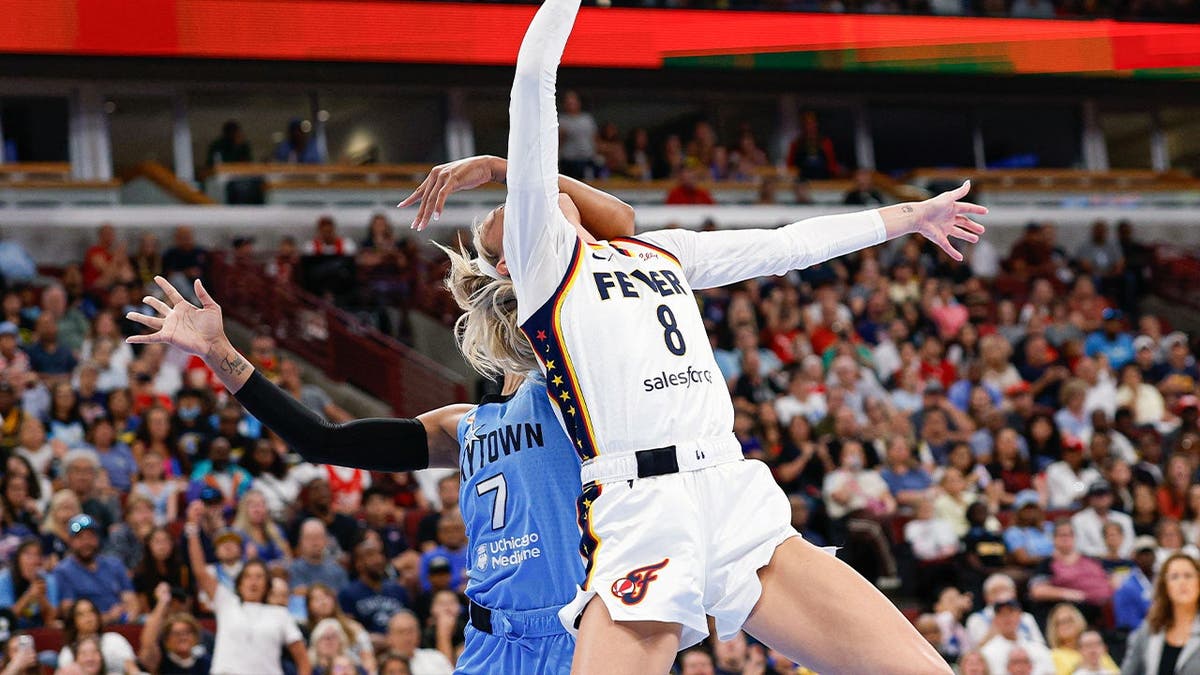
The WNBA experienced a significant moment of conflict and controversy. Months of tension culminated in DiJonai Carrington striking Sophie Cunningham in the face during a game on Saturday. This incident led to a heated scuffle, Carrington’s ejection, and ignited a social media firestorm when Carrington referenced ‘White privilege.’
DiJonai Carrington of the Chicago Sky was ejected following a harsh foul on Sophie Cunningham of the Indiana Fever. Both players come from distinct backgrounds yet share common traits. Carrington’s father, Darren Carrington, played in the NFL, and her family settled in San Diego. She played flag football and tackle football in elementary school.
On the other hand, Cunningham grew up in Columbia, Missouri, and played football at Rock Bridge High School as a placekicker. Her background is blue-collar, with her family enduring difficult times during the 2008 financial crisis.
Cunningham stayed close to home for college at Missouri, maintaining family traditions. Meanwhile, Carrington’s college journey was more varied. She faced injuries but played for Stanford and then transferred to Baylor during COVID-19 shutdowns.
Both players entered the WNBA as second-round picks. Cunningham became known as ‘Spicy Sophie’ in Phoenix, building a reputation for emotional play. Carrington became a formidable defender in Connecticut and was recognized as the WNBA’s Most Improved Player.
Their personal lives also drew attention. Carrington’s relationship with NaLyssa Smith was public, while Cunningham kept her romantic life private. Both players have become political symbols within the WNBA.
Carrington’s advocacy for racial justice and gender equality contrasts with Cunningham’s support for excluding transgender individuals from female sports. This stance turned Cunningham into a polarizing figure.
When Carrington hit Cunningham, the incident symbolized more than a foul. It represented the different worlds these players come from. Carrington later clarified that her ‘White privilege’ comment was not about the officials’ decision but did not fully explain her intentions. The incident marked a significant chapter in WNBA history, highlighting the complex layers of identity and perception within the league.