Criticism Arises Over WNBA’s Handling of Caitlin Clark and Race-Related Accusations
Dan Dakich, host at OutKick, criticized the WNBA and media regarding their treatment of Caitlin Clark. He argues that despite the league’s 30 years in existence, it has failed to leverage Clark’s popularity. According to Dakich, negative narratives fueled by ‘petty jealousies, racism, and sexism’ hinder support for the 24-year-old athlete, impacting her and the sport’s growth potential.
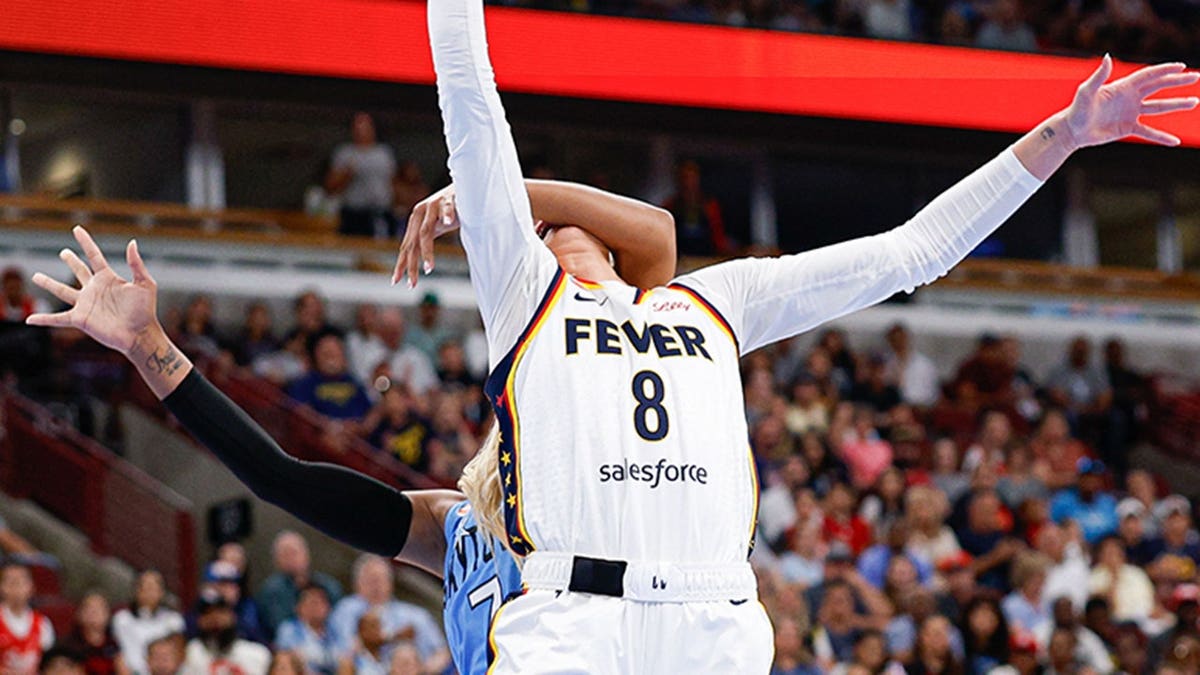
In a related incident, Chicago Sky guard DiJonai Carrington was ejected for a Flagrant 2 foul against Indiana Fever guard Sophie Cunningham. Following her ejection, Carrington posted an accusation on Threads, mentioning ‘WHITE PRIVILEGE @indianafever.’
“It’s hard to imagine such an accusation going without punishment in another major sports league.”
The game ended with the Fever defeating the Sky 90-86. The incident happened late in the first quarter when Carrington struck Cunningham across the head during a layup attempt, resulting in her ejection. Cunningham needed restraint after showing a bleeding mouth to teammates.
The timing of Carrington’s post implies she believed race played a role in the incident. This interpretation, though not explicitly stated, raises significant issues for the WNBA. The league must choose whether to discipline Carrington, potentially upsetting players and media, or ignore it and risk a perception of inconsistent racial standards, despite Commissioner Cathy Engelbert’s assertion of fair rule application.
OutKick reached out to the WNBA, the WNBA Players’ Association, and the Sky for comments on whether race influenced the officiating decision. No responses were received by publication time.
Accusations like ‘white privilege’ add a new dimension to the common complaints about officiating biases in professional sports. If Carrington’s statement implies racial bias, clarity and evidence are essential. Sophie Cunningham, known for her stance on transgender athletes, adds another layer of complexity, possibly broadening Carrington’s grievance beyond officiating.
The WNBA encourages players to voice their opinions on various issues, but handling allegations like Carrington’s without discipline sends mixed signals. The players’ association, having condemned demonization of any group, finds itself in a dilemma. It must address Carrington’s public ‘WHITE PRIVILEGE’ statement during a game, ensuring consistent application of its values.
The league, association, and the Sky had the chance to clarify Carrington’s meaning or share whether they addressed her actions. As of now, her statement stands unclarified, leaving interpretations open.