David Hockney’s Impact on Los Angeles and Personal Reflections
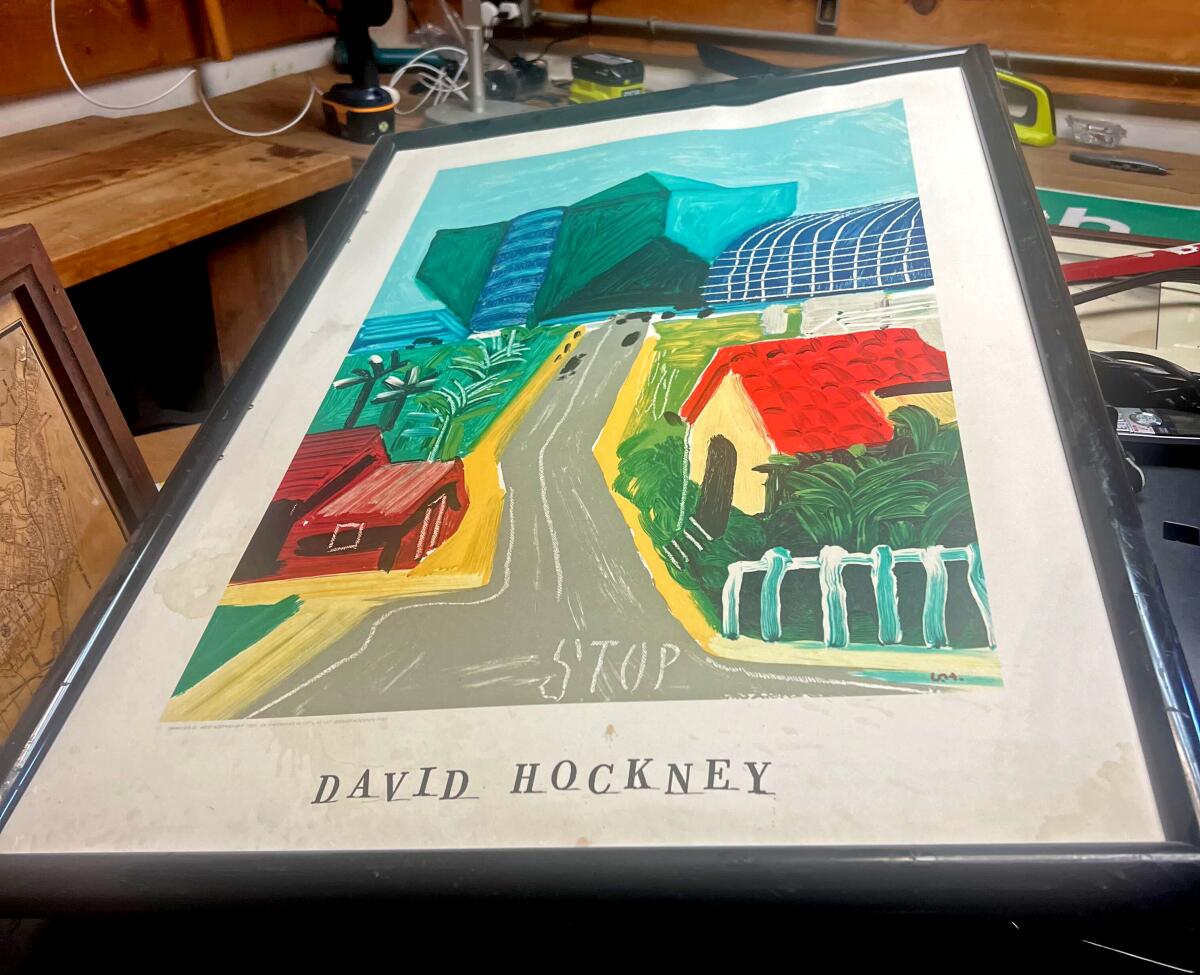
In the mid-1990s, Los Angeles was awash with David Hockney prints. At a West Hollywood apartment complex’s carport, I discovered my first Hockney print leaning against an aging Volkswagen Rabbit. The print was in a bent aluminum frame and suffered water damage. When I asked about the price, the garage sale host simply said, “name your price.” Hockney prints were everywhere then, sold in malls and framing stores like Aaron Brothers and Michaels. A few months after my first purchase, I snagged his “Nichols Canyon” landscape at a discount.
Although Hockney might not have been the finest artist Los Angeles produced, he was the most popular at that time. Following his passing, art critics and fans discussed why he remained an enduring talent. The New York Times tribute, “‘How David Hockney Taught Los Angeles to See Itself,’” suggests his art made us see the L.A. we wanted.
Hockney’s works were instantly recognizable: the abstract panorama of Mulholland Drive, the photo collage of Pearblossom Highway, and various swimming pools with tropical backyards against hillsides and oceans. Hockney supported the mass market appeal of art, noting in his memoir that posters could be kept and enjoyed as wall decorations.
During an era of economic collapse and crime, Hockney’s vibrant imagery clashed with the realities of Los Angeles in the mid-1990s. Yet, his art represented an aspirational vision. Living in a cramped, dark apartment, I found solace in hanging Hockney’s images, dreaming of future possibilities, such as having a pool to share with someone.
Personal Introductions to Hockney
I first learned about Hockney during a chance encounter with a man in the fashion industry who lived in my apartment complex. His home, adorned with antiques and a prominent Hockney swimming pool print, added to my interest. During our conversations, he highlighted Hockney’s significance as a gay artist celebrating the male form, which embarrassed me due to the era’s AIDS stigma and my privacy.
Purchasing the Hockney print at the garage sale felt like a connection to him. My apartment soon displayed several of Hockney’s works, eventually inviting my neighbor in for a brief appreciation.
The Evolution of Hockney’s Vision
Reflecting on Hockney’s vision of Los Angeles today, his artwork seems limited, not capturing the entire diversity of the city. Fewer prints are visible now, and mine are in storage. However, I appreciate how Hockney influenced my view of L.A. and myself.
Though my Hollywood Hills mansion dream remains unrealized, I own a suburban home with a small pool. It sits mostly unused, but when morning light reflects off the blue water, it reminds me of dreams yet to be fulfilled.
Recommended Reads on David Hockney’s Work:
- “‘If you ever wanna fly…’ Mulholland Drive” (L.A. Times)
- A winking queer life (Guardian)
- ‘He colonized the tulip and by extension invented Los Angeles’ (L.A. Times)
- Special effects (The New Yorker)