Debate Over the Mysterious Object 1998 KY26
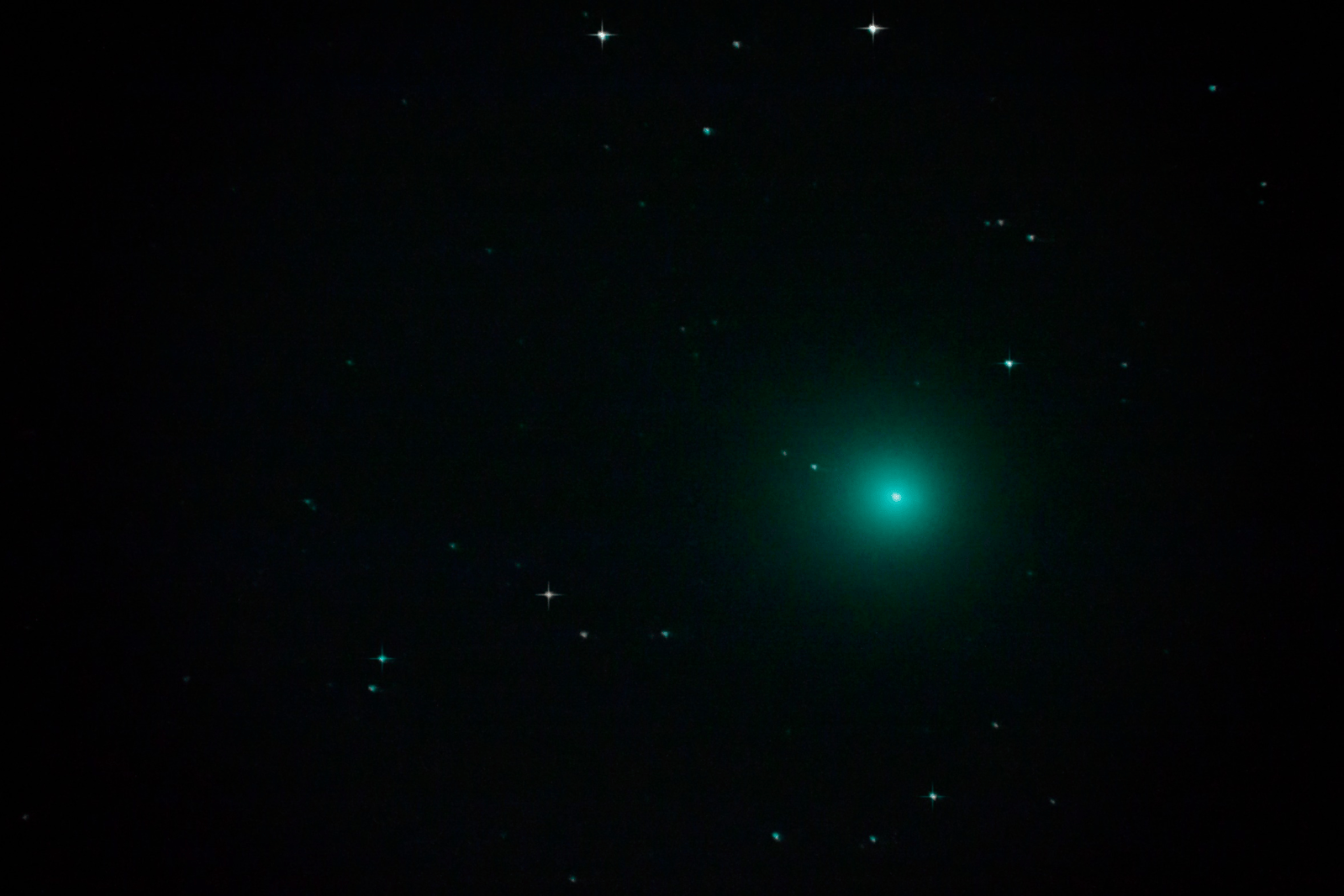
A small object orbiting the Sun, known as 1998 KY26, is at the center of a scientific debate. Researchers are exploring its identity, suggesting it could be a fast-spinning asteroid, a ‘dark comet,’ or even a lost Soviet spacecraft.
Discovery and Initial Observations
Discovered by astronomer Tom Gehrels on May 28, 1998, during a routine observation session for the University of Arizona’s Spacewatch project at Kitt Peak, Arizona, 1998 KY26 was originally thought to be about 30 meters across, spinning once every 10.7 minutes. However, recent observations led by astronomer Toni Santana-Ros have indicated the object is smaller, around 11 meters, and spins faster, completing a rotation every 5.35 minutes.
Theories Surrounding 1998 KY26
Theory One: A Dark Comet
Some scientists propose that 1998 KY26 could be a ‘dark comet.’ Typically, comets have gas and dust that form a tail, pushed by solar radiation. However, 1998 KY26 lacks a visible cloud. Research by Bryce T. Bolin, using Keck I and Gemini North telescopes in Hawaii, detected an unusual extra push affecting the object, suspecting small materials might be flung from its surface due to its rapid spin.
Theory Two: Lost Soviet Phobos 1 Probe
Another theory suggests 1998 KY26 is Phobos 1, a Soviet probe launched in July 1988. The spacecraft lost contact after an error a couple of months post-launch. Researchers Abraham Loeb, Adam Hibberd, and Adam Crowl found that the orbits of Phobos 1 and 1998 KY26 closely match. The extra push could be from sunlight reflecting off the probe, but there’s no confirmation yet that they are identical.
Theory Three: A Tiny, Fast-Spinning Asteroid
The more traditional explanation is that 1998 KY26 is an unusual asteroid. Observations suggest it could be an Xe-type asteroid, a compact piece of rock rather than a loose assembly of debris. Its rotation might be causing material to be expelled, accounting for the observed motion.
Theory Four: Dried-Out Object
Research by Korbin Hansen and Masatoshi Hirabayashi at Georgia Tech questions if 1998 KY26 retains enough water ice to behave like a dark comet. Their model shows the object would be too warm to hold onto such ice, suggesting the water has likely evaporated, leaving a rocky mass.
Why the Increased Interest?
Recent observations have sharpened astronomers’ understanding of 1998 KY26, revealing its smaller size and faster spin. The hypothesis that it could be Phobos 1 offers an alternative perspective. Notably, Japan’s space agency, JAXA, has targeted 1998 KY26 for its Hayabusa2 spacecraft’s extended mission, aiming for a 2031 rendezvous to further investigate.
While Loeb speculates that we could find a label ‘Made in the U.S.S.R.,’ the scientific community currently leans towards natural explanations for the object’s peculiar motions. With Hayabusa2 en route, closer examination could eventually resolve the debate around this enigmatic celestial body.