Discovery of Ancient Bison Skull in Alberta Sparks Interest
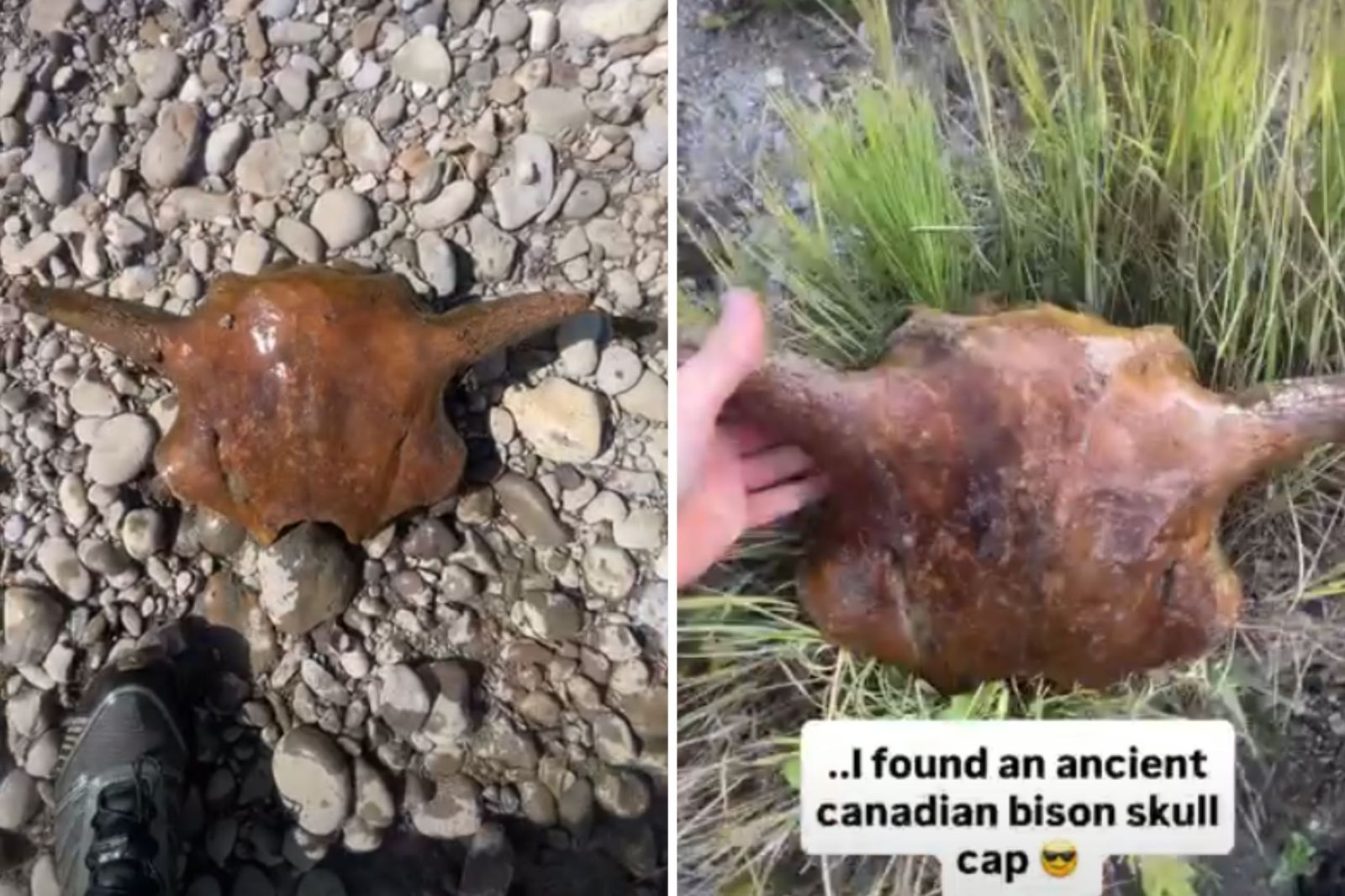
A fisherman in Alberta, Canada, recently made an intriguing discovery while fishing in a local creek. Dominic Boon, a resident near Banff, often looks for unique finds outdoors. During a fly fishing trip, he noticed something unusual protruding from the water.
Boon recorded his exploration and shared the footage on his Instagram account, @dominicboon_. Initially, his companions believed the object was a cow skull, prompting Boon’s curiosity. Upon closer inspection, he suspected it was a bison skull.
Heavy Rain Reveals the Skull
Boon’s suspicion was confirmed when experts identified it as a bison skull. The discovery followed Alberta’s rainiest summer on record, with the capital city experiencing unprecedented rainfall, as reported by The Canadian Press. Boon believes the rain may have uncovered the skull, possibly buried for years.
The skull is unexpectedly heavy, weighing about a few kilograms. Boon began questioning its age, considering it might be much older than initially thought.
A 5,000-Year-Old Mystery
Boon reached out to museum experts and received a response from Dr. Chris Jass of the Royal Alberta Museum. Dr. Jass confirmed it was a bison cranium and estimated it could be up to 5,000 years old.
The estimate is based on the skull’s shape and features. While it may date back several millennia, it could be as recent as 150 years old. According to the U.S. National Park Service, rapid burial helps preserve remains by shielding them from scavengers and environmental damage.
Boon plans to transport the skull to a museum three hours away for further study. Experts may examine, measure, and photograph it to gain more insights.
A Species Nearly Lost
This bison skull’s discovery sheds light on a species nearly driven to extinction. The Canadian Parks and Wilderness Society (CPAWS) reports that plains bison once populated over 30 million across North America. However, by the late 1880s, they had nearly vanished in Canada due to overhunting, habitat destruction, and disease. Wood bison also faced severe population declines, dropping from over 170,000 to about 200.
Today, Alberta hosts around 2,800 wild wood bison, while plains bison occupy less than 1 percent of their historical Canadian range. The skull’s discovery is significant against this backdrop, even as its precise age remains undetermined.
Boon finds the circumstances of the discovery particularly compelling, regardless of whether the skull dates back 150 years, several centuries, or thousands of years.