Examining Asian American Representation and Structural Contributions
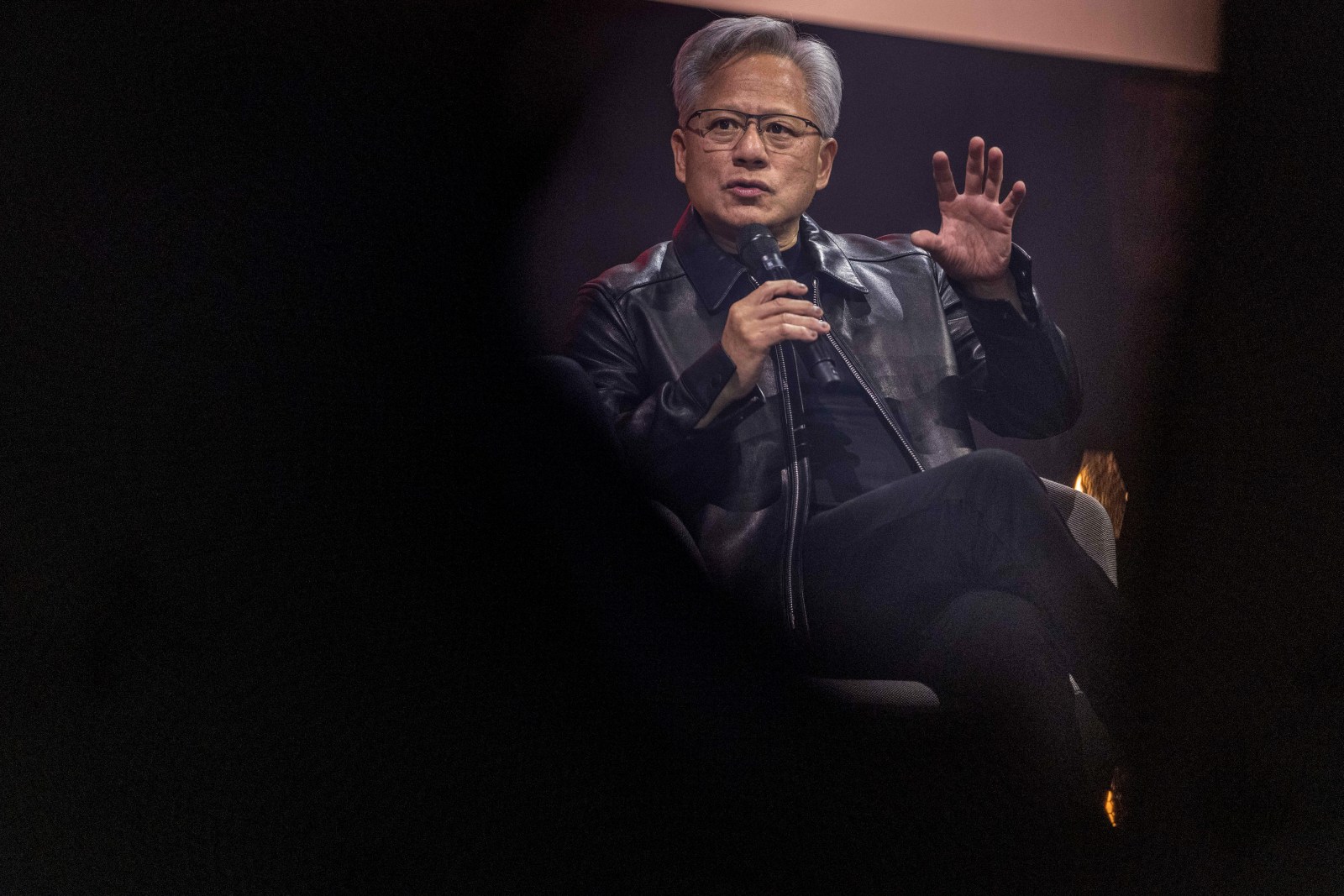
When Jensen Huang was removed from his company, it stirred a reflexive anxiety within the Asian American community. This was less about sympathy for a CEO and more about recognizing a familiar pattern: when an Asian individual is involved in a scandal, an entire ethnicity is often scrutinized. An exhibition titled “Hidden in Plain Sight: Asian Americans and the Making of America” at Federal Hall National Memorial in New York offers a different narrative. It showcases how Asian Americans have contributed to America’s development through their work in labor, law, and science.
Huang is accountable for his actions, and acknowledging this is important. However, using one person’s failure as a reason to question the loyalty of an entire group is misleading and applies selectively to certain ethnicities.
At the exhibition’s opening, I was reminded of alarming suggestions from certain podcasts about interning Chinese Americans. Such ideas are not only dangerous but also stem from historical ignorance. This ignorance persists because the structural contributions of Asian Americans often remain excluded from mainstream narratives, remaining hidden in plain sight.
The exhibition intends to readdress this gap. It does not present Asian Americans as a model minority
awaiting acknowledgment but highlights ten key figures in American state-building. Notably, Lee Shao and Chinese railroad workers shaped America by constructing paths through the Sierra Nevada, connecting the continent. Japanese American congresswoman Patsy Takemoto Mink’s efforts on Title IX significantly impacted women’s legal standing in education and sports nationwide. Indian American scientist Narinder Singh Kapany’s pioneering of fiber optics formed the backbone of global communication. These contributions are foundational and are unaffected by any individual’s reputation.
Yet, public discourse displays an imbalance. When a white CEO resigns due to a personal scandal, the suitability of white Americans in leadership rarely undergoes scrutiny. However, when similar incidents involve Asian Americans, questions of loyalty and belonging arise. Frank Wu, in Yellow, highlights this perpetual foreigner
stereotype imposed on Asian Americans, making their identity pending verification
despite their origins or contributions.
The alarm following Huang’s departure is due to this ongoing need for validation. More concerningly, Asian Americans’ roles in corporate America remain limited. Comprising about 13 percent of the professional workforce, they occupy only 6 percent of executive roles. In Silicon Valley, while they hold 27 percent of professional positions, only 14 percent reach executive levels. This bamboo ceiling
indicates a systemic mismatch between expected leadership traits and perceptions of Asian Americans. Huang broke through this barrier, symbolizing a significant achievement, though individual success does not negate systemic barriers.
The symbolism of holding the exhibition at Federal Hall is significant: it was the site of Washington’s inauguration and a starting point in America’s national narrative. Positioning Asian American stories here asserts their integral role in the nation’s history. Their impact on infrastructure, legislation, and technology remains despite any scandal. These contributions are ingrained in the nation’s foundational structure.
The pertinent discussion is not about whether Jensen Huang represents
Asian Americans, but about halting the logic where a minority group bears collective responsibility for an individual’s mistakes, while the majority remains exempt. If Huang’s errors prompt questions about Asian Americans’ loyalty, should a white CEO’s misdeeds invoke similar scrutiny for white Americans? This is not a question to answer, but one worth asking.
John Wang is the founder and president of the Asian American Business Development Center. The organization promotes recognition of Asian American professionals, entrepreneurs, and business leaders and facilitates cross-cultural and economic connections between U.S. and Asian businesses.
The views expressed in this article are the writer’s own.