Exploring Authenticity and Controversies in the Music Industry
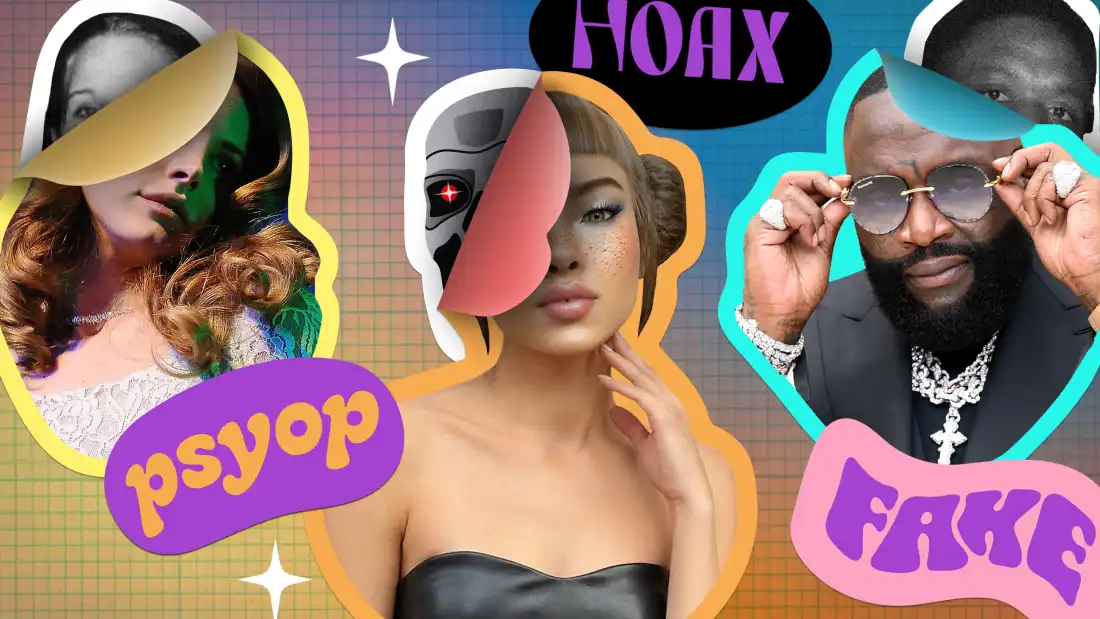
Lana Del Rey, virtual musician and influencer Lil Miquela, and rapper Rick Ross have all faced controversies about what defines an authentic musical artist. These debates highlight ongoing concerns in the music industry about authenticity.
In 2026, the music industry struggles with the concept of authenticity. Technology and promotional tactics frequently challenge the perception of genuine artistry. This article explores instances where authenticity has been questioned and the impact of these controversies.
Silibil N’ Brains: A Scottish Rap Ruse
In the early 2000s, Scottish musicians Gavin Bain and Billy Boyd pretended to be American rappers to gain success. Initially presenting themselves authentically, they failed to impress Polydor Records. They then adopted American personas, Silibil N’ Brains, convincing Sony UK to sign them. Despite gaining popularity, the deception took a toll on their personal lives. Eventually, the truth emerged, and the duo struggled to reconcile their actions.
The Joyce Hatto Plagiarism Scandal in Classical Music
Joyce Hatto, an English pianist, became the center of a significant scandal in the classical music world. Her recordings, celebrated for their excellence, were later discovered to be plagiarized performances by other pianists. Her husband, William Barrington-Coupe, admitted to the deception, claiming he did it for his ailing wife. This scandal raised questions about authenticity in classical music.
Rick Ross: Hip-Hop Credibility Questioned
In 2008, Rick Ross’s credibility as a rapper faced scrutiny when a photo surfaced of him in a correctional officer’s uniform. This revelation contradicted his image as a luxury coke rap icon. Despite initial denials, Ross’s artistry and sound eventually triumphed over the controversy, allowing him to maintain his position in the industry.
Lana Del Rey and the Authenticity Debate
Lana Del Rey’s debut album, Born to Die, sparked debates about authenticity. Critics questioned her stage name and past music career. Despite scrutiny, Del Rey’s artistic evolution eventually overshadowed initial doubts about her authenticity. Her unique style and sound have continued to influence the music industry.
Digital Influencer Lil Miquela: Predicting an AI-Generated Future
In 2016, Lil Miquela, a virtual influencer and musician, blurred the lines between real and digital personas. Initially shrouded in mystery, she became emblematic of AI’s potential impact on the music industry. Her existence challenges conventional notions of authenticity in music and social media.
Gender and Ghostwriting in Hip-Hop: The Karrahbooo Case
Authenticity in hip-hop is often linked to authorship. Female rappers, like Karrahbooo, frequently face allegations of ghostwriting, which raises issues of gender dynamics in the industry. A public dispute between Lil Yachty and Karrahbooo illustrates how such accusations can undermine female artists. These controversies reflect broader gender biases in hip-hop and expectations of authenticity.