Exploring Section 301 Tariffs: Targeted Trade Remedy or General Tariff Authority?
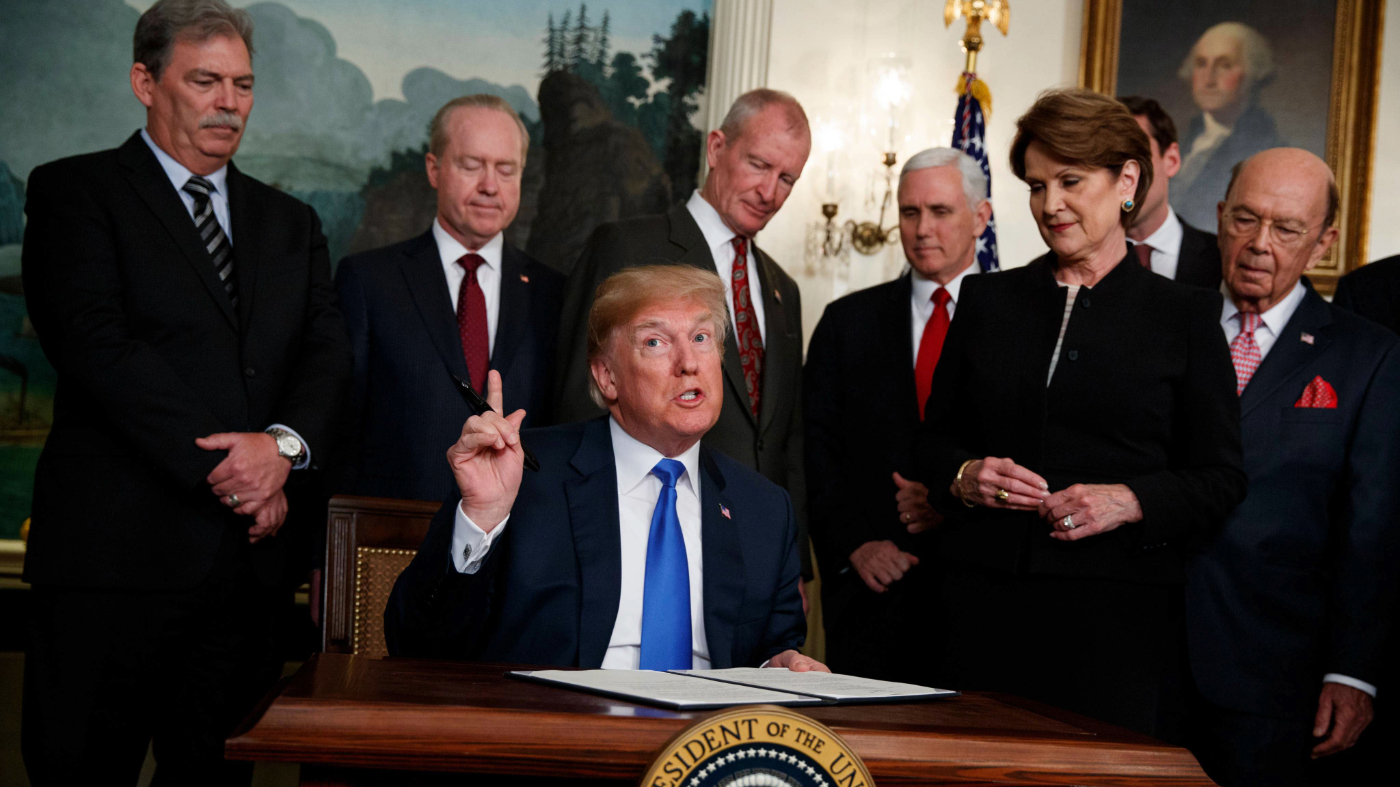
President Donald Trump, on March 22, 2018, signed a presidential memorandum imposing tariffs and investment restrictions on China. This decision raised questions about Section 301 of the 1974 Trade Act, originally intended as a targeted trade remedy and not a general tariff statute. This distinction is vital and is central to a recent lawsuit challenging Trump’s Section 301 tariffs, brought forward by the Liberty Justice Center.
The lawsuit concerns tariffs on imports from 60 economies, citing alleged failures to combat forced labor. The key question is whether Section 301 remains a targeted remedy or if it has transformed into a broader source of presidential tariff authority. The statute outlines a procedure where the U.S. Trade Representative must identify a foreign act, policy, or practice, and determine its impact on U.S. commerce. They must also explain why the chosen response is suitable and feasible for eliminating this practice. This sequence is more than a formality; it serves as the statute’s limiting principle.
“Tariffs are not the objective; they are the instrument,” the article explains, highlighting that tariffs aim to persuade foreign governments to abandon specific practices.
The recent litigation argues that the connection between identified practices and remedies has diminished. While forced labor is undeniably a human rights abuse, the court of International Trade must decide if the tariffs imposed on imports from 60 economies are appropriate and feasible for encouraging these governments to enforce against forced labor. If the executive cannot demonstrate how a tariff could eliminate a specific foreign practice, Section 301 loses its intended function and becomes a broad authority for imposing tariffs based on perceived needs for economic pressure, not as Congress intended.
American trade law confirms this perspective. Congress has not delegated tariff authority through an all-purpose statute. Instead, specialized authorities address specific problems. For instance, Section 232 addresses national security, while Section 122 allows temporary tariffs during balance of payments crises. Section 301 plays a distinctly different role, authorizing targeted responses to specific foreign trade practices.
Section 122 highlights the importance of these distinctions. Congress anticipated that presidents might seek broad economic tariffs, so it imposed limits—tariffs under this statute cannot exceed 15 percent and must have congressional approval to last beyond 150 days. If Section 301 allows similar tariff programs indefinitely, those limitations lose significance. Courts generally reject interpretations that permit such outcomes. One foundational principle of statutory interpretation is that Congress does not legislate redundantly. Statutes should work in synchronization, not let one overshadow others. This principle should guide the Court of International Trade in its decision.
This case is not about tariff policy or the severity of forced labor directly. It’s about maintaining the statutory limits Congress set on its significant delegation of economic authority. Congress did not grant a general power to impose tariffs on any international issue considered worthy of pressure. It authorized a narrower authority—identify a foreign act, policy, or practice, determine its impact on U.S. commerce, and justify the chosen tariff as necessary and feasible to address that practice.
The statutory chain is essential, distinguishing Section 301 from general tariff law. If courts break this chain, Section 301 will no longer serve as a targeted remedy. It risks becoming the executive’s default source of tariff authority when other avenues are unavailable. Allowing this would not just expand Section 301; it would remove a key restriction Congress placed on executive tariff authority. Section 301 was crafted as a precise instrument, and courts should ensure it does not become an indiscriminate tool.
Marc L. Busch, Karl F. Landegger Professor of International Business Diplomacy at Georgetown University, and Petros Mavroidis, Edwin B. Parker Professor of Foreign and Comparative Law at Columbia Law School, emphasize this issue’s importance in maintaining the intended balance of Congressional authority.