Fatal B-52 Crash: Names of Victims Released
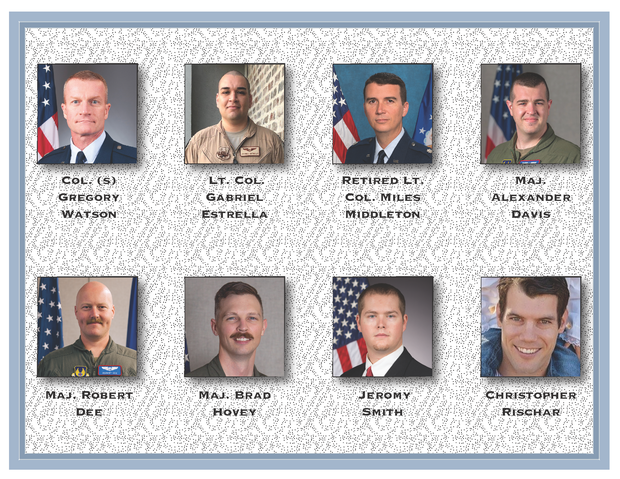
Edwards Air Force Base has announced the identities of the eight individuals who perished in a tragic B-52 Stratofortress bomber crash on Monday. This unfortunate accident claimed the lives of military personnel, Boeing staff, and government employees.
The crash victims include Lt. Col. Gabriel Estrella, 40, and Maj. Alexander Davis, 34, both weapons system officers. Estrella was assigned to the Air Force Operational Test and Evaluation Center at Edwards. Also lost were 419th Test Squadron pilots Maj. Robert Dee, 40, and Maj. Brad Hovey, 35.
Additional victims are Jeremy Smith, a 32-year-old flight test engineer with the 419th Flight Test Squadron; Christopher Rischar, 41, a contractor and flight test engineer; retired Lt. Col. Miles Middleton, 50, a pilot for Boeing; and Col. Gregory Watson, 53, a weapons officer with Boeing and an Air Force reservist stationed at the Naval Air Station Joint Reserve Base in Fort Worth, Texas.
Col. Thomas Tauer, commander of the 412th Test Wing, expressed profound sorrow at the loss of these individuals. In a statement, he emphasized that they were not only professionals but also cherished family members and key teammates within the Edwards and Air Force community.
These individuals were part of a Combined Test Force, a collaborative team of active-duty airmen, military contractors, and government civilians dedicated to specific projects. The military released their identities after notifying next of kin 24 hours prior.
The B-52 was embarked on a test mission related to the Air Force’s Radar Modernization Program. It took off around 11:20 a.m. local time. Tragically, the aircraft crashed and caught fire shortly after liftoff. Aerial footage captured a substantial burn mark and visible smoke plumes.
Col. James Hayes, the deputy commander of the 412th Test Wing, described the crash as “unsurvivable.” Despite the first responders’ efforts, lives were lost. The base will remain closed until at least Thursday, with flight test operations anticipated to resume early in the following week.
The Radar Modernization Program upgrades B-52 bombers to extend their service into the 2050s. Known for their payload capacity and range, these planes are a crucial component of the Air Force arsenal and are nuclear-capable.
According to Doug Birkey from the Mitchell Institute for Aerospace Studies, the age of the B-52s is a significant concern. Built in the early 1960s, these aircraft are among the oldest in the fleet. The military is investing nearly $50 billion in upgrades to maintain their functionality through the coming decades. Birkey emphasized the inherent risks involved in operating such aged machinery, noting the tragic loss of eight lives.
An investigation will be conducted by the U.S. Air Force’s Accident Investigation Board. Their inquiry may extend up to six months before reaching any conclusions regarding the crash’s cause.
Edwards Air Force Base prioritizes support for the families and colleagues impacted by this tragedy. An Emergency Family Assistance Center has been established to offer mental health services, childcare, legal counsel, and chaplain support.
The Air Force Global Strike Command, which manages the bomber fleet, urged its personnel to support one another. “Please take the time to check in on your wingmen,” a message from the commander and command chief stated. “Grief affects us all differently, and there is absolute strength in asking for help when you need it.” Edwards has a pivotal role in the U.S. Air Force’s aerospace testing, located approximately 100 miles north of Los Angeles.