House GOP Budget Blueprint Faces Challenges Amid Election Concerns
The House GOP leadership has proposed a budget plan that aims to bypass Democratic opposition. This plan includes $73 billion in military spending related to the ongoing conflict in Iran. Additionally, it proposes $12 billion for farmers and seeks to impose strict voting restrictions advocated by President Trump.
The proposal marks the first attempt to advance a Pentagon spending request from the White House aimed at funding the Middle East conflict. Democrats have consistently rejected these efforts, criticizing the president’s management of the war, which was initiated without congressional consent.
This budget proposal also attempts to revive the president’s stalled election bill, known as the SAVE Act. Democrats have criticized it as a measure to suppress voting, while Republicans have struggled to pass it through the Senate.
Spending requests are generally handled through bipartisan appropriations. However, due to Democratic resistance to funding Trump’s key priorities, including immigration enforcement and the war in Iran, Republicans are utilizing the reconciliation process. This approach shields certain fiscal bills from filibuster, which allows them to bypass Democratic opposition.
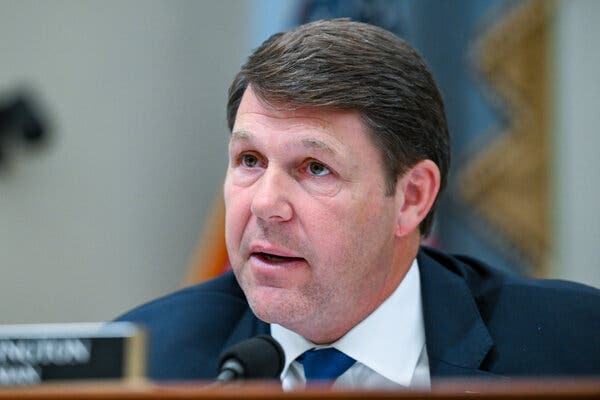
Representative Jodey C. Arrington from Texas, who chairs the House Budget Committee, stated, “House Republicans will unlock a third budget reconciliation to stop Democrat obstruction, support our troops, and safeguard the integrity of our elections.” His panel was scheduled to vote on the plan.
The proposal faces major obstacles due to divisions within the GOP. It also carries significant political risks as it leads to votes aimed at providing considerable funding to an unpopular war, as reflected in various polls, just months before the midterm elections. Additionally, the proposal may encounter difficulties during the reconciliation process.
President Trump has insisted that Republicans pass the SAVE Act, mandating proof of U.S. citizenship for voter registration, implementing new identification requirements for voting, and drastically reducing mail-in voting. Despite this, broad policy changes like these are typically unsuitable for reconciliation bills, which are limited to provisions that directly affect fiscal deficits.