Impact of Canadian Wildfire Smoke on U.S. Air Quality
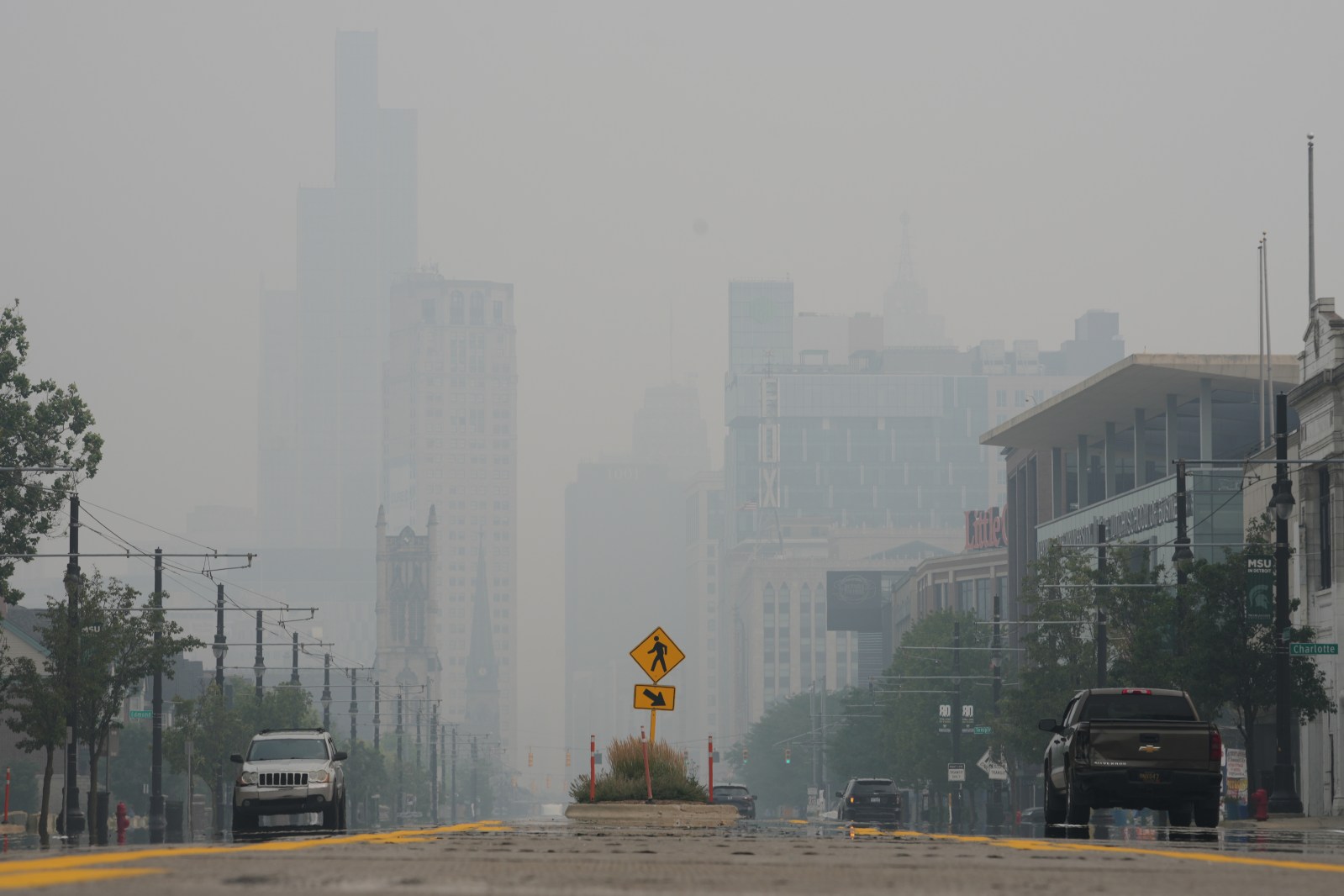
On Friday, three U.S. cities were ranked highest for poor air quality due to Canadian wildfires affecting the Midwest and Northeast. Detroit led with a U.S. Air Quality Index (AQI) reading of 240 between 1 and 2 p.m. ET, classified as ‘very unhealthy.’
Chicago followed with an AQI of 199, and Washington, D.C., reported an AQI of 172. New York City, at 131, secured the eighth position on the list tracked by IQAir. These ranks reflected the immediate influence of smoke rather than the cities’ standard air quality.
Outside the U.S., Kinshasa, Delhi, and Jakarta were among the worst, with AQI readings of 186, 163, and 144, respectively. Delhi is known for high PM2.5 levels, with an average annual concentration of 99.6 µg/m3.
Understanding PM2.5
PM2.5 refers to fine particulate matter measuring 2.5 micrometers or smaller. This pollutant is prevalent due to its small size and widespread sources like vehicles and wildfires. PM2.5 can easily enter buildings and penetrate deep into the lungs, posing significant health risks.
It often appears as the primary pollutant in air quality reports, as it easily exceeds safety levels, impacting large populations.
Wildfire Smoke in the U.S.
Wildfire smoke from northern Ontario affected air quality in the U.S., particularly in cities like New York, Chicago, and Washington, D.C. Alerts were issued, warning residents to stay indoors or wear masks. In New York City, outdoor events were canceled, and cooling centers opened due to the combination of smoke and high temperatures.
Detroit experienced severe conditions, with AQI levels hitting between 300 and 500 overnight. Dense-smoke advisories were in place for nearby regions due to reduced visibility.
Forecasters predicted improving conditions as winds shifted. However, ongoing fires in Canada meant potential return of the smoke.
Protective Measures Against Smoke
For those exposed to wildfire smoke, N95 or KN95 respirators are recommended due to their effectiveness in filtering fine particles. Dr. Tyler Evans emphasized the importance of proper fit, as air leakage reduces a mask’s efficiency.
The Public Health Agency of Canada supports using well-fitting N95, KN95, and KF94 masks, highlighting the necessity to avoid gaps around the nose, mouth, and chin. These masks should not be used during sleep, and certain individuals, such as young children or those with breathing difficulties, should not wear them.