Impact of Iranian-Supplied Weapons on U.S. Troops in Iraq
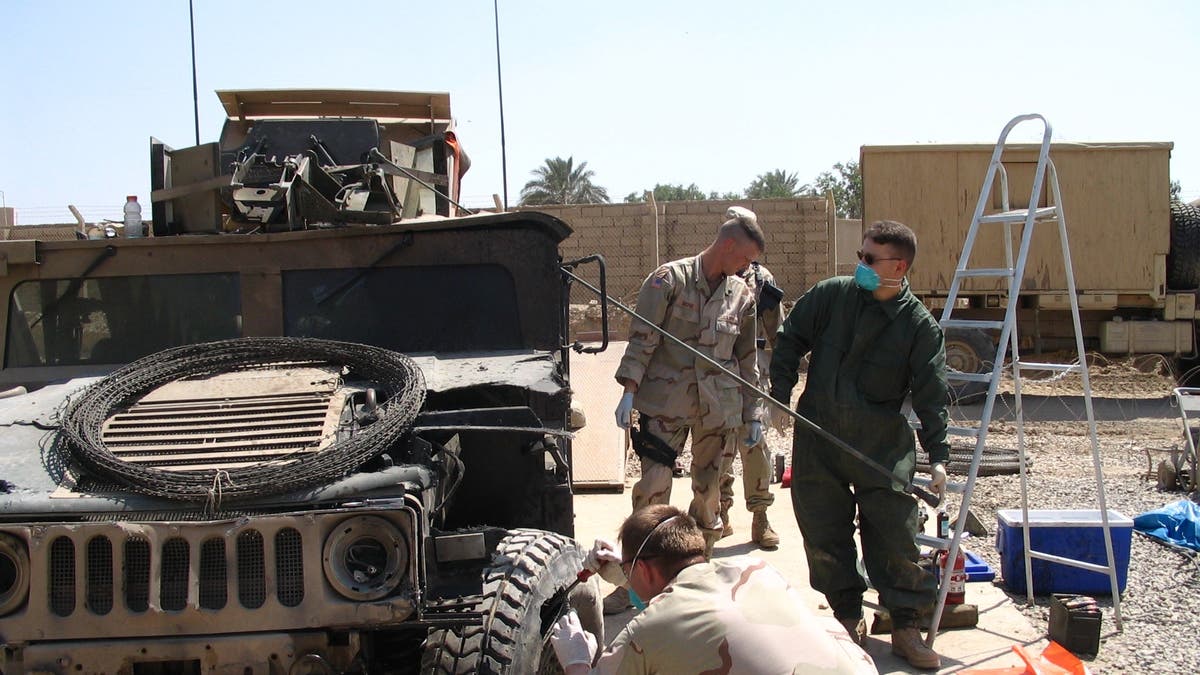
Explosively formed penetrators, supplied by Iran, have had a devastating impact on U.S. troops in Iraq. These weapons, part of Iran’s campaign through proxy forces, have caused serious injuries and death. According to federal court findings, Iran manufactured or supplied the weapons, and trained or directed attackers through the Islamic Revolutionary Guard Corps.
“It cut me in half from my temple down through my jaw,” said Sgt. (Ret.) Robert Bartlett.
“I would end up dying three times and spent four years at Walter Reed receiving surgeries.”
Bartlett was driving an armored Humvee on May 3, 2005, when the weapon struck, injuring him and two other soldiers. Staff Sgt. William Brooks was killed. Bartlett struggled with severe facial trauma, described in the Army report as “very seriously injured.” The weapon was linked to the Revolutionary Guard’s campaign to arm militias against American forces.
Bartlett’s experience aligns with cases involving Capt. Shawn English and Maj. Stuart Wolfer, both killed by similar attacks in Baghdad. Courts confirmed Iran supplied weapons and training, a substantial factor in these attacks. Although the legal judgments provided some recognition, they did not ease the loss felt by the victims’ families.
Impact on Families
Maj. Stuart Wolfer’s sister, Beverly, shared the difficulty of living without her brother. At her wedding, he stood as her “man of honor.” Wolfer died in 2008 after a rocket struck a gym in Baghdad. His daughters, young at the time, grew up without him. Beverly described preserving his memory for the children.
Tricia English recalled her husband, Capt. Shawn English, who was killed in 2006 by an EFP. He knew the danger of these weapons, manufactured and supplied by Iran. During his last communication, he expressed love for his family.
The legal processes revealed more about the weapons and their origins, leading to accusations against Iran. Though courts ruled against Iran, collecting the awarded judgments remains a challenge.
Continuing Impact of Conflict
This conflict isn’t viewed as new by victims’ families. It’s ongoing, deeply rooted since the early 2000s with Iran’s involvement in Iraq’s political and security landscape. The Revolutionary Guard’s Quds Force supplied militia groups targeting U.S. personnel. This proxy warfare enabled Iran to avoid direct confrontation but still exert harmful influence on American troops.
The U.S. administrations acknowledge Iran’s responsibility when convenient, but families await more accountability. The war’s toll is felt in loss, legal rulings, and unending grief.
Bartlett remains committed to honoring those who didn’t return. The truth, as he sees it, remains unchanged. Families measure it not only in legal terms but in the personal loss of loved ones.