Iran’s Former Supreme Leader Ayatollah Ali Khamenei’s Legacy and Funeral Events
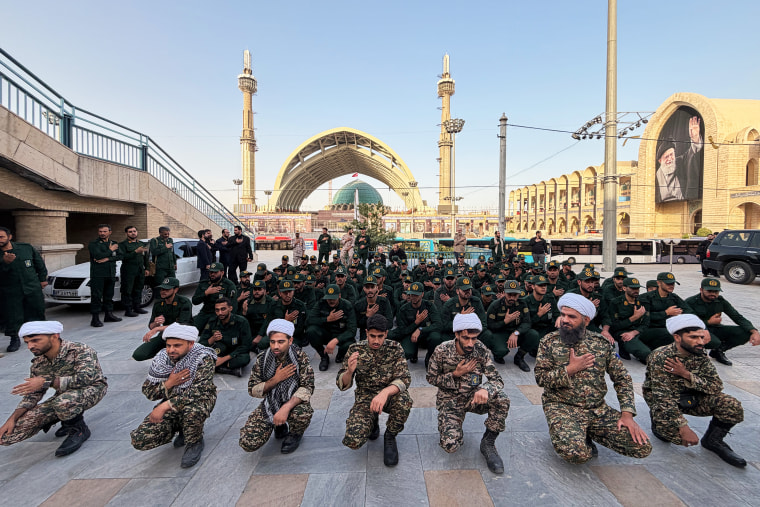
On July 3, 2026, Iran will conclude the funeral proceedings for its former Supreme Leader, Ayatollah Ali Khamenei. Known for his formidable rule, Khamenei died alongside family members in U.S. and Israeli strikes on Tehran on February 28. Khamenei’s influence permeated the Islamic Republic’s governance for almost forty years.
This event marks the second time Iran buries a supreme leader. In 1989, millions participated in the Tehran funeral of Ayatollah Ruhollah Khomeini, the Islamic Republic’s founder. Tehran’s mayor, Alireza Zakani, estimates that up to 20 million people might attend Khamenei’s funeral events, as reported by the Young Journalists Club affiliated with Iranian state television.
The funeral, staged at the Imam Khomeini Mosalla Grand Mosque, has Revolutionary Guard members and clerics mourning the late leader. Sina Azodi from George Washington University notes the event serves as a moment to demonstrate loyalty to Khamenei’s legacy, aiming to project the Islamic Republic’s enduring strength and resilience.
A public viewing and prayers will occur at the expansive Grand Mosalla in Tehran, continuing with a citywide funeral procession. Events are also organized in Iran’s religious hub, Qom, and in Iraq, which holds significant Shia shrines. Bringing Khamenei’s funeral ceremonies to Iraq highlights the regional influence of the Islamic Revolutionary Guard Corps (IRGC), an influential force in Iran.
Khamenei will be interred in his hometown, Mashhad, home to Iran’s prominent Shia religious shrine. While Muslim customs prefer funerals soon after death, Khamenei’s delayed funeral reflects extraordinary circumstances during a fragile U.S.-Iran peace process. The funeral date was announced only recently, months after hostilities allegedly ended.
Several key figures died in the initial phase of conflict with the U.S. and Israel, leaving Iran politically uncertain. Khamenei’s son, Mojtaba, injured in the attack that killed his father, took over as Supreme Leader in March but remains out of the public eye, stoking speculation about his condition. The Iranian government has not confirmed his attendance at the funeral events.
Khamenei’s image remains prominent in Tehran, featuring on murals alongside Ayatollah Khomeini. These depictions often condemn U.S.-Israeli aggression. Iranian state media frequently refer to Khamenei as a martyr, acknowledging his era’s impact. Under his rule, the IRGC became a key player in Iranian affairs. Recent escalations have hardened the Guard’s stance.
Mohammad Bagher Ghalibaf, parliament speaker and chief American negotiator, personifies this shift. Known for his provocative social media comments toward President Donald Trump, Ghalibaf recently underscored Iran’s refusal to yield to ‘oppression and arrogance.’
Khamenei’s funeral allows IRGC factions to demonstrate resilience against international pressures. The vast turnout contrasts sharply with January’s massive protests, which posed significant challenges to the 47-year-old regime and were met with severe crackdowns.
Ongoing negotiations with the U.S. and deteriorating economy have exacerbated the situation. Security measures will be stringent after past events like Ayatollah Khomeini’s chaotic procession in 1989, which saw fatalities and injuries due to a stampede. Attacks on high-profile funerals, notably the Islamic State’s deadly 2024 strike on Gen. Qassem Soleimani’s remembrance, underscore these concerns.
Analysts, including Ali Vaez from the International Crisis Group, point to uncertainty post-funeral. Khamenei strengthened Iran against external threats but eroded the republic’s foundational legitimacy. With the leadership transition, unresolved war trauma, and recent internal strife, Iran faces an uncertain future.